
Mental Health Masterclass | The Friendship Bench
Full Title of the Masterclass
Inside the Friendship Bench: Mechanisms, Methodology and Innovations that Decolonise Practice
Payment Instructions
Instructions about how to pay are here – https://africasocialwork.net/how-to-do-mfundo-courses/
Overview
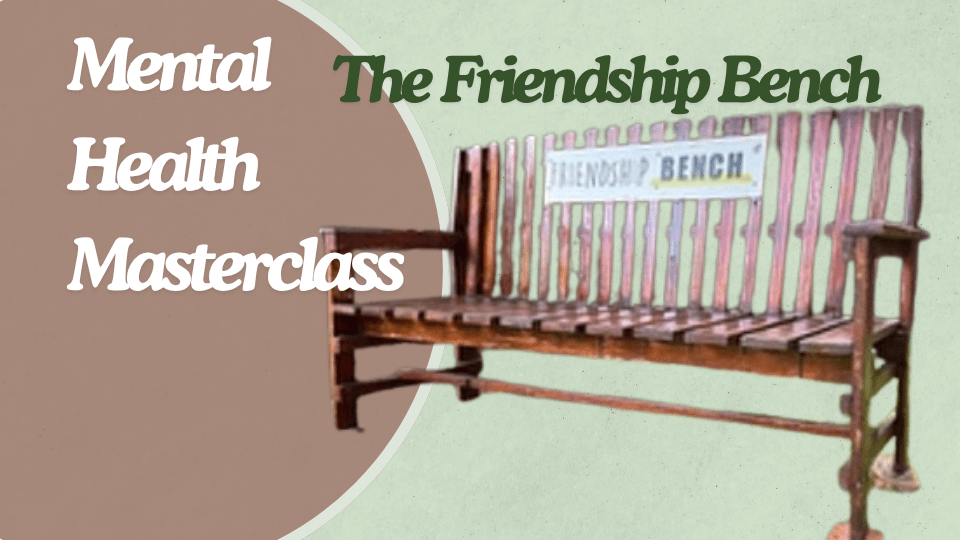
The Friendship Bench (FB) is a community based, evidence based mental health intervention founded in 2006 by Professor Dixon Chibanda in Mbare, Harare, Zimbabwe. Trained lay grandmothers, known as Gogo or Ambuya Utano, deliver structured problem solving talk therapy from benches at primary healthcare clinics. The grandmothers address kufungisisa, the Shona expression for thinking too much, which describes depression and anxiety, through culturally grounded care rather than imported clinical models.
This masterclass is presented by the Friendship Bench in partnership with Mtandao, Africa Social Work and Development Network. It sets out the mechanisms, methodology and innovations that make the Friendship Bench a model for decolonising mental health practice: an Africa initiated intervention that has since been replicated in over 12 countries across Africa, Europe, the Americas and Asia, used by global institutions including FIFA, and is now formally integrating into government structures in all 10 provinces of Zimbabwe.
The course covers the theoretical foundations, core methodology and practice mechanics of the model, including kufungisisa and the task sharing approach, alongside the evidence base that supports it, most notably the 2016 randomised controlled trial published in the Journal of the American Medical Association, which found that grandmother delivered therapy outperformed therapy delivered by trained psychologists at six months.
Learning outcomes
By the end of this course, students will be able to:
Outcome 1: Describe the origins of the Friendship Bench, including its founding by Professor Dixon Chibanda in Mbare, Harare, in 2006, and its growth into a globally replicated model.
Outcome 2: Define kufungisisa and explain how this Shona concept reframes depression and anxiety in culturally grounded terms, rather than through imported clinical categories.
Outcome 3: Explain the task sharing approach used by the Friendship Bench, including the role of trained lay grandmothers, Gogo or Ambuya Utano, as the central delivery mechanism of the model.
Outcome 4: Evaluate the evidence base for the Friendship Bench, including the 2016 randomised controlled trial in the Journal of the American Medical Association and its recognition in the 2025 World Happiness Report.
Outcome 5: Assess how the Friendship Bench model functions as an example of Ubuntu led, decolonial mental health practice, and how it has scaled from a single site in Harare to national government integration and international adoption.
Features
- Live online
- Training delivered by the founder
- Certificate
- Evidence-based
- No prior training in mental health required
Target audiences
- This course is aimed at mental health professionals, social workers, community health workers, public health practitioners and Indigenous workers worldwide, alongside academics and policymakers interested in task sharing models, community delivered care, and decolonial approaches to mental health, reflecting the Friendship Bench's own reach across more than 12 countries in Africa, Europe, the Americas and Asia, and its adoption by global institutions such as the WHO and FIFA.
Requirements
- Two (2) hours of your time
- Good internet connection
- Whatsapp number to facilitate emergency communiciation, if required
FAQs
Instructor

Dixon Chibanda is a practising Medical Doctor and Professor of Psychiatry & Global Mental Health holds chairs at the University of Zimbabwe and the London School of Hygiene and Tropical Medicine, and directs the African Mental Health Research Initiative (AMARI). He is the founder of the Friendship Bench and one of Africa’s foremost voices on community mental health, task sharing, and culturally grounded practice.
This course is grounded in Ubuntu values of family, community and intergenerational reciprocity. The Friendship Bench model shows the power of African knowledge, if embraced with thought, innovation and pride. Rugare Mugumbate, Director, Mtandao.
This course is grounded in Ubuntu values of family, community and intergenerational reciprocity. The Friendship Bench model shows the power of African knowledge, if embraced with thought, innovation and pride. Rugare Mugumbate, Director, Mtandao.