
Social Work and Development Student Conference (SWDSC)
About
The Day of the African Child Conference for Students (DACCS) was started in 2023. Its main aim is to mould our future leaders, and mentor them to be able to organise events to promote social work and development on our continent. The conference is organised by students, and most presenters and chairs are students. It is a relaxed environment to present and mentor both undergraduate and postgraduate students. Presentations are short, about 10 minutes, and any topic could be suitable, as long as it relates to the theme. For you to get a chance to present, you will need to submit an abstract. An abstract is a statement that introduces a report, article or research in a summarised way. All abstracts and presentations will be published in African and globally indexed peer reviewed journals so that you can be cited and contribute to research, education and learning.The conference is organised by students on 16 June which is the Day of the African Child (DAC) and also South African Youth Day. All students are invited to take part – Diploma, Associate or Bachelor degree, Master Degree and Doctoral Degree. An elected organising committee made up of students will select a theme, design materials, make a call for presenters, invite speakers, review abstracts, create the schedule, moderate, chair and report.
The conference is an important opportunity to prepare students for future leadership, academic and research roles to advance social work and development, not only in Africa but globally.
Reasons to attend a conference
Academic and skill development
- Test and build your academic presentation confidence in a supportive scholarly environment.
- Receive constructive feedback from peers and senior academics to improve your research.
- Learn how an academic conference is structured, run, and successfully organised.
- Gain practical experience by volunteering to chair sessions or facilitate group discussions.
Knowledge expansion
- Discover cutting-edge methodologies and indigenous research frameworks before they are published.
- Learn about newly emerged theories and findings specific to your academic discipline.
- Uncover recent literature and hidden source material shared during interactive presentations.
- Watch highly experienced presenters in action to learn effective public speaking techniques.
Networking and community
- Experience the professional atmosphere and cultural dynamics of a formal academic conference.
- See how other postgraduate students and international scholars present their ongoing work.
- Make professional connections and build networks with future collaborators, mentors, and peers.
Main themes of DACCS
- Children in social work and development.
- Learning to be a social or development worker.
- Social work and development approaches focusing on those most suitable to Africa.
2026 and 2025
The 2025 DACCS had 186 participants registered to attend online, of whom 105 attended on the day. Additional participants attended in person at ECU. The conference delivered approximately 6.5 hours of learning and engagement across 30 presentations.
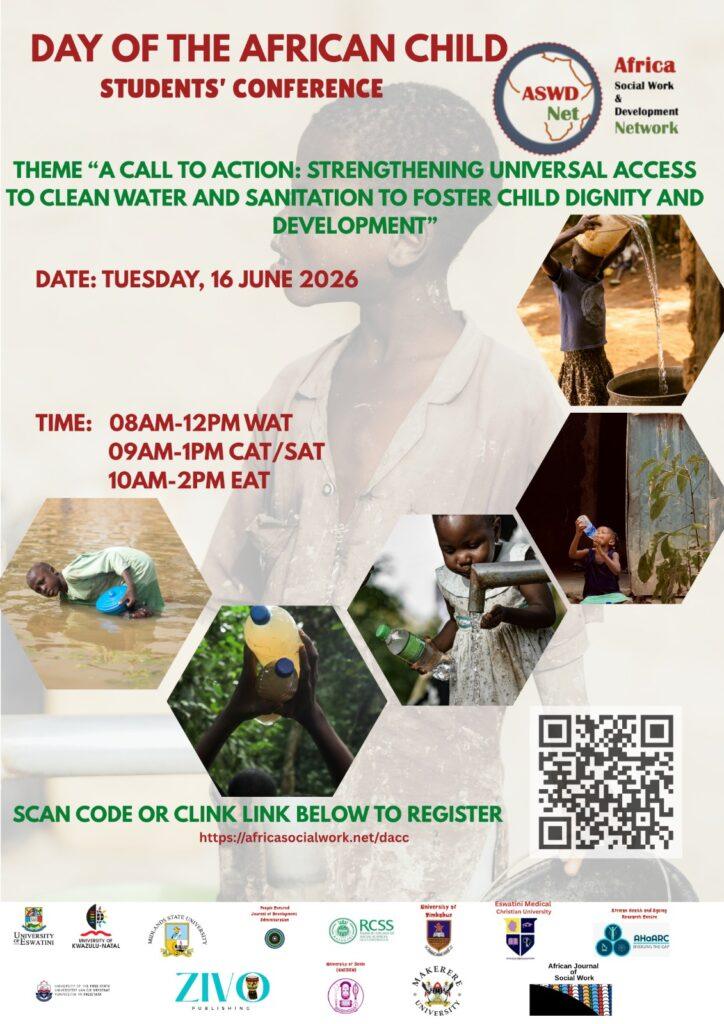
Date
On 16 JuneTime
08AM-12PM WAT | 09AM-1PM CAT/SAT | 10AM-2PM EAT (time may change)Theme
Current theme: A call to action: Strengthening universal access to clean water and sanitation to foster child dignity and development.Previous themes
2025: A 14-Year Legacy of policy and practice: Investing in Child Rights through responsive budgetingHashtags
#DACC #DayOfTheAfricanChild #InternationalDayOfTheAfricanChildBelow are the posters to share. Pin on notice boards, share on social media and send via emails. Print and post.
2026 poster
2025 posters
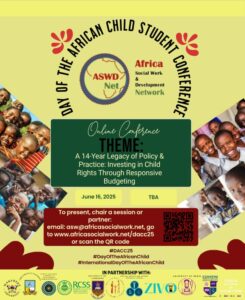
Day of the African Child (DAC) 2025


Introduction
The Day of the African Child (DAC) was launched by the Assembly of Heads of State of the Organization of African Unity (OAU) in 1991 to be commemorated on 16 June each year. The DAC pays tribute to the 1976 student uprising in Soweto, South Africa, which resulted in the killings of students who demonstrated against the poor quality of education they received and demanding to be taught in their own language by the apartheid regime. Over the years, the Day has been an opportunity for all stakeholders and actors involved in the protection and promotion of children’s rights in Africa to come together, to consolidate common goals and to tackle the obstacles that stand in the way of achieving an Africa fit for its children.
As guardian of the African Charter on the Rights and Welfare of the Child (ACRWC), the African Committee of Experts on the Rights and Welfare of the Child (ACERWC/Committee) has spearheaded the commemoration of the DAC since 2002. The ACERWC is an Organ of the African Union established in accordance with articles 32 and 33 of the ACRWC mandated to promote and protect the rights and welfare of the child in Africa and monitor its implementation. Each year, the Committee identifies a relevant theme for the Day, which is further adopted by the Executive Council of the AU, organizes and coordinates activities and events to commemorate the Day at continental level.
The purpose of this concept note is to provide guidance to Member States on the main objectives of the theme, and the various measures that should be undertaken by States in the celebration of the theme. The Committee notes that the DAC provides an opportunity for children, Member States, policy makers, organisations and other stakeholders on the continent working on children’s issues to review and evaluate efforts, policies and programmes aimed to protect and promote children’s rights considering the theme. The DAC is called for serious introspection and commitment to addressing the many challenges facing African children.
For previous themes and the current concept note, please visit: https://www.acerwc.africa/en/page/about-day-african-child
CALL FOR ABSTRACTS
For you to get a chance to present, you will need to submit an abstract. An abstract is a statement that introduces a report, article or research in a summarised way. Submit abstract using this form. Please follow these guidelines:-
- Your abstract should have a title.
-
- Your name, email and institution and college level (if available).
-
- The abstract paragraph should have an opening sentence introducing the topic, clarification of the research gap\questions/needs/purpose, theories used to understand the issue, methods used to collect data (e.g. personal experience, stories, photo taking, family interviews, baliano, literature review, documents, social media and ETHICS), summary of the data or findings, conclusions reached and recommendations or implications.
-
- Abstract should be 150-200 words long – with sub-headings (see example at the end)
-
- Abstract should report academic or non-academic research that has already been done or that will be completed before 14 June each year OR could be based on your experience or reflections at home, in the community, at university, during placement.
-
- There should be no references in the abstract.
-
- Prioritise African philosophy, theories, sources of knowledge and research methods.
-
- Africa research methods can be read here – https://africasocialwork.net/research/
-
- African theories can be read here – https://africasocialwork.net/african-theories-of-social-work/
-
- African philosophy can be read here – https://africasocialwork.net/african-philosophy/
-
- Ubuntu (Africa’s philosophy) – https://africasocialwork.net/ubuntu-database/
-
- Prioritise African philosophy, theories, sources of knowledge and research methods.
-
- It is ok to write the abstract in your own language, to use words from any African language in the abstract, title or key words.
-
- Add 5-8 key words – all key words must be used in the abstract paragraph.
ABSTRACT EXAMPLE
ABSTRACT REVIEW GUIDES
There is a table and text reviewer guide, they are all acceptable.TABLE GUIDE
INSTRUCTIONS: You can give qualitative comments or quantitative ratings or both. The outcomes are the same for both – Accept, Revise or Reject. For quantitative ratings, abstract that’s cores 0-3 marks will be rejected, 4-6 will be revised by authors and reviewed again, 7-10 will be accepted. You can put comments in the table . Click to get Word version of Reviewer guidelines SOCIAL WORK and DEVELOPMENT STUDENT CONFERENCE.TEXT GUIDE
INSTRUCTIONS: Put your feedback comments or ratings at the end of each point.- Your abstract should have relevant, concise and original title, your full name, email and institution and college level (if available).
- The abstract should have an opening sentence introducing the topic, aim or objectives, clarification of the research gap\questions/needs/purpose, African theories, methods used to collect data (e.g. personal experience, stories, photo taking, family interviews, baliano, literature review, documents, social media), methods, procedures and tools for data analysis, summary of the data and findings proving there is sufficient for presentation, relevant conclusions reached and recommendations or implications and potential impact for policy, practice, teaching, learning and further research.
- Abstract should be between 150 and 200 words long – sub-headings used.
- Abstract should report research that has already been done or that will be completed before the conference or could be based on your experience or reflections at home, in the community, at university, during placement.
- There should be no references in the abstract.
- It is ok to write in your language, to use words from any African language, including the title or key words.
- Add 5-8 key words – all key words must be appearing in the abstract paragraph.
- Prioritise African philosophy, theories, sources of knowledge and research methods
- Other criteria: potential impact of findings, trustworthiness of research process, limitations, conflict of interest declared
- Any other feedback
Resources to help you
- African philosophy (Ubuntu) – https://africasocialwork.net/glossary/philosophy/
- Africa research methods can be read here – https://africasocialwork.net/research/
- African theories are here – https://africasocialwork.net/african-theories-of-social-work/
- African philosophy can be read here – https://africasocialwork.net/african-philosophy/
- Ubuntu – https://africasocialwork.net/ubuntu-database/ and https://africasocialwork.net/ubuntu/
- Examples of abstracts – click here and presentation – click here.
- Africa Union DAC click here or ACERWC
PRESENTER GUIDE
🪘 PowerPoint slide-making guide
(For a 10-minute presentation)
🧭 1. Plan for time before hand
- For a 10-minute presentation, use no more than 12 slides.
- 8 slides for full discussion (spend 1 minute per slide, but can spend less and longer in others but not more than 2 minutes per slide)
- 4 slides that you show briefly in passing or speak to for not less than 30 seconds.
- Do not spend a lot of time introducing self or topic or providing the background, MOST IMPORTANT are:
- Why – why this research was needed?
- How – how was it done? Can the researcher and results be trusted, is this true research? What is evidence of data collection? Were participants protected? Are methods enough to produce these findings? Are findings strong for us to adopt recommedations to change practice?
- What – what were the main and unique results (not demographic results), what is new?
- What- what do the results mean? What should change?
- How- how should the change happen?
🌀2. Slide design basics
- Font size 24 throughout.
- Make headings bold, the rest not bold unless who want to show emphasis.
- Use dark fonts on light backgrounds, or vice versa, for visibility.
- Aim for one visual element per slide (photo, drawing, chart, quote etc.).
- Keep text minimal – use bullet points or keywords.
📑 3. Slide structure
- Slide 1 – Cover slide – title, your name, affiliation, conference name and date.
- Slide 2 – Overview slide – outline of topics. if you have any conflict of interest, mention here or slide 1.
- Slides 3–10 – Main content slides – your discussion points.
- Slide 11 – Summary slide – key points and conclusions or Thank you slide.
- Slide 12 – References list slide – full list of cited works.
🪮 4. Content tips
- Stick to your main theme and stay relevant throughout.
- Always create your key points first instead of asking AI to create for you – if you use AI, revise outputs so that you remain the thinker or author.
- Place citations within slides (e.g. Amadasun, 2021, Okoye, 2024).
- Avoid information overload – one idea per slide is best.
🎭 5. Visuals and images
- Choose images that are respectful, decolonising, accurate, and culturally appropriate.
- If discussing African or Black communities, use images of Black people.
- Avoid inappropriate or stereotypical internet photos.
- It is best to use images you have taken or created yourself (drawings, photos, diagrams).
- Don’t be shy about using African visuals and cultural representation – they are part of valid, rich academic storytelling.
- Ask the organisers for the conference logo, official images, and theme colours or branding to include in your slides – it helps align your presentation with the event.
👍🏿 6. Presenting with confidence
- Anticipate questions and be ready with answers.
- Stay calm if technology fails – have a backup like a PDF or printed handout.
- Smile and connect with your audience – your presence matters.
- Dress appropriately for your setting – it shows respect for your work and the audience.
- Try, test or learn the technology used for the presentation beforehand.
- Sit in a space or room without noise or distractions.
- Have a good internet connection.
- It is good practice to keep your video on while presenting.
CHAIRING GUIDE
-
- Prioritise African names by practicing pronunciation thoroughly ahead of the event.
- Practice speaker names diligently to say people’s names correctly, or at least try, instead of avoiding them.
- Practice your chairing beforehand to ensure smooth transitions and confident delivery.
- Check speaker availability with the facilitator to confirm if any presenter is missing.
-
- Introduce all speakers together at the start of the session.
- Position your speakers by asking them to come to the front if live, or turn their videos on if online.
- Notify available time clearly to each speaker before they begin presenting.
- Use a timer during the presentations to maintain strict scheduling.
- Signal the midpoint of the allocated time to keep speakers paced.
- Give a 2-minute warning as they approach the end of their slot.
- Stop the speaker immediately if they exceed their time limit by 2 minutes. [1]
-
- Invite question time from the audience as soon as the presentation finishes.
- Ensure each speaker is asked a question to make them feel valued.
- Ask a question yourself if the audience remains silent, ensuring no speaker is left out.
- Provide one key lesson from each speaker at the end, limiting it to exactly one key point.
- Thank all speakers and participants for their time and contributions.
- Hand over control of the floor back to the facilitator.
The current program will be put below when available
PROGRAMME_DACC25_Final (pdf)
PROGRAMME_DACC25_Final (Docx)
2024
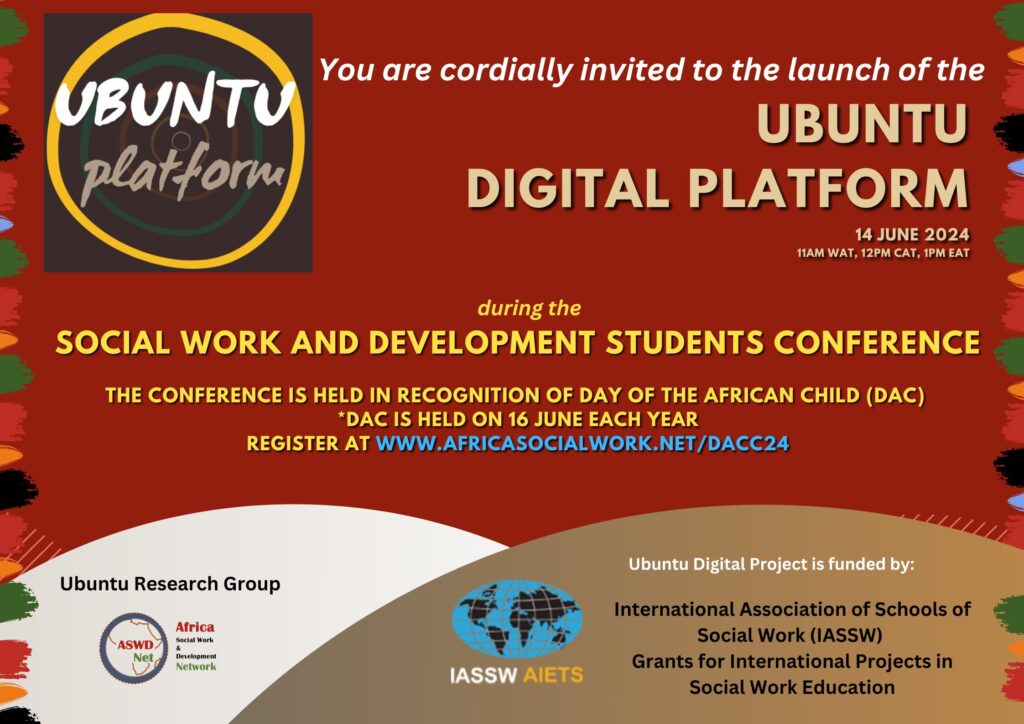
Theme
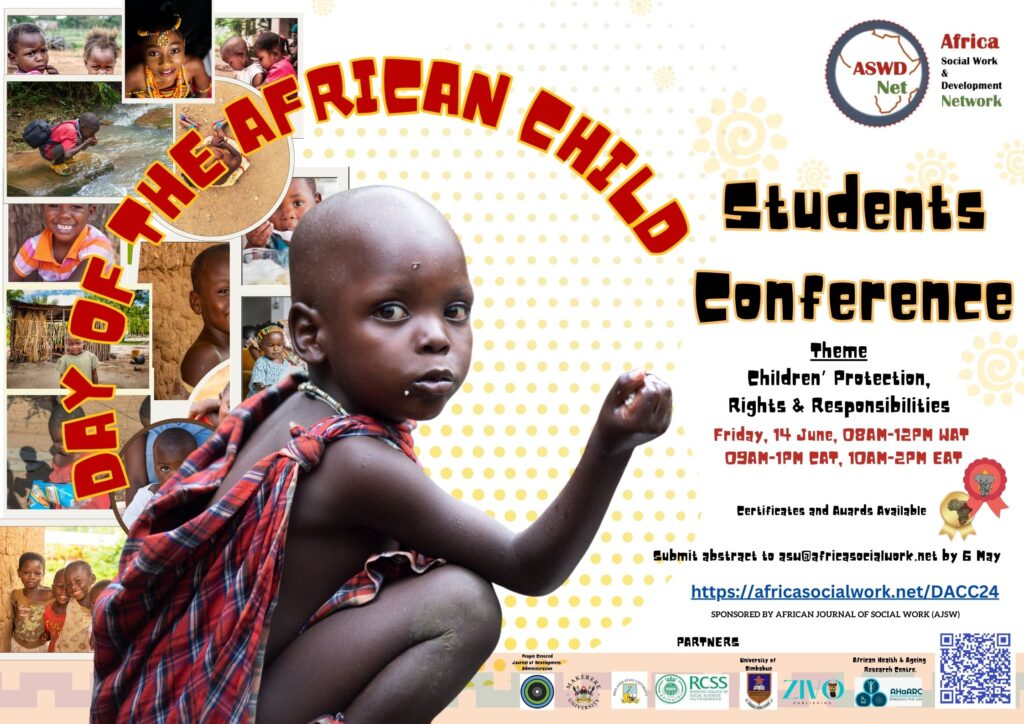
Children’ protection, rights and responsibilities
Poster
Date and Time
Friday, 14 June | 08AM-12PM WAT | 09AM-1PM CAT/SAT | 10AM-2PM EAT
*Sunday, 16 June will be Day of the African Child (DAC).
Hashtag #DACC24
Day of the African Child Conference 2024
URL: https://africasocialwork.net/DACC24

Abstract submission
For you to get a chance to present, you will need to submit an abstract. An abstract is a statement that introduces a report, article or research in a summarised way.
Submit abstract to asw@africasocialwork.net before 13 May 2024. Please follow these guidelines:
- Your abstract should have a title.
- Your name, email and institution and college level (if available).
- The abstract paragraph should have an opening sentence introducing the topic, clarification of the research gap\questions/needs/purpose, methods used to collect data (e.g. personal experience, stories, photo taking, family interviews, baliano, literature review, documents, social media), summary of the data or findings, conclusions reached and recommendations or implications.
- Abstract should be 200 words long – single paragraph and no sub-headings.
- Abstract should report academic or no-academic research that has already been done or that will be completed before 14 June 2024 OR could be based on your experience or reflections at home, in the community, at university, during placement.
- There should be no references in the abstract.
- Prioritise African philosophy, theories, sources of knowledge and research methods.
- Africa research methods can be read here – https://africasocialwork.net/research/
- African theories can be read here – https://africasocialwork.net/african-theories-of-social-work/
- African philosophy can be read here – https://africasocialwork.net/african-philosophy/
- Ubuntu (Africa’s philosophy) – https://africasocialwork.net/ubuntu-database/
- It is ok to write the abstract in your own language, to use words from any African language in the abstract, title or key words.
- Add 5-8 key words – all key words must be used in the abstract paragraph.
African Union DAC Concept Note 2024
Use this link to read full concept note.
African Committee of Experts on the Rights and Welfare of the Child – DAC webpage
Theme
AU DAC theme for 2024: EDUCATION FOR ALL CHILDREN IN AFRICA: THE TIME IS NOW
Reporting template
2023
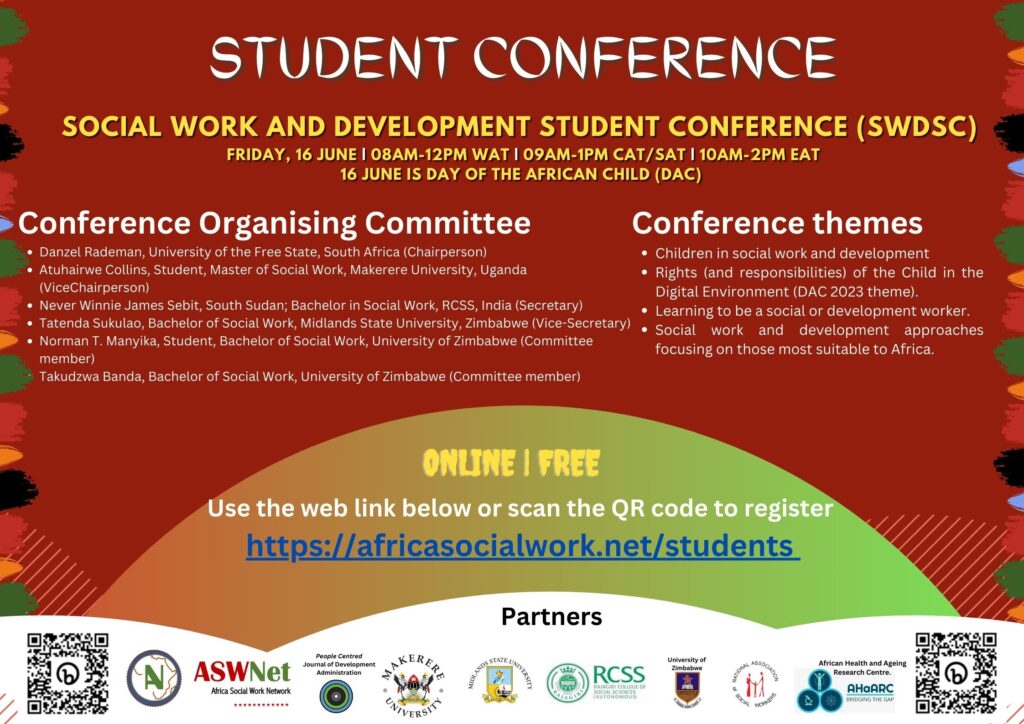
Friday, 16 June | 08AM-12PM WAT | 09AM-1PM CAT/SAT | 10AM-2PM EAT
16 June is Day of the African Child (DAC).
Abstracts
For you to get a chance to present, you will need to submit an abstract of 50 words. An abstract is a statement that introduces a topic, provides the main ideas and a conclusion. For statements about research, you add the methods used. Do not put references in the abstract. If you abstract is longer than 50 words (should not exceed 200 words), you can email it to asw@africasocialwork.net.
Program
The conference will be done in four hours. The table below will be updated as in formation becomes available.
Download Program (pdf)
Examples of published abstracts
Abstract submission form
Abstract should be no more than 200 words.
Types of Presentations
The conference will include but will not be limited to:
- Presentations on The Rights of the Child in the Digital Environment which is the DAC 2023 theme.
- Presentations on learning to be a social or development worker
- Presentations of thesis or dissertations
- Presentations of fieldwork
- Presentation of essays and reflections
- Mentoring-focused sessions
- Community-engaged sessions
- Technology-focused sessions
- Employer-focused sessions
- Publishing-focused sessions
- Scholarship-focused sessions
- Social media focused sessions
- An exemplary essay
- An exemplary thesis or dissertation
- A exemplary research report
- Research paper being prepared for a journal or already published
- Book chapter or draft manuscript of a book chapter
- An exemplary fieldwork report
- Poster
- Blog post
- Practice reflection
- Your personal, family and community experience relevant to conference themes.
- A case study.
- A project proposal
- A community development plan
- A policy review
- A needs analysis report
- An project evaluation report (use the Made in Africa Evaluation approach)
Organising Committee
The Organising Committee
Lwazi Mavuso, Eswatini, Master of Social Work, UKZN, South Africa
Chairperson

Tatenda Sukulao, Student, Master of Social Work, Midlands State University, Zimbabwe
Vice-Chairperson

Christabel Okoroafor, Student, University of Nigeria, Bachelor of Social Work, Nigeria
Secretary

Danzel Rademan, Student, Bachelor of Social Work, University of the Free State, Bloemfontein Campus, South Africa
Member, Past Chairperson

Atuhairwe Collins, Student, Master of Social Work, Makerere University, Uganda
Member, Past Vice-Chairperson

Willard Muntanga, Student, Great Zimbabwe University, MSC Peace Leadership and Governance Studies, Zimbabwe
Committee Member, Past Secretary
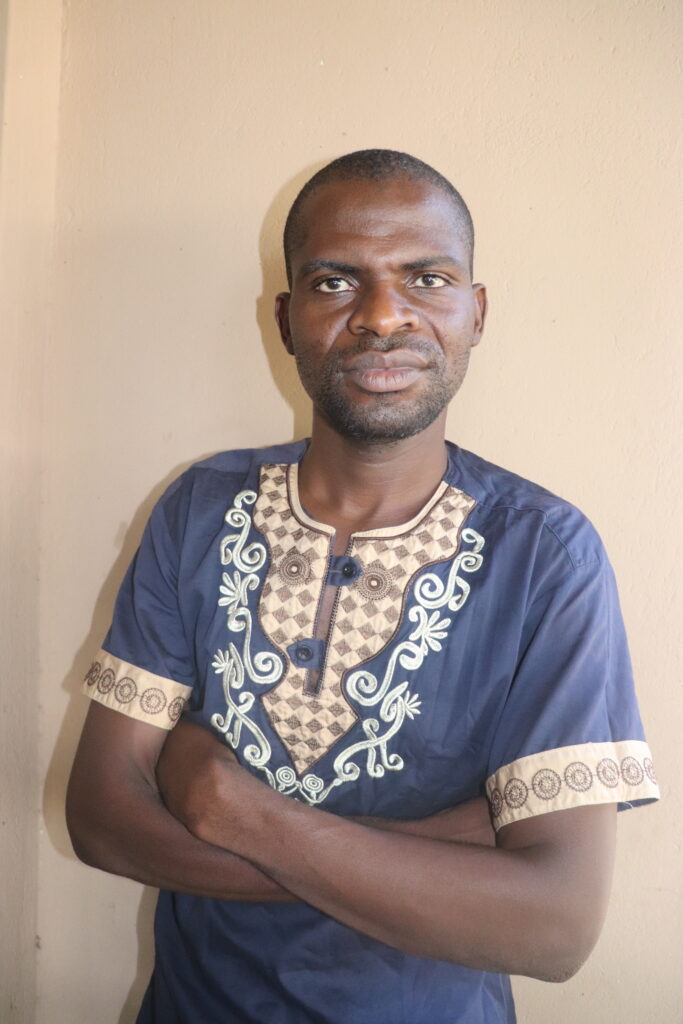
Never Winnie James Sebit, South Sudan; Student, Bachelor in Social Work, Rajagiri College of Social Sciences, India
Committee Member, Past Secretary

Norman T. Manyika, Student, Bachelor of Social Work, University of Zimbabwe, Zimbabwe
Committee member

Takudzwa Banda, Student, Bachelor of Social Work, University of Zimbabwe, Zimbabwe
Committee member

Ighalo Jennifer Benita, social work student, University of Benin, Nigeria
Committee Member

Haggai Muchapondwa, Bachelor of Social Work, Zimbabwe ezekiel Guti University, Zimbabwe
Committee member

Ziyandiswa Fono
Committee member

Devotion Mahamba, Student, Master of Social Work, Midlands State University, Zimbabwe
Committee member

Partners
- Midlands State University, Zimbabwe
- Makerere University, Uganda
- University of Zimbabwe
- Rajagiri College of Social Sciences, India
- National Association of Social Workers, Zimbabwe
- African Health & Ageing Research Centre, Ghana
- People Centred- Journal of Development Administration (JDA)
- University of Benin (UNIBEN), Nigeria
- Zivo Publishers, Zimbabwe
- Eswatini Medical Christian University, Eswatini
How to Become a Conference Partner
To become a partner, send an email to asw@africasocialwork.net
As partner, we expect that you will achieve at least 4 of the following:
- Share your logo for use in conference documents and promotional material.
- Select a student to join the organising committee.
- Select 2-5 students to present.
- Select an academic to present or chair at the conference.
- Arrange for students’ attendance of the conference.
- Link at least one assessment to the conference.
- Link the conference to research training for students.
- Link the conference to fieldwork for students.
- Fund the conference (Best Paper or Best Project; Awards/Rewards/Incentives for Organisers).
- Promote the conference on social media, notice boards, website and in classrooms.
Resources for planning DACC
Invitation letters
Below are examples and templates of invitation letters and calls
Program examples
Example of a previous program. Use this as a template for the program each year. Make sure you update DACC committee and partner details.
Example of a WhatsApp version of the program. Download and edit it and share on WhasApp.
Posters
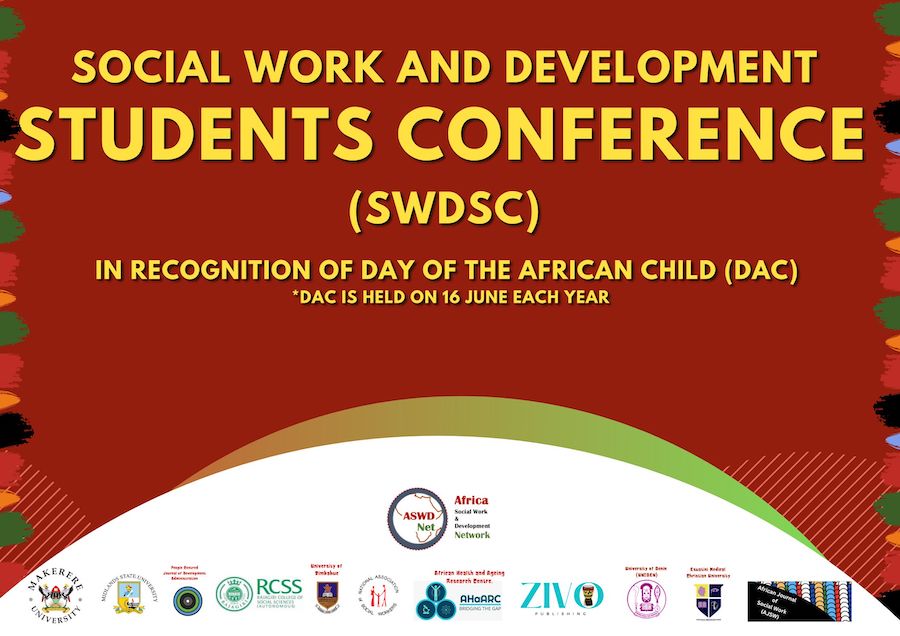
Main posters for DACC – these posters do not change but can be updated, they are usable year after year. They can also be used as Zoom backgrounds during meetings. There will be a poster of each year.
Reviewer guidelines
Presenter guidelines
Reporting template to AU
Certificates examples
There will be certificates for organizers, presenters and participants. Organizers will get more CPD points on their certificates.