Decolonising the African plate: Lessons on storytelling and valuing community knowledge from Magriza Made Me Cook
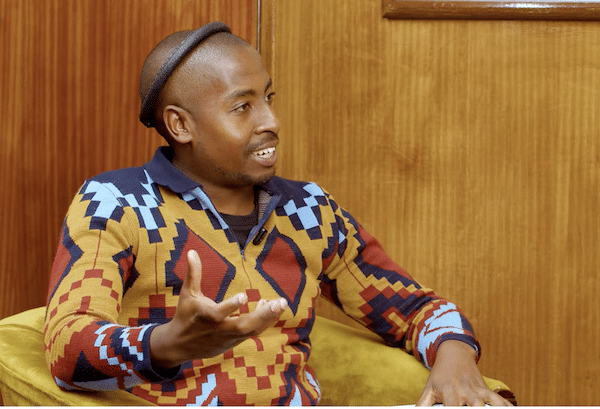
Magriza Made Me Cook is a Zimbabwean food documentary platform based in Bulawayo and hosted by chef and filmmaker Prince Sivalo Mahlangu. Magriza means grandmother in isiNdebele. The name honours the woman who raised him and taught him to cook. Since 2020 the show has recorded indigenous dishes, cooking methods and the people who hold this knowledge, in Zimbabwe and across the region. This post draws on press coverage of the show and on a long interview Prince gave on In Conversation with Trevor, recorded in Bulawayo. It looks at what Prince means by decolonising the plate, what his work teaches about storytelling as a research method, and what it offers social work and social development.
A grandmother’s kitchen as the starting point
Prince went to live with his maternal grandmother, Violet Masiye nee Nkomo, in 2002, when he was in Grade 7. He says that is where his real education began. She finished only primary school, yet he describes her as a professor “with 100 publications”. She taught him respect, to keep seeking knowledge, and to travel and learn how other people cook.
One of her dishes was amasi (fermented milk) mixed with sorghum that had been cooked, ground on a grinding stone and topped with honey. She explained each dish as she prepared it. Sorghum was an ancestral grain, tied to the ancestors and to beer making. Grinding stones were chosen with care, which Prince reads as applied science, since he understands the stone to add iron to the grain.
When she was preparing the dish, she would explain. So that’s the element of storytelling.
The show still follows this method.
From finance to food
Prince studied business management, majoring in corporate finance, at the National University of Science and Technology (NUST), and later did postgraduate study at the University of Fort Hare in South Africa. He first planned to make finance and fitness videos. Two experiences changed his course.
The first was living near Nigerian students in South Africa. They were proud of their food and cooked it far from home, while he could find almost no Zimbabwean food content online. The second came after his postgraduate studies. He visited his grandmother’s rural home and sat under a tree with elderly women as they talked about the uses of leaves, trees and cow dung.
Society would deem these people very uneducated. Then society would deem me educated because I’ve got a certificate.
He decided that view was wrong and set out to record their knowledge so the next generation could see where they come from. The show started on 21 February 2020, with early episodes filmed in his brother’s kitchen. His family had hoped he would become a professor, and his grandmother was angry when he left academic work for cooking. Five years later, he described the brand as part of the nation’s cultural and heritage record, an outcome he had not planned.
From townships to villages
Season one covered Cowdray Park, Bulawayo’s largest township, Mzilikazi township, and Chief Dakamela’s cultural festival and awards at eBabambeni in Nkayi. The team then moved from weekly uploads to a seasonal format. Prince describes this in farming terms: Harvest first, then create the content.
The Taste of Zimbabwe series began in 2021 with Nambya food and went on to cover Kalanga, Sotho and other groups. Season two expanded it, with episodes including:
- Tsonga and Shangani food at the Budula Festival in Muhlanguleni, Chiredzi South
- Tonga food in Binga, in the Zambezi Valley, focusing on preservation, wood ash and local grains rather than commercial oils and additives
- Karanga food near Great Zimbabwe, with local elders
- San (Tjwao) food in Tsholotsho District, in Chief Goledema’s area
- Venda food in Malala Village, Beitbridge, including tshidzimba and thophi and the cultural guidance of the makhadzi
The series gives equal screen time to language groups whose food rarely appears in national media.
Prince says documentary work is costly. Research, travel and equipment all need funding, and YouTube income is low and hard to predict. He would still like to film a new place every week, because he believes these food cultures are disappearing. When an elder dies, he says, “the library is burnt down”.
What decolonising the plate means
Self-worth and language
Prince traces the problem to what colonisation did to how Africans see themselves. He argues that people were taught to see no worth in their culture, dress, language and music, and food followed.
We do not see worth in the ingredients in our own lives.
The stigma lives in language. He objects to English names such as “snot apple” for a rich and delicious fruit, “monkey fruit”, and “opaque beer” for sorghum beer. He also avoids the older label most people use for this food and calls it indigenous food, because the older term makes people think of poverty and splits food into “ours” and “real”.
His elder brother, Makhosi Mahlangu, Director of the African Food Revolution (AFR), links the issue to eating together: “Decolonising the plate is what we are all about, because colonisation destroyed commensality.” Commensality means sharing a meal. Colonisation weakened the shared meal as a social practice, not only the ingredients on the plate.
Origins, science and zero waste
Prince is clear that decolonising the plate does not mean rejecting every food that arrived from outside. Maize came with the Portuguese, and peanuts and pumpkin also came from elsewhere. Zimbabweans have made maize their own, but he holds that small grains carry greater value. He ranks finger millet first for fibre, followed by pearl millet and sorghum.
He treats indigenous food as science. Milk fermentation, he says, “deserves an Oscar”. Men milk the cows in the kraal and women take over a fermentation that runs for several days, producing cream, amasi and whey. The whey is cooked into a sorghum porridge or given to the dogs, because nothing is wasted. He wants this taught from preschool to university.
From seminars to daily cooking
We are tourists of our own food.
People cook African dishes on Africa Day and buy fast food the rest of the year. Prince argues that workshops and seminars change little unless people go home and cook their own food. Decolonising the plate happens in the daily kitchen.
It also means changing some norms. When people online ask what a man is doing in the kitchen, he replies that men have always cooked certain dishes, such as meals prepared in the cattle kraal, and that keeping food culture alive sometimes means breaking norms.
He sees the work as collective. Documentation has to reach culinary school curricula, government support for small grain farmers, steady supply in supermarkets and hotel menus. He quotes Steve Biko on the need to come together to solve a problem that Africans did not create.
A wider movement
Prince attended the first African Chefs Gathering of the Alliance for Food Sovereignty in Africa (AFSA) in Addis Ababa, held under the theme “My Food is African: Chefs and Changemakers Shaping Food Futures”. He joined about 60 chefs from across the continent to discuss how to decolonise the plate, and he names Ngũgĩ wa Thiong’o’s Decolonising the Mind as an influence on this part of his work. In August 2026 he represented Zimbabwe at the Standard Bank Luju Food and Lifestyle Festival in Eswatini, giving demonstrations on fermentation and ancestral foraging.
The interest is also showing up in daily life. Bulawayo had fewer than ten indigenous food restaurants five years ago and now has around 30. Nutrition experts link the decline of indigenous grains, legumes and leafy vegetables to deficiencies in iron, zinc and vitamin A.
Storytelling as a research method
Prince’s work offers a clear model for research with communities.
Treat elders as experts: His encounter under the tree states the central claim of Indigenous research methods. Knowledge held outside the academy is still knowledge, and those who hold it are experts.
Start close to home: He speaks of the power to document the stories of people near you. A brother, an uncle or a neighbour each has a story worth recording.
Prepare, then let the community lead: His team researches before entering a community, but control of the story then passes to the participant.
We always allow the community or the person to lead the story.
This fits the San Code of Research Ethics and its instruction to come through the door, not the window.
Use the speaker’s own language: Elders are interviewed in their own languages so nothing is lost in translation, and the team translates for a wider audience afterwards. The story is told from within the community, not through an external lens. This is knowledge sovereignty in practice.
Respect what cannot be shared: At a spiritual shrine, the team does not record the sacred practices. It records only the food around the shrine.
Accept critique: A friend told him early on that he was missing the story behind the food. Prince changed the show in response. Reflexivity is part of the method.
Reading the show through Ubuntu
Ubuntu sees development as happening at five connected levels: family, community, society, environment and spiritual. Magriza Made Me Cook touches all five.
Family: The show begins with a grandmother teaching a grandson. Prince also credits his father with teaching him to value African culture and to speak up with respect, and his mother with teaching him care and attention.
Community: The knowledge sits with village elders, chiefs and festivals. Episodes are filmed in named villages and under named chiefs, with the community leading the story.
Society: The show builds a national record of food knowledge and reaches audiences in Zimbabwe, South Africa, Botswana, Zambia, the United Kingdom, the United States and Australia. The restaurant growth in Bulawayo shows the same knowledge creating jobs and supply chains.
Environment: Prince describes foraging with the example of blackjack, which many people treat as a weed but which he calls a nutritious vegetable. Sorghum, he notes, started as a wild plant that African farmers later cultivated. Fermentation and zero waste fit food to local land and seasons.
Spiritual: The Venda episode centres the sacred guidance of the makhadzi. Prince links sorghum to the ancestors, and his team keeps sacred practices off camera.
What this means for social work and social development
Food security work: Nkayi, where the Mahlangu brothers come from, has been described as one of the most food insecure districts in the world. Nutrition, school feeding and household food programmes can draw on indigenous grains and vegetables that people already know how to grow and cook.
Work with elders: Elders hold food knowledge that is at risk. Intergenerational projects that record and share this knowledge are a form of community work, and they give elders a valued social role.
Storytelling in practice: The same principles apply to life story work, narrative practice and community assessment. Let people lead, use their language, and treat their knowledge as expertise.
Shared meals as method: If colonisation weakened commensality, then restoring the shared meal is a practical tool for group work and community building.
Documentation as decolonial practice: Recording oral knowledge raises questions of consent, ownership and benefit sharing. How a project enters a community, and who benefits from the recording, matters as much as the record itself.
Livelihoods: Indigenous food restaurants already report a shortage of village chickens. Indigenous food value chains offer income for small farmers, women and young people.
Teaching: Episodes and interviews like this one are free and grounded in community voices. They are useful material for social work and development education on culture, food and decolonisation.
Artificial Intelligence (AI) acknowledgement
The author listened to the full interview with Prince Sivalo Mahlangu on In Conversation with Trevor and noted the key ideas. The author then selected the topics and lessons most relevant to Mtandao readers. Claude, an AI tool, helped bring the ideas together and identify further sources online. The author reviewed and verified every stage.
Further in depth reading
- Prince Sivalo Mahlangu on In Conversation with Trevor (YouTube)
- Magriza Made Me Cook (official website)
- Decolonising the plate: How the Mahlangu brothers are healing Africa’s broken table (The Herald)
- Prince Sivalo puts Ndebele cuisine on regional stage at Luju Festival (The Herald)
- Back to the roots: Zimbabwe’s [indigenous] food revival gains momentum (Africanews)
Use the form below to subscibe to Owia Bulletin.