Skip to content
  • Home
  • About|Join
  • Ethics
  • Events
  • Certificates
  • Decolonise calculators
  • Owia Bulletin
  • Journals
  • Mfundo|CPD
  • Fundi | Dictionary
  • Awards
  • DACCS
  • Ushahidi
  • Kuumba
  • AfroMe
  • Submit
  • Exhibitions
  • Consultancy
  • Catalogue
  • Blog
  • Shop
  • Contact us
  • Twitter
  • Facebook
  • LinkedIn
  • YouTube
  • Academia AJSW
  • Instagram
  • TikTok
Africa Social Work and Development Network | Mtandao waKazi zaJamii naMaendeleo waAfrica
Africa Social Work & Development Network | Mtandao waKazi zaJamii naMaendeleo waAfrika

Africa Social Work & Development Network | Mtandao waKazi zaJamii naMaendeleo waAfrika

We create, aggregate and disseminate information and resources to facilitate Social Work and Social Development in Africa.

  • ACADEMICS
    • Lecture Resources
    • Lectures
    • Fieldwork Resources
    • Approaches to assessing learning
    • Types of University Assessments
    • ASWDNet Guide to Writing (Journals)
    • ASWDNet Guide to Writing and Publishing
  • PRACTITIONERS
    • Values and Ethics in Africa
    • Africa Social Work and Development Awards
    • Continuous Professional Development (CPD)
    • Templates, Models, Frameworks, Assessment Tools and Questionnaires
    • African Theories
    • Supervision
  • STUDENTS
    • Day of the African Child Conference of Students (DACCS)
    • 12 Steps to Get Published
    • Tips for Prospective Doctoral Students
    • ASWDNet Guide to Writing (Academic Research Brief| Proposal | Thesis)
    • Writing a journal article could be as easy as making fufu, nsima, ugali or matoke!
    • Lectures
    • Glossary of Publishing Terms
  • RESEARCHERS
    • Research Methods
    • Qualitative data levels of analysis
    • African Independent Ethics Committee (AIEC)
    • Research Questions Bank
    • Publisher/Journal Checker
    • Research Strategies
    • Reviewers
    • Ubuntu Research Group (URG)
    • Kuumba (Mentoring)
      • SURVEY OF SOCIAL PROBLEMS AND CHALLENGES FOR AFRICA
      • Mentees
      • Mentors
      • Guidelines
    • Afrocentric Mentoring Project (AfroME)
  • ASSOCIATIONS
  • TRAINING INSTITUTIONS
  • COMMUNITIES
    • Ubuntu Fundraising and Charity Principles
    • COVID-19
    • Social Work for Children
    • Funda KiSwahili
  • MEMBERS
  • African Philosophy
  • African Theories
  • Research Methods
  • Library | Databases
  • Social Work
    • Social Work Education institutions (SWEI) in Africa
    • Biography of Social Development in Africa
      • Charlotte Makgomo-Mannya Maxeke (1871-1939)
      • Zahia Marzouk (1906 – 1988)
      • Regina Gelana Twala (1908-1968)
      • Mai Musodzi Chibhaga Ayema (1885-1952)
      • Nnoseng Ellen Kate Kuzwayo (1914 – 2006)
      • Joshua Mqabuko Nyongolo Nkomo (19 June 1917 – 1 July 1999)
      • Jairos Jiri (1921 – 1982)
      • Kenneth Buchizya Kaunda (1924-2021)
      • John Samuel Mbiti (1931-2019)
      • Gibson Mthuthuzeli Kent (1932-2004)
      • Winnie Madikizela-Mandela 1936–2016
      • Ngugi wa Mirii (1951 – May 3, 2008)
      • Andrew Chad Nyanguru (28 Mar 1953-14 May 2014)
      • Professor Rodreck Mupedziswa
      • Edwell Kaseke (1954-2017)
      • Lovemore Mbigi
      • Selassie Seyoum Gebre (1936-)
      • Arega Yimam (-c1989)
      • Dr Noel Garikai Muridzo
      • Dr Edmos Mthethwa
      • Phillip Manyanye Bohwasi
      • Wassie Kebede
      • Gidraph G Wairire
      • Wangari Muta Maathai
      • Uzoma Odera Okoye, Dr
    • Social Work Journals and Other Serial Publications in Africa (ASWDNet Index)
    • Association of Social Work Education in Africa (ASWEA) – 1965 to 1989
    • Future of Social Work in Africa
    • Environmental Social Work
  • Development
  • Ubuntu
    • Ubuntu Research Group (URG)
    • Ushahidi Platform
    • Ubuntu Fundraising and Charity Principles
    • Ubuntu Bibliography
    • Ubuntu Survey
    • Ubuntu Annual Lecture
    • Ubuntu Interview Guide Sample
  • Africa
    • African Anthem (African Union)
    • Umoja waAfrica (African Union)
    • African symbols and alphabets
    • Fundi – The African Dictionary and Encyclopaedia of Social Work and Development
    • Africa Religion (uAfrica)
    • Africa Research Ethics and Malpractice Statement (AREMS)
    • The San Code of Research Ethics (San Code)
  • Blog
  • Mfundo | CPD
    • Courses
      • Mental Health Masterclass - Friendship Bench
      • Ubuntu Basics Course
      • Research Ethics Course (REC)
      • Peer Reviewers Course (Hwe Mu Dua)
    • Profile
    • How to do Mfundo courses
    • Mfundo Terms and Conditions

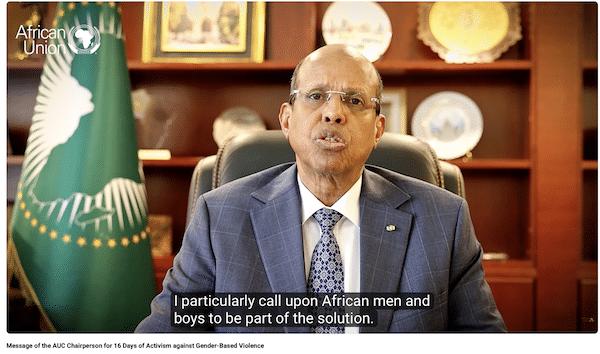
Message of the AUC Chairperson for 16 Days of Activism against Gender-Based Violence

Posted on 28 November 202628 November 2026 By Rugare Mugumbate No Comments on Message of the AUC Chairperson for 16 Days of Activism against Gender-Based Violence

Today, as Africa joins the international community in marking the International Day for the Elimination of Violence Against Women, I reaffirm the African Union’s firm commitment to ending all forms of violence against women and girls.

Violence against women and girls has no place in the Africa we want to build. It is a violation of fundamental human rights, an affront to human dignity, and a serious obstacle to peace, security and development.

Across our continent, too many women and girls continue to experience violence in their homes, in their communities, in workplaces and, increasingly, in digital spaces. In situations of conflict and displacement, women and girls face even greater risks, including sexual violence and exploitation. This must end.

In February 2025, African Heads of State and Government adopted the African Union Convention on Ending Violence Against Women and Girls. This landmark convention represents Africa’s collective determination to confront violence, protect survivors and end impunity.

But adopting a convention is only the beginning. Our commitment must now be measured by action. I therefore call upon all African Union member states to accelerate the signature and ratification of the convention and take concrete steps towards its implementation.

We must ensure that laws are enforced, that survivors have access to protection and justice, and that perpetrators are held accountable. Governments must also invest in prevention, strengthen support services, and address the harmful attitudes and practices that perpetuate violence.

The African Union Commission will continue working with member states and partners to advance these commitments and support the implementation of our continental framework.

Ending violence against women and girls is not the responsibility of governments only. It requires the engagement of communities, community and religious leaders, civil society, young people and the private sector. I particularly call upon African men and boys to be part of the solution. Respect for women and girls, equality and non-violence must become values we uphold in our families, schools and communities.

To the women and girls who have experienced violence, I reaffirm our commitment to your dignity, safety and right to justice.

As we begin these 16 Days of Activism, let us remember that our responsibility extends far beyond these 16 days. No woman or girl should live in fear. No survivor should be denied justice, and no perpetrator should enjoy impunity.

Together, let us build an Africa where every woman and every girl can live in safety, exercise her rights and fulfil her aspirations.

I thank you.

African Union, Gender

Post navigation

Previous Post: Nommo: an African relational research method that values griots (human libraries), speech and narratives
Next Post: Policy paper: Young people at the centre of Uganda’s HIV crisis: Disproportionate vulnerability, persistent prevention gaps and policy priorities

Leave a Reply Cancel reply

You must be logged in to post a comment.

AFRICA-WIDE INSTITUTIONS

ASWEA logo

ASWEA

1971-1989

Umoja waAfrika (AU) Former OAU Toto/Brief | Agenda63

ADF

Part of ADB

ASSWA logo

ASSWA

Since 2005

PAWO (AU Arm)

Facebook | X

COUNTRY INFORMATION

  • Algeria 🇩🇿
  • Angola 🇦🇴
  • Benin 🇧🇯
  • Botswana 🇧🇼
  • Burkina Faso 🇧🇫
  • Burundi 🇧🇮
  • Cabo Verde 🇨🇻
  • Cameroon 🇨🇲
  • Central African Republic 🇨🇫
  • Chad 🇹🇩
  • Comoros 🇰🇲
    • Mayotte of Comoro
  • Congo, DR 🇨🇩
  • Congo 🇨🇬
  • Cote D’Ivoire 🇨🇮
  • Djibouti 🇩🇯
  • Egypt 🇪🇬
  • Equatorial Guinea 🇬🇶
  • Eritrea 🇪🇷
  • Eswatini 🇸🇿
  • Ethiopia 🇪🇹
  • Gabon 🇬🇦
  • Gambia, The 🇬🇲
  • Ghana 🇬🇭
  • Guinea 🇬🇳
  • Guinea-Bissau 🇬🇼
  • Kenya 🇰🇪
  • Lesotho 🇱🇸
  • Liberia 🇱🇷
  • Libya 🇱🇾
  • Madagascar 🇲🇬
  • Malawi 🇲🇼
  • Mali 🇲🇱
  • Mauritania 🇲🇷
  • Mauritius 🇲🇺
  • Morocco 🇲🇦
  • Mozambique 🇲🇿
  • Namibia 🇳🇦
  • Niger 🇳🇪
  • Nigeria 🇳🇬
  • Rwanda 🇷🇼
  • Sao Tome and Principe 🇸🇹
  • Senegal 🇸🇳
  • Seychelles 🇸🇨
  • Sierra Leone 🇸🇱
  • Somalia 🇸🇴
  • South Africa 🇿🇦
  • South Sudan 🇸🇸
  • Sudan 🇸🇩
  • Togo 🇹🇬
  • Tanzania 🇹🇿
  • Tunisia 🇹🇳
  • Uganda 🇺🇬
  • Western Sahara (SADR)
  • Zambia 🇿🇲
  • Zimbabwe 🇿🇼
  • “Dongo”
  • ‘Wakanda’
  • Umoja waAfrica (African Union)
  • Afro-Caribbeans
    • Haiti
  • Afro-Latinos
  • Melanesia
    • Aboriginal Countries
    • Papua New Guinea
    • West Papua
  • Afro-Asians ‘Sidi’

Decolonisation Calculator (DECA). What is the rate of decolonisation of social work and development training, education and research in your country? Use this simple calculator.

COVID-19 FINAL UPDATE: Africa Infections: 12.3 million people. Deaths 260 000. World infections: 650 million. Deaths 6.7 million. Data aggregated by ASWDNet on 12 December 2022. View this COVID-19 references list for Africa.

Search

Policies | Protocols | Guidelines | Checklists

  • Ubuntu Acknowledgements
  • AI Policy
  • San Code of Ethics
  • Journal Writing Guide
  • Ubuntu Principles in Fundraising & Charity
  • Comments Policy
  • Publisher Checker
  • Decolonisation Calculator
  • African Research Ethics & Malpractice Statement
  • Privacy & Cookie Policy
  • Email, Data and Social Media Policy
  • Comments Policy

Recent Posts

  • Policy paper: Young people at the centre of Uganda’s HIV crisis: Disproportionate vulnerability, persistent prevention gaps and policy priorities
  • Message of the AUC Chairperson for 16 Days of Activism against Gender-Based Violence
  • Nommo: an African relational research method that values griots (human libraries), speech and narratives
  • Artificial Intelligence for Ubuntu Studies (AI4US): a ScienceOpen collection
  • How to decolonise your use of Claude.AI?

Email Sign In


Website Log In


Mfundo | Courses | CPD Log In


Members Portal

COPYRIGHT © 2020 to 2030: Mtandao - Africa Social Work and Development Network (ASWDNet) | UBUNTU ACKNOWLEDGEMENT - We pay our respects to those who came before us, our Elders and forefathers and mothers, who are the sources and protectors (against colonisation) of the knowledge and wisdom that continue to shape lives, teaching, learning, research, and practice across generations. Because they were, we are. Asante. Siyabonga. Tatenda. Waaw. Àṣé. INDIGENISATION STATEMENT - Mtandao is a pan-African network grounded in Ubuntu. We recognise the sovereignty, knowledge systems and cultural protocols of African and Indigenous peoples, and we use these knowledges as primary frameworks in our publishing, teaching and research.