
Africanising colonial religion?
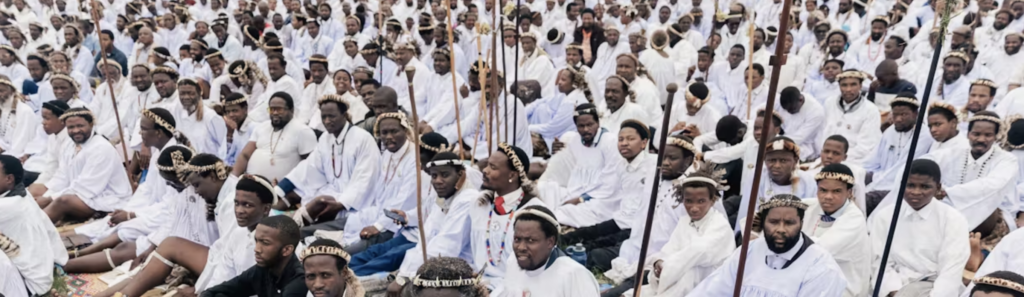
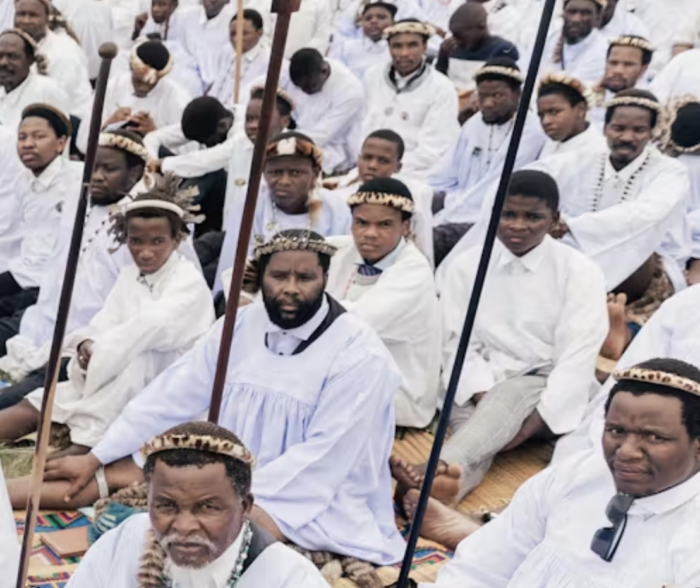
The image shows the intersection of African religion and Abrahamic religion. Can you pick some examples? The round-headed spiritual stick is found in African religion, so is the animal skin head gear. The while robes are characteristic of Islamic and Christian practices.
- 1. Blending African religion with Christianity and Islam
- 2. Family and spirituality
- 3. Community worship and support
- 4. Society and leadership
- 5. Connection to the environment and agriculture ceremonies
- 6. Spiritual protection and healing
- 7. Church dress and Islamic dress in Africa
- 8. Religious artefacts and symbols
- 9. Religious festivals and African religious influence
- 10. Balancing Abrahamic religion and African identity
In colonial religion, all African artefacts, symbols, languages, songs, dances, stories, ancestries and spiritual healings are considered sinful. This colonising view impacts how African knowledge, inventions and aspirations are perceived, they are often seen as dismissible and replaceable. This is the philosophy that resulted in colonial social work.
Yet everyday, there are people dismantling colonial social work, replacing it with indigenous, developmental and empowering social work.
To know more or recollect in-depth about this, read the piece below.
In-depth reading: The Africanisation of Abrahamic Religion: Blending African Spirituality with Christianity and Islam
The text in this text box was AI generated. 17 prompts were used to make the content more appropriate to the website’s focus on social and development in Africa. After the text was copied, it was revised by the extractor and reviewed by an editor before publication. The prompts can be requested from our Admin. The AI apps used were ChatGPT and DeepSeek. The extraction was done on 17 February 2025.
The forceful and often deceitful spread of Christianity and Islam across Africa has resulted in unique adaptations of these Abrahamic religions, incorporating elements of African religious beliefs and practices. This process of Africanisation has created a distinctive form of Christianity and Islam in Africa, where African spirituality and cultural values are integrated with the teachings of Christianity and Islam. This blending is evident in various aspects of daily life, including family structure, community worship, spiritual practices and environmental practices. Concepts like Ubuntu (reciprocity and justice), ujamaa (communalism), and sankofa (learning from the past to move forward) shape the way these religions are lived out in Africa. The following sections explore how African religion, family, community, society, environment, and spirituality have influenced African Christianity and Islam.
1. Blending African religion with Christianity and Islam
- African religion teaches that the spiritual and physical worlds are connected, and this belief continues in African Christianity and Islam.
- Many African Christians and Muslims believe that misfortunes or blessings come from spiritual forces, requiring prayer, sacrifices or rituals for protection and success.
- Ancestors are sometimes seen as part of God’s plan, rather than being rejected in line with colonial religion.
- Prophets, marabouts (Islamic spiritual leaders), and church pastors act as intermediaries, similar to African spiritual figures.
- Ubuntu (humanity towards others) and ujamaa (community and cooperative economics) can be seen in the emphasis on collective well-being and social responsibility in both African Christianity and Islam.
2. Family and spirituality
- In African religion, family is central to worship, and this continues in African Christianity and Islam.
- Many African religious practices, such as naming ceremonies, marriages, and funerals, have been blended into Christian and Muslim rituals.
- In both faiths, family problems—such as sickness, barrenness, or misfortune—may be seen as having spiritual causes that require prayers, healing, or religious rituals.
- Ubuntu shapes the family structure in African communities, where well-being is shared collectively, influencing how spirituality is understood and practiced within families.
3. Community worship and support
- Worship in African Christianity and Islam is deeply communal, reflecting African religious gatherings.
- African Christian churches often include dancing, drumming, clapping, and singing, similar to African religious ceremonies.
- African Muslim communities, especially Sufi groups, practice dhikr (chanting prayers) in large gatherings, just as African religion encourages collective spiritual acts.
- Churches and mosques provide financial and social support, similar to African religious traditions of helping one another.
- Both ujamaa and Ubuntu are mirrored in these practices, emphasising the interconnectedness of individuals within a community and supporting collective growth and prosperity.
4. Society and leadership
- African religious traditions place great respect on parents, elders and spiritual leaders, which continues in African Christianity and Islam.
- African Christian churches are often led by prophets and healers, similar to traditional African religious figures.
- Many African Muslim communities follow Sufi sheikhs or marabouts, who provide spiritual guidance and healing.
- Religious leaders also act as moral and political guides in society, like African religious elders.
- These leaders often embody the values of Ubuntu, promoting justice, harmony, respect, reciprocity and communal unity, which guide societal progress and leadership.
5. Connection to the environment and agriculture ceremonies
- African religious traditions teach that the land, water, and animals are sacred and must be respected.
- Some African Christian and Muslim groups hold special prayers for rain, good harvests, and protection from drought.
- Agricultural ceremonies, such as first-fruit offerings, have been adapted into Christian and Muslim practices in Africa.
- In some African Muslim communities, special Quranic prayers are recited over farms and animals to bring blessings, similar to African religious rituals.
- Some African churches hold thanksgiving ceremonies after a successful harvest, where food is shared with the community and the church.
- Sankofa, which emphasises learning from the past to build a better future, is evident in the agricultural practices that honour traditional rituals and offer respect for the environment.
6. Spiritual protection and healing
- Healing is central in both African Christianity and Islam, just like in African religion.
- Many African Christian churches use anointing oil, holy water, and laying of hands for healing, similar to African religious healing rituals.
- African Muslims use taweez (amulets with Quranic verses), spiritual baths, and prayers to seek protection and healing, much like traditional African healers.
- Some African churches and Sufi Islamic groups believe that sickness, bad luck, and misfortunes can come from spiritual attacks, requiring special prayers for protection.
- Ubuntu can be observed in these practices, where healing is not just for an individual, but for the whole community’s spiritual balance.
7. Church dress and Islamic dress in Africa
- Dress in African Christianity and Islam often reflects both religious and African religious traditions.
- In African churches, many church leaders wear robes, headscarves, and embroidered garments similar to African religious priests.
- Some churches use sacred staffs, crosses, and beads, reflecting African religious artefacts used for power and protection.
- In African Islam, flowing robes, turbans, and special prayer beads (misbaha) are common, influenced by both Islamic and African religious styles.
- Many Christian and Muslim women wear headscarves as a sign of modesty and respect, similar to African religious customs.
- The notion of Ubuntu is often reflected in the communal style of dressing, where individuals wear traditional garments to symbolise unity, identity, and belonging to the wider community.
8. Religious artefacts and symbols
- In Africa Independent Churches (AICs), religious objects such as wooden staffs, anointing oil, crosses, and sacred garments have spiritual meanings, similar to African religious artefacts.
- Some churches keep special altars, holy water, and prayer mats, reflecting African religious practices of setting apart sacred spaces.
- In African Islam, prayer beads, Quranic scrolls, and protective amulets are widely used, much like charms and sacred objects in African religion.
- Some AICs and Sufi Muslim groups use bells, incense, and sacred water for purification, similar to African religious cleansing rituals.
9. Religious festivals and African religious influence
- Many African Christian churches mix local religious and cultural traditions with Christian holidays like Christmas and Easter.
- African Muslims celebrate Eid with large community feasts, drumming, and storytelling, similar to African religious celebrations.
- Some African Muslim communities hold special Mawlid (prophet’s birthday) celebrations, which include drumming, chanting, and dancing, reflecting African religious festival traditions.
- In both Christianity and Islam, night vigils, fasting, and communal feasts have been influenced by African religious practices.
- These celebrations emphasise the values of ujamaa and Ubuntu, where community unity, sharing, and collective celebration are at the heart of these religious and cultural observances.
10. Balancing Abrahamic religion and African identity
- African Christianity and Islam allow people to be Christian or Muslim while keeping African religious values about family, community, society, environment and spirituality.
- Many African Christians and Muslims believe that God (Allah), ancestors (e.g. dead Kings, prophets and their families) and spirits (e.g. angels and Satan) are active in everyday life, just as African religion teaches that God, spirits and ancestors influence daily events.
- Religious leaders in African Christianity and Islam are seen as healers, protectors, and guides, similar to figures in African religion.
- Sankofa and Ubuntu can be seen in the way African identity and spirituality are preserved while integrating aspects of Christianity and Islam, ensuring that ancestral wisdom and communal unity continue to guide daily practices.
Use the form below to subscibe to Owia Bulletin.