
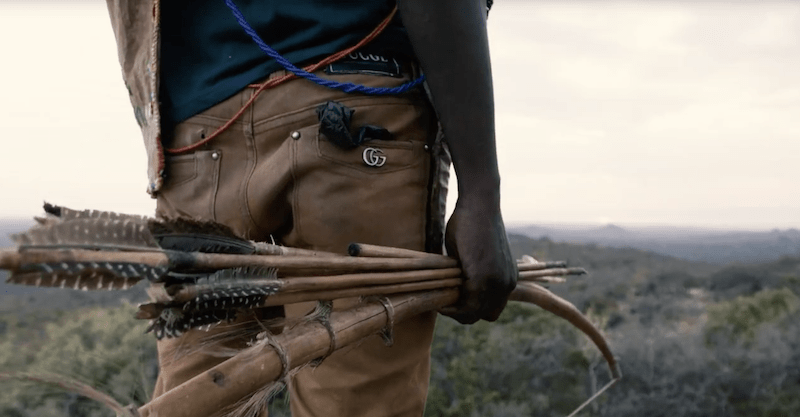
Hadzabe people’s role in African and global sustainable development
Succeeding without tech, the environment as a teacher and researcher
The Hadzabe (singular Hadza), a 40,000 year-old hunter-gatherer people gain legal rights over their ancestral lands in Tanzania, allowing them to protect their forests from farmers and herders seeking to clear the land. Deforestation in the core Hadzabe territory has since declined, compared to a significant increase in the wider region. Populations of endangered African elephants, African wild dogs, lions and leopards have increased, and the Hadzabe have earned over US$450 000 from trading carbon offsets. This remarkable progress earned the Hadzabe UNDP’s Equator Prize, which recognizes indigenous peoples’ efforts to reduce poverty through the conservation and sustainable use of biodiversity.
The Hadzabe of Tanzania are among the last remaining hunter–gatherer peoples in Africa. They live close to nature, relying on traditional knowledge for food, water, and survival. Their way of life places them in an important position in global sustainable development discussions. Other communities with similar traditions include the San of Southern Africa, the Khoi of Southern Africa, the Sandawe of Tanzania, the Ogiek of Kenya, the Batwa (Twa) of Central Africa, the Bambenga (Mbenga) and Bambuti (Mbuti) of the Congo Basin, and the Aka and Baka forest peoples of the same region. All face common struggles of land dispossession, marginalisation, and threats to their cultures, while at the same time contributing valuable knowledge for sustainability.
Implications for social work and development
Rethinking development paradigms
Social work and development often assume that modernisation and integration into markets are universal goals. The Hadzabe remind us that diverse ways of life can also contribute to sustainability. Social work must therefore challenge dominant models of development that marginalise Indigenous knowledge and lifestyles.
Valuing indigenous knowledge for sustainability
The Hadzabe’s ecological knowledge of forests, wildlife, and water cycles aligns with global sustainable development goals, especially climate action and biodiversity protection. Development practice should integrate such knowledge into policy, resource management, and climate adaptation strategies.
Rights, justice, and self-determination
The Hadzabe face land grabs, marginalisation, and pressure to assimilate. This highlights structural injustice. Social work must advocate for Indigenous peoples’ rights, land tenure, and cultural survival, framing these as justice issues, not just development challenges.
Community-centred development
The Hadzabe thrive through collective decision-making, sharing, and reciprocity, contrasting with individualised, profit-driven systems. Social work can learn from and promote communal approaches that strengthen social cohesion and resilience.
Challenging global inequalities
The struggles of the Hadzabe highlight how global forces such as tourism, extractive industries, and climate change disproportionately harm marginalised communities. Development must address these structural inequalities and amplify Indigenous voices in global sustainable development debates.
Ethics of intervention
Efforts to “help” the Hadzabe often risk erasing their culture. Social workers and development practitioners must adopt participatory, rights-based, and culturally sensitive approaches, ensuring the Hadzabe define what development means for them.
Conclusion
The story of the Hadzabe people underlines that sustainability is not only about technology and policy but also about protecting Indigenous knowledge, rights, and ways of life. For social work and development, this means shifting from imposing solutions to supporting justice, cultural survival, and self-determination. The Hadzabe and other hunter–gatherer communities in Africa, such as the San, Khoi, Sandawe, Ogiek, Batwa, Bambenga, Bambuti, Aka, and Baka, remind us that alternative pathways to sustainable development exist, rooted in harmony with nature and community solidarity.
Use the form below to subscibe to Owia Bulletin.