
[aioseo_breadcrumbs]



Designing philosophical, theoretical, and conceptual approaches in research
When writing a research proposal, report or publication manuscript, one of the most important choices you make is how to ground your study. Research is never neutral; it is always shaped by how you see the world, the questions you ask, and the knowledge systems you privilege. That is why every strong piece of research should be guided by philosophical, theoretical, or conceptual foundations.
But what does that mean in practice? And how do we prioritise African ways of knowing while doing so?
Three options for guiding your research
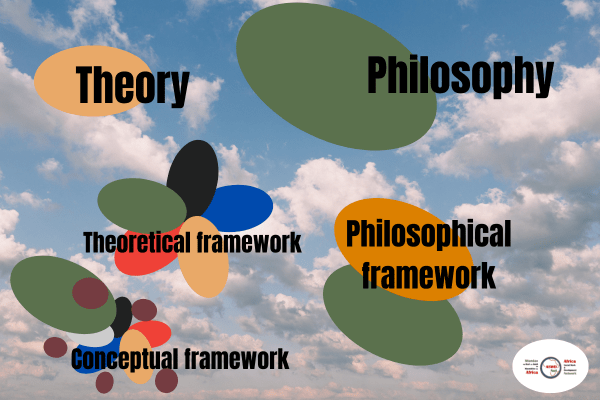
Philosophy or theory
You may choose to base your study on one guiding philosophy or theory. For example, Ubuntu philosophy (reciprocity and justice) can serve as a philosophical foundation for interpreting social relationships. There are also many theories of Ubuntu that apply this philosophy to different aspects of life, such as education, governance, or community practice. Likewise, ujamaa (communalism) can guide research on community development. A single philosophy or theory provides focus and clarity.
For Ubuntu please note that Ubuntu is a philosophy which has many theories. Therefore, there are theories of Ubuntu, not Ubuntu theory.
Case study: gender research
A researcher studying gender roles in rural communities may draw on Ubuntu as a guiding philosophy. By using theories of Ubuntu that emphasise reciprocity and care, the researcher can frame gender not only in terms of power dynamics but also in relation to communal responsibilities and interdependence. This perspective challenges Western gender theories that often focus primarily on individual rights, by showing how gender equality in African contexts can be advanced through collective well-being and mutual accountability.
Theoretical or/and philosophical framework
A framework combines two or more theories or philosophies. For example, drawing together Afrocentricity and Pan-Africanism creates a framework for understanding African identity and unity in development work. A framework allows for richer interpretation by bringing multiple lenses into conversation.
You can not build a framework on one theory and you can not build a philosophical framework on one philosophy.
Conceptual framework
This is the broadest option. A conceptual framework blends philosophies, theories, models, literature, and the researcher’s own ideas. For instance, a researcher might combine Ubuntu philosophy, African feminist thought, mutual aid models, and relevant literature to construct a unique perspective. A conceptual framework is particularly useful when exploring new or complex issues that cannot be explained by a single theory.
Why African foundations matter
Too often, research conducted in Africa is guided by Western theories that do not reflect African lived realities. By prioritising African philosophies, theories, models, and literature, we not only decolonise knowledge production but also ensure that our research is relevant, just, and transformative.
African-centred thought offers powerful resources: Ubuntu emphasises interconnectedness; ujamaa highlights communal well-being; sankofa reminds us to look back in order to move forward. These are not abstract ideas; they are lenses that reshape how we interpret problems, design methods, and analyse data.
A call to researchers
Next time you design a study or write a report, ask yourself:
What philosophy or theory best speaks to my research problem?
Do I need to combine several into a framework?
Should I build a conceptual framework that includes my own synthesis of African and global ideas?
By making these choices consciously, and by prioritising African intellectual traditions, we create research that is not only rigorous but also meaningful for the communities we study and serve.
Use the form below to subscibe to Owia Bulletin.