
Akulahlwa Mbeleko Kufelwa: A Letter to the Children on the Streets, and to Every Young Person Life Has Tried to Break
How this piece is organised. It opens with a short poem, followed by a few words in memory of Oliver Mtukudzi’s award winning song and movie Neria, which supports the theme of this article. Then comes the main article. The article begins by explaining what Akulahlwa Mbeleko Kufelwa means and why this letter was written. It then speaks to each group of young people in turn and closes with a word to all of us as a community.
Dedicated to the children living on the streets, the children carrying hurt that others caused them, the children rejected by their families and communities, the children sitting in prison cells tonight, the young people in universities and colleges who feel the pressure is too much to bear, and the young people at home without work, still waiting for a door to open.
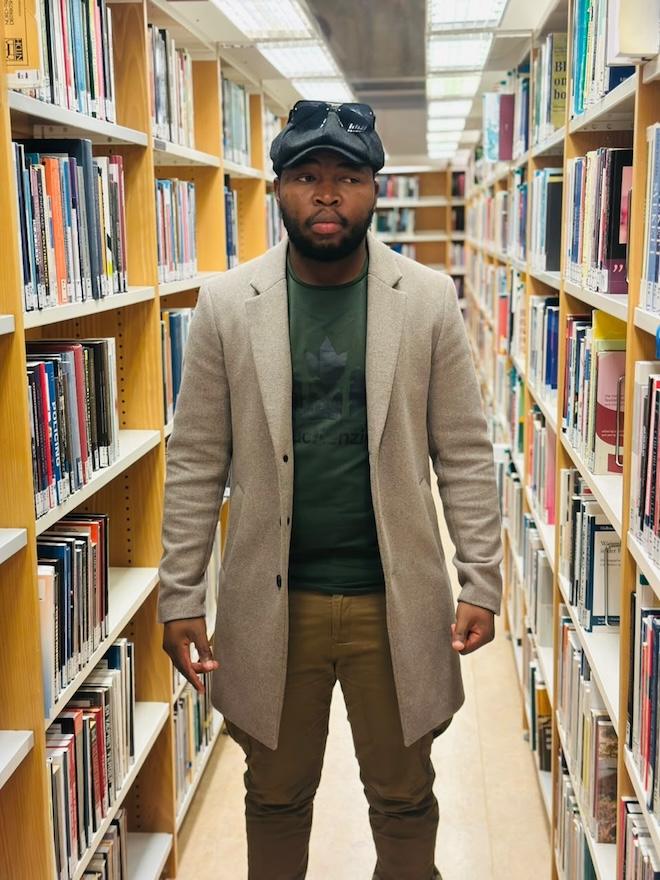
The author: I am Lwazi Sanele Mavuso, a social work graduate from Eswatini. I obtained my Bachelor of Social Work (Honours) from Eswatini Medical Christian University and am currently pursuing a Master of Social Science in Social Work at the University of KwaZulu-Natal (UKZN), South Africa. I am also participating in a master’s-level exchange programme in Childhood Studies at the Norwegian University of Science and Technology (NTNU) in Trondheim, Norway. I love research, particularly in child protection, child offender rehabilitation, indigenous knowledge systems, and Afrocentric approaches to social work. Through my contributions to academic publications and conference presentations, I aim to advance research that supports children, families, and communities.
A mother wept beside a little grave.
Her arms were empty and her heart was torn.
But she did not throw the carrier away;
she folded it and waited for the morn.
And you who sleep where the cold winds blow,
you who were hurt, you who were chased,
you behind walls, you with books piled high:
your story is not over. It is not erased.
So, fold your pain but keep the cloth.
Hold on to hope and wait for the day.
The carrier is still yours to keep.
Akulahlwa mbeleko kufelwa.
Usarasa mbereko
Remembering Tuku’s Neria
This message was inspired by Oliver “Tuku” Mtukudzi’s song Neria. Tuku sang Neria for a woman who lost her husband and then lost almost everything else to his relatives. In the song, he sits with her in her grief. He tells her not to lose heart, that she is not alone, and that God has not left her. Across Africa, many of us have turned to that song on our darkest days. So, if you feel like Neria today, stripped of everything and alone, hear these words: do not lose heart Ungayilahli Imbeleko or in Shona Usarase Mbereko.
What the saying means
Our elders say, Akulahlwa mbeleko kufelwa (usarasa mbereko nekufirwa): you do not throw away the baby carrier because you have lost a child.
Picture a mother coming home from her child’s burial. The imbeleko, the cloth she once used to carry her baby on her back, is still there. Her heart is broken, yet she does not throw it away. She folds it and puts it aside, because she believes life will go on and another child may still come and use that carrier Imbeleko. One loss does not get to decide the rest of her life.
That is what our elders were teaching us. Life can turn upside down. You can lose people, lose your home, even lose hope. But you keep the carrier. Do not give up. Keep walking, because things can change, and one day you will win.
Why I am writing this
I am not writing this from a soft chair, looking down on people who are suffering. I am writing as someone who has walked a hard road himself.
I have been down. I have been neglected. I have been beaten. I have walked the streets not knowing where my next meal would come from, or how I would make it through the night.
I have seen police officers, the very people who were meant to protect me, become the ones who put me in danger. I have seen relatives turn into vultures, wanting to turn my breathing into a myth. I have seen peers who should have welcomed me chase me away. Even at university, I met people who joined hands to bring me down.
But I am still here. And I won.
I did not win alone. I won because people chose to practise Ubuntu towards me. When I had nothing left, someone saw me as a person. Someone gave me food, a place to sleep, a kind word and a chance. Umuntu ngumuntu ngabantu: a person is a person through other people. Those people carried me when I could not carry myself, and that is how I got to where I am today.
What I learnt is that Ubuntu only lives when people live it. It is a door that opens when others have closed. It is a person who notices you when it would be easier to look away. When we practise Ubuntu, your pain becomes my pain, your child becomes my child, and your hunger becomes my hunger. When one of us falls, we bend down to lift them up. When one of us rises, we all rejoice. This is the Ubuntu that lifted me, and it is the Ubuntu each of us is called to practise today.
I will not pretend to know exactly what you are going through. Your pain is your own, and no one can fully stand in your shoes. But I can relate, because I have felt something close to it. So, hear this: if it was possible for me, it is possible for you too.
To the child on the street
I know something of the cold and the hunger. I know how it feels when people walk past you as if you are not there or look at you as if you are a problem. Your road may be even harder than mine was, but please know this: you are not invisible.
The street is where you are right now. It is not who you are, and it is not the end of your story. Hold on. Look for the people who show kindness and let them help you. You can still move from zero to hero.
Even on the street, I have seen children live Ubuntu. I have watched a child with almost nothing shares his last piece of bread with another. Keep looking out for one another like that.
And to the community: a child on the street is not somebody else’s problem. In our culture, a child belongs to all of us. So, when you pass a child sleeping in the cold, stop. Greet them and call them by name if you know it. Share some food. Call a social worker. Ask your church or community group what can be done. This is how we practise Ubuntu.
To the one who has been hurt
Dzadzewetfu, my dear sister, and you too, my dear brother:
If someone has hurt you in a way that is hard to speak about, please hear one thing first: it was not your fault. You did nothing to deserve it.
Nobody should rush you to tell your story before you are ready. Healing has no timetable. Some days will feel lighter, and others will feel heavy again, and both are okay. What happened does not define your journey yes, it might be part of, but it is not the whole of who you are. You are still precious, and you still deserve love, safety and a good life.
When you feel ready, find one person you trust to walk beside you. It could be a teacher, a social worker, a nurse, a counsellor, psychologista pastor or an aunt. You do not have to carry this alone.
To us as a community, this is where our Ubuntu is tested. When a child trusts us with something painful, we sit quietly, we listen, and we believe them. We do not ask, “What were you doing there?” We do not gossip, and we do not shame. We keep their story safe and gently bring them to people who can help. When we see signs that a child is being harmed, we speak to a social worker, a nurse or the police. We do not hide it as “a family matter” Tibi Tendlu, because protecting a child must always come before protecting a family’s name.
To the child who has been rejected
Maybe your family pushed you out. Maybe your community has given you a bad name. Maybe you feel that nobody wants you.
Hear this: being rejected by some people does not mean the whole world has rejected you. There are people out there who will see your worth, so keep going until you find them. Do not let other people’s blindness make you blind to your own value.
Our elders never threw a child away. They found a place for that child, even if it was with a distant relative or a neighbour. That is Ubuntu in practice. So even if your own family has turned away from you, other people can still become your family. Some of the people who will love you most may not share your blood.
And to families and neighbours: when you see a child who seems to belong to no one, make room for them. Invite them to your table. Let them sit with your own children. Small acts like these are how a rejected child learns that they still belong.
To the child in prison
You may have made mistakes. Some of you may be there for things you did not do. Either way, you are still a person, and your life is not over.
Prison walls can hold your body, but they do not have to hold your mind. Learn whatever you can while you are there. Think about the person you want to become. Many people who once sat where you are sitting came out and built good lives, and you can be one of them.
In our tradition, when a young person did wrong, the community did not only punish. Elders corrected and talked, families were brought together, and the young person was welcomed back home. People who live Ubuntu believe that a person can change. So, to the community: when these young people come home, do not close the door on them. Open it. Visit them. Help them find a school, a job or a skill. Give them a reason never to go back.
To the student at university or college
Some of you have assignments that are long overdue. The deadlines keep coming, one after another. There is so much to read, and the more you read, the further behind you feel. Exams are close, and you do not feel ready and maybe even your continuous assessment is not promising. Some nights you sit in front of your books, and nothing goes in.
I can relate. Varsity can be a lonely and heavy place, especially when you are far from home, short of money, or carrying problems that your lecturers and classmates cannot see. But even here, we say: akulahlwa mbeleko kufelwa.
A late assignment is not a failed life, and a bad mark is not the end of your story. Go and talk to your lecturer or supervisor and be honest about where you are. Many of them will give you more time or guide you if you ask. Visit the student counselling office, because that is exactly what it is there for.
Take the work in small bites: one page, one chapter, one hour at a time. You do not have to read everything, so ask others which readings matter most. Study with friends so that you are not carrying it all alone. And please eat, sleep and rest. A tired mind cannot learn.
Students can practise Ubuntu in the lecture hall too. Share your notes. Explain what you understand to the one who is struggling. If a classmate has gone quiet or stopped coming to class, knock on their door and check on them. And to lecturers and supervisors: behind every late assignment is a person. Before you ask, “Where is your work?”, first ask, “How are you? What is happening?”
Many people who now hold degrees once sat where you are sitting, sure they would never finish. They finished, and so can you.
To the young person without a job
Maybe you finished school, or even university, and you have been sitting at home for months or years. You have sent your curriculum virtue (CV) to so many places that you no longer count. Some never replied. Others said, “we will call you”, and the phone never rang. Each morning, you wake up with nowhere to go, and each evening you go to sleep with the same question: what is the point?
I will not pretend I know exactly how this feels for you. But I want to say something clearly. Being without a job does not mean you are without worth. In many places, there are simply too many young people and too few jobs. That is not a sign that you are lazy or useless. It is a hard situation, and you are carrying it.
It hurts when people at home start to look at you differently. It hurts when relatives ask, “So, what are you doing now?” It hurts to watch friends move ahead while you feel stuck in one place. But please do not let that silence and shame make you hide away. Akulahlwa mbeleko kufelwa. Even in this long season of waiting, do not throw away the carrier.
While you wait, keep your hands and your mind busy. Take the small piece of work, even if it is not what you studied for. It keeps you moving, and it brings you closer to people who may know of something better. Learn a skill you can use with your own hands or teach yourself something new from your phone.
Volunteer somewhere, a school or a community project. You will be helping others, and people will come to know your face, your character and your work. Many doors open through people who have seen you serve. Join with others in your position, too. Some of the best small businesses, savings groups and projects started with a few young people who had nothing but each other. And keep applying. One “yes” is all it takes.
Most of all, guard your heart. Long unemployment can pull a person towards drinking, drugs or giving up on life. If the days start to feel too heavy, talk to someone. Your life is worth far more than any job.
And to us as a community: this is where Ubuntu must show. If you run a business, give a young person a chance, even a small one, and teach them as you go. If you hear of an opening, share it, and do not keep it only for your own family. Speak a young person’s name in rooms they cannot enter yet. Invite them to help in your garden, your shop or your project, so that their hands stay busy and their hope stays alive. And at home, be gentle with them. A young person without a job needs encouragement, not mockery.
To every young person waiting for a door to open: the waiting is not the end of your story. Keep knocking. Keep learning. Keep standing. Your time can still come.
To the young person who is thinking of ending their life
These words come to you gently, because right now, you matter most.
Suicide is not the solution. I will not say I know how heavy your pain is, because only you carry it. But I know what it is like to feel that there is no way out, and I can tell you that this feeling lies. Pain changes. Situations change. From where you are standing today, you cannot see the whole picture.
Our elders also say that a problem shared is half solved. Please do not carry this alone. Tell someone today: a friend, a family member, a teacher, a lecturer, a social worker or a nurse at the clinic. If the first person does not listen, tell another. You deserve to be heard.
Our people have always known that no one is meant to carry life alone. You belong to a family, a community and a people, and your life matters to more people than you can see right now.
And to everyone reading this: living Ubuntu means checking on the quiet ones. Ask how they are and mean it. Sit with them. Listen without judging. Sometimes one caring person makes the difference between life and death.
Please, do not throw away the carrier. Akulahlwa mbeleko kufelwa.
To Ubuntu every day all of us: living
This message is not only for young people. It is also for everyone adults: parents, relatives, police officers, teachers, lecturers, social workers, chiefs, church leaders and neighbours.
We are quick to call ourselves a people of Ubuntu. But Ubuntu is not something we simply have. It is something we do, again and again, in small ways.
What does it look like in real life? A parent sits down and listens to their child, even after a long and tiring day. A neighbour notices the child who is always alone and invites them in for a meal. A church or community group makes space for children who have nowhere to go. A chief brings families together to settle a wrong in a way that heals rather than shames. A teacher or lecturer asks a struggling student what is wrong before handing out a punishment. A police officer treats a child in trouble as a child first.
None of this needs much money or a big programme. It only needs people who choose, every day, to see other people’s children as their own.
Every young person who makes it through does so because somebody chose to practise Ubuntu. And when we lose a young person, it is partly because too many of us looked away. We can be the vultures, or we can be the hands that lift.
Umuntu ngumuntu ngabantu. A person is a person through other people. Let us be those people.
Final word
To every child and young person who is hurting right now: your challenges are real, but they do not define you, and they do not decide your future. Do not let them take away your power.
I was down, and I rose. You can rise too.
So, keep fighting. Keep hoping. Hold on.
Akulahlwa mbeleko kufelwa.
Use the form below to subscibe to Owia Bulletin.