Skip to content
  • Home
  • About|Join
  • Ethics
  • Events
  • Certificates
  • OwiaNews
  • Journals
  • DecoloniseCalculators
  • Mfundo|CPD
  • FundiDictionary
  • Awards
  • Ushahidi
  • DACCS
  • Kuumba
  • Submit
  • WSWSD Conference Nairobi | Mtandao Exhibition
  • Mental Health Masterclass
  • Catalogue
  • Consultancy
  • Shop
  • Twitter
  • Facebook
  • LinkedIn
  • YouTube
  • Academia AJSW
  • Instagram
Africa Social Work and Development Network | Mtandao waKazi zaJamii naMaendeleo waAfrica
Africa Social Work & Development Network | Mtandao waKazi zaJamii naMaendeleo waAfrika

Africa Social Work & Development Network | Mtandao waKazi zaJamii naMaendeleo waAfrika

Mtandao creates, aggregates and disseminates information and resources to facilitate Social Work and Development Work in Africa.

  • ACADEMICS
    • Lecture Resources
    • Lectures
    • Fieldwork Resources
    • Approaches to assessing learning
    • Types of University Assessments
    • Book Publishing
      • Book_Professional Social Work in Zimbabwe
    • ASWDNet Guide to Writing (Journals)
    • ASWDNet Guide to Writing and Publishing
  • PRACTITIONERS
    • Values and Ethics in Africa
    • Africa Social Work and Development Awards
    • Continuous Professional Development (CPD)
    • Templates, Models, Frameworks, Assessment Tools and Questionnaires
    • African Theories
    • Supervision
  • STUDENTS
    • Social Work and Development Student Conference (SWDSC)
    • 12 Steps to Get Published
    • Tips for Prospective Doctoral Students
    • ASWDNet Guide to Writing (Academic Research Brief| Proposal | Thesis)
    • Writing a journal article could be as easy as making fufu, nsima, ugali or matoke!
    • Lectures
  • RESEARCHERS
    • Research Methods
    • Qualitative data levels of analysis
    • African Independent Ethics Committee (AIEC)
    • Research Questions Bank
    • Publisher/Journal Checker
    • Research Strategies
    • Reviewers
    • Ubuntu Research Group (URG)
    • Kuumba (Mentoring)
      • SURVEY OF SOCIAL PROBLEMS AND CHALLENGES FOR AFRICA
      • Mentees
      • Mentors
      • Guidelines
    • Afrocentric Mentoring Project (AfroME)
      • Team
      • Partners
      • Call for Applications for the Afrocentric and Decolonial Social Work Mentoring Project (now closed)
  • ASSOCIATIONS
  • TRAINING INSTITUTIONS
  • COMMUNITIES
    • Ubuntu Fundraising and Charity Principles
    • COVID-19
    • Social Work for Children
    • Funda KiSwahili
  • MEMBERS
  • Africa Philosophy
  • African Theories
  • Research Methods
  • Library | Databases
  • Social Work
    • Social Work Education institutions (SWEI) in Africa
    • Biography of Social Development in Africa
      • Charlotte Makgomo-Mannya Maxeke (1871-1939)
      • Zahia Marzoukย (1906 โ€“ 1988)
      • Regina Gelana Twala (1908-1968)
      • Mai Musodzi Chibhaga Ayema (1885-1952)
      • Nnoseng Ellen Kate Kuzwayo (1914 โ€“ 2006)
      • Joshua Mqabuko Nyongolo Nkomo (19 June 1917 โ€“ 1 July 1999)
      • Jairos Jiri (1921 โ€“ 1982)
      • Kenneth Buchizya Kaunda (1924-2021)
      • John Samuel Mbiti (1931-2019)
      • Gibson Mthuthuzeli Kent (1932-2004)
      • Winnie Madikizela-Mandela 1936โ€“2016
      • Ngugi wa Mirii (1951 โ€“ May 3, 2008)
      • Andrew Chad Nyanguru (28 Mar 1953-14 May 2014)
      • Professor Rodreck Mupedziswa
      • Edwell Kaseke (1954-2017)
      • Lovemore Mbigi
      • Selassie Seyoum Gebre (1936-)
      • Arega Yimam (-c1989)
      • Dr Noel Garikai Muridzo
      • Dr Edmos Mthethwa
      • Phillip Manyanye Bohwasi
      • Wassie Kebede
      • Gidraph G Wairire
      • Wangari Muta Maathai
      • Uzoma Odera Okoye, Dr
    • Social Work Journals and Other Serial Publications in Africa (ASWDNet Index)
    • Association of Social Work Education in Africa (ASWEA) โ€“ 1965 to 1989
    • Future of Social Work in Africa
    • Environmental Social Work
  • Development
    • Developmental Work Database
  • Ubuntu
    • Ubuntu Research Group (URG)
    • Ushahidi Platform
    • Ubuntu Fundraising and Charity Principles
    • Ubuntu Bibliography
    • Ubuntu Survey
    • Ubuntu Annual Lecture
    • Ubuntu Interview Guide Sample
  • Africa
    • African Anthem (African Union)
    • Umoja waAfrica (African Union)
    • African symbols and alphabets
    • Fundi โ€“ The African Dictionary and Encyclopaedia of Social Work and Development
    • Africa Religion (uAfrica)
    • Africa Research Ethics and Malpractice Statement (AREMS)
    • The San Code of Research Ethics (San Code)
  • Blog
    • Our Ubuntu-inspired Comments Policy
    • Become a Blogger
    • Admin ASWDNet
    • Babekazi
    • Professor Roy@Indigenous Social Work
    • Mutape J.D.S Sithole
    • Alemayehu Gebru from Ethiopia, Jimma City
    • Rugare Mugumbate
    • Decolonise
    • Writing and Publishing
    • Development
    • Toto
    • Ms. Alexandra Thokozile Mliswa (MSc,LLB, BA)
    • Environmental work
    • Africa religion | Spirituality
    • Kudzai Mwapaura blogger
    • All Posts Basket

[aioseo_breadcrumbs]

How Annonciata Niyibizi Muhayimana created the Ingata of Life Narrative Model Admin ASWDNet
When Resilience Becomes a Burden: The Hidden Struggles of Women Researchers in Africa Admin ASWDNet
Borderless borders: how Dangote’s African Renaissance Group is putting muscle behind Mbeki’s African Renaissance Theory Development

Flooding Crisis in Baidoa, Somalia – Collaborative Efforts Needed

Posted on 20 December 202321 December 2023 By aswnetadmin 1 Comment on Flooding Crisis in Baidoa, Somalia – Collaborative Efforts Needed

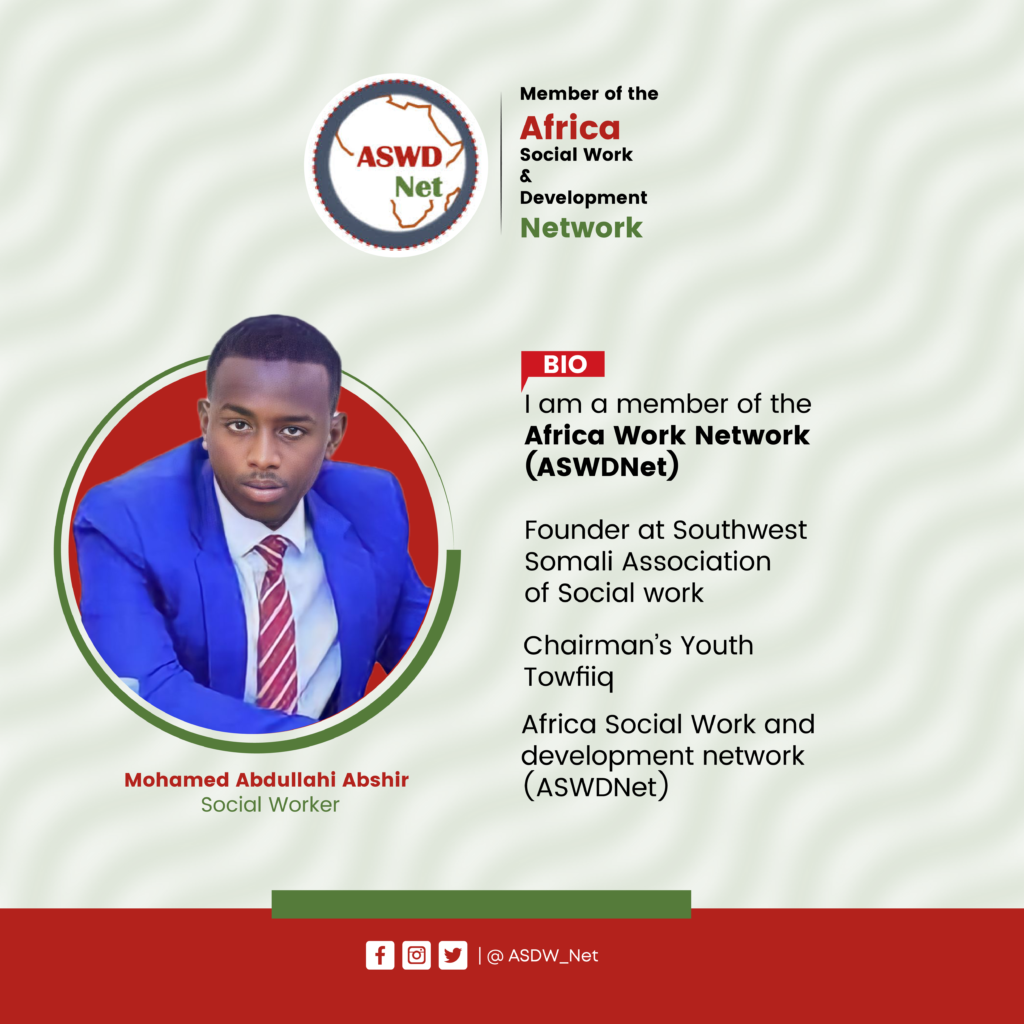
by Mohamed Abdulahi Abshir, Somalia

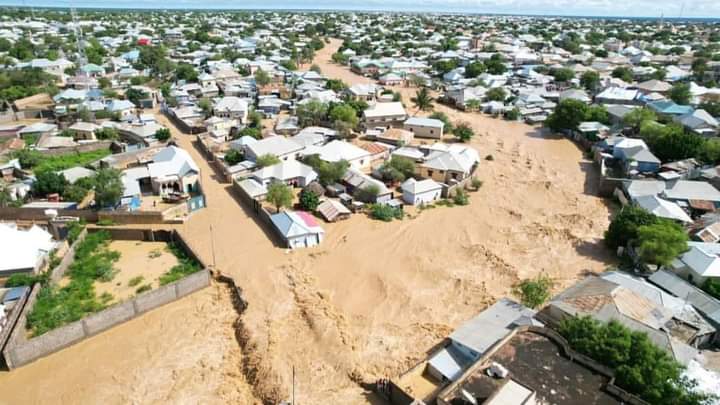
The situation in Baidoa is dire, with significant disruptions to daily life. Individuals, such as car drivers and house builders, have been unable to work for the past five days due to heavy rainfall and flooding. This has resulted in elevated market prices, damaged roads, and overall challenges in the affected areas.

  • Geography and Climate
  • Deforestation and Land Degradation
  • Urbanization and Poor Infrastructure
  • Poverty and Informal Settlements
  • Climate Change
  • Conflict and Displacement
  • Comprehensive approach is required
    • Food support
    • Long-term solutions
    • About author

While the conditions are starting to normalize, it is crucial to address the root causes of such disasters and work collaboratively to prevent future occurrences. Here are some key factors contributing to the flooding in Baidoa:

Geography and Climate

Baidoa’s location in a region prone to heavy rainfall and its proximity to the Shebelle River make it susceptible to seasonal flooding.

Deforestation and Land Degradation

The clearing of forests for various purposes has reduced the natural water retention capacity of the land, leading to increased flood risks.

Urbanization and Poor Infrastructure

Rapid urbanization without proper planning and infrastructure has exacerbated the flooding problem, with unplanned settlements and inadequate drainage systems hindering water flow.

Poverty and Informal Settlements

Poverty and the growth of informal settlements contribute to the vulnerability of the population, as many residents live in low-income housing with limited access to basic services.

Climate Change

The impacts of climate change, including altered precipitation patterns and rising global temperatures, contribute to the frequency and intensity of extreme weather events such as heavy rainfall and flooding.

Conflict and Displacement

Prolonged conflict and instability have led to internal displacement, with displaced populations settling in vulnerable areas, increasing their susceptibility to flooding.

The loss of life during floods can be attributed to factors such as insufficient early warning systems, lack of infrastructure and emergency preparedness, high population density, and limited access to healthcare services.

Comprehensive approach is required

To address these challenges, a comprehensive approach is required. This includes improving early warning systems, investing in infrastructure development, implementing effective emergency preparedness measures, and ensuring access to healthcare services during and after floods. Community education and awareness programs are also crucial for promoting flood resilience.

Food support

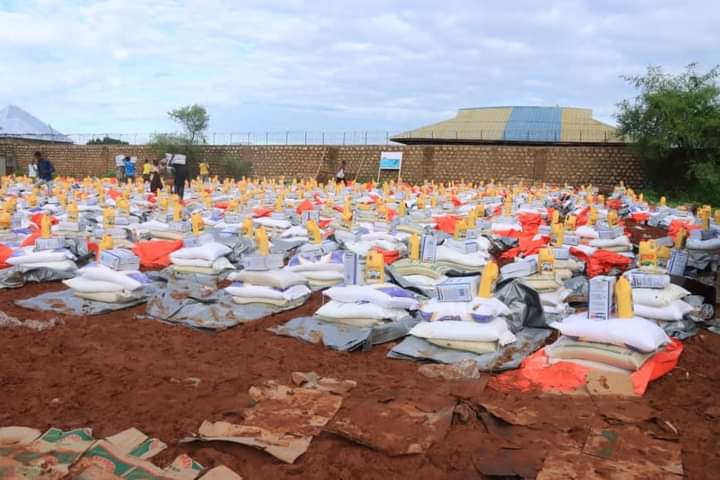
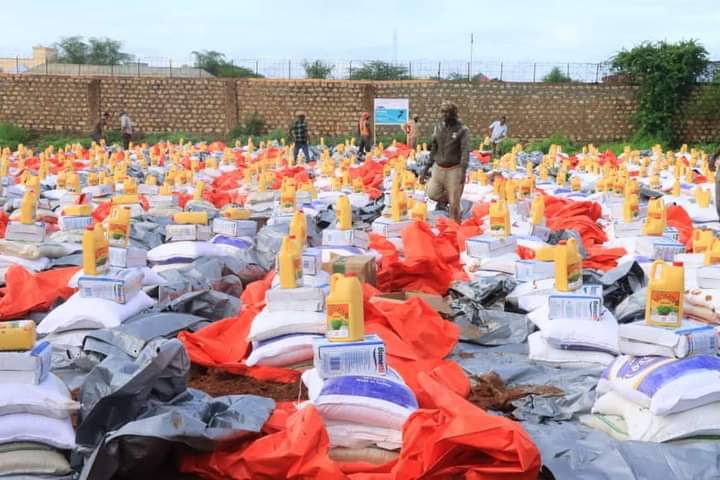
The efforts of the Baidoa District Administration and the Southwest Flood Emergency Committee are commendable. Distributing food donations to the people affected by the floods shows their commitment to providing immediate relief and support to those in need.

Floods can have devastating effects on communities, causing displacement, damage to infrastructure, and food insecurity. By providing food donations, the authorities are addressing one of the most basic and immediate needs of the affected individuals and families.

Such initiatives are crucial in times of crisis, as they help in alleviating the suffering of the vulnerable populations and contribute to their overall well-being. It’s heartening to see the government and relevant committees working together to provide assistance to the affected people in Baidoa.

Efforts like these not only provide immediate relief but also demonstrate the importance of preparedness and proactive measures to mitigate the impact of natural disasters. By responding swiftly and effectively to such situations, the authorities can help communities recover and rebuild their lives more quickly.
Flood Somalia
Flood Somalia

Long-term solutions

It’s important to continue supporting and advocating for initiatives that address the needs of those affected by natural disasters, as well as investing in long-term solutions to enhance resilience and disaster preparedness in the region.

About author

Mohamed Abdulahi Abshir is the Founder of Southwest Somali Association and is a Member of Africa Social Work Network (Aswdnet)

As the Founder of Southwest Somali Association and a member of the Africa Social Work Network (Aswnet), I believe in the power of collaborative efforts. I am reaching out to you for support and collaboration in addressing the socio-economic causes of flooding in Baidoa. Together, we can implement sustainable land management practices, afforestation efforts, improved urban planning, resilient infrastructure development, poverty alleviation measures, and climate change adaptation strategies.
Use the form below to subscibe to Owia Bulletin.

Admin ASWDNet

Post navigation

Previous Post: DECOLONISING RESEARCH ETHICS PLANS
Next Post: Research articles โ€“ from primary to tertiary articles

Comment (1) on “Flooding Crisis in Baidoa, Somalia – Collaborative Efforts Needed”

  1. Yuvan Sankar says:
    20 December 2023 at 16:35

    I feel sorry for the losses of the Somali people. Although natural disasters cannot be avoided, managing them in some micro ways can reduce the losses. Although many countries have managed these natural disasters well, developing countries still fail to deal with them. Many Indian villages have become water-self-sufficient villages by using it properly. Also, water storage systems and drainage systems should be set up in every village. Also, a disaster rescue team should be formed in every village to deal with disasters, and the youth of that village should come forward and participate in this rescue team. The country’s government should learn the methods of carrying out and managing this along with many developed countries and spread it through the youth. It can be easily handled if every youth comes forward and does this. Also, the structure of a village should include all kinds of basic facilities. These systems help to provide water to the people during drought. Indian rainwater harvesting systems drainage systems individual suction pipe systems, water storage systems, and properly maintained ponds and lakes can easily save people from these types of natural calamities.

Comments are closed.

AFRICA-WIDE INSTITUTIONS

ASWEA logo

ASWEA

1971-1989

Umoja waAfrika (AU) Former OAU Toto/Brief | Agenda63

ADF

Part of ADB

ASSWA logo

ASSWA

Since 2005

PAWO (AU Arm)

Facebook | X

COUNTRY INFORMATION (SOCIAL WORK & DEVELOPMENT)

  • Algeria ๐Ÿ‡ฉ๐Ÿ‡ฟ
  • Angola ๐Ÿ‡ฆ๐Ÿ‡ด
  • Benin ๐Ÿ‡ง๐Ÿ‡ฏ
  • Botswana ๐Ÿ‡ง๐Ÿ‡ผ
  • Burkina Faso ๐Ÿ‡ง๐Ÿ‡ซ
  • Burundi ๐Ÿ‡ง๐Ÿ‡ฎ
  • Cabo Verde ๐Ÿ‡จ๐Ÿ‡ป
  • Cameroon ๐Ÿ‡จ๐Ÿ‡ฒ
  • Central Africa Republic ๐Ÿ‡จ๐Ÿ‡ซ
  • Chad ๐Ÿ‡น๐Ÿ‡ฉ
  • Comoros ๐Ÿ‡ฐ๐Ÿ‡ฒ
    • Mayotte of Comoro
  • Congo, DR ๐Ÿ‡จ๐Ÿ‡ฉ
  • Congo ๐Ÿ‡จ๐Ÿ‡ฌ
  • Cote D’Ivoire ๐Ÿ‡จ๐Ÿ‡ฎ
  • Djibouti ๐Ÿ‡ฉ๐Ÿ‡ฏ
  • Egypt ๐Ÿ‡ช๐Ÿ‡ฌ
  • Equatorial Guinea ๐Ÿ‡ฌ๐Ÿ‡ถ
  • Eritrea ๐Ÿ‡ช๐Ÿ‡ท
  • Eswatini ๐Ÿ‡ธ๐Ÿ‡ฟ
  • Ethiopia ๐Ÿ‡ช๐Ÿ‡น
  • Gabon ๐Ÿ‡ฌ๐Ÿ‡ฆ
  • Gambia, The ๐Ÿ‡ฌ๐Ÿ‡ฒ
  • Ghana ๐Ÿ‡ฌ๐Ÿ‡ญ
  • Guinea ๐Ÿ‡ฌ๐Ÿ‡ณ
  • Guinea-Bissau ๐Ÿ‡ฌ๐Ÿ‡ผ
  • Kenya ๐Ÿ‡ฐ๐Ÿ‡ช
  • Lesotho ๐Ÿ‡ฑ๐Ÿ‡ธ
  • Liberia ๐Ÿ‡ฑ๐Ÿ‡ท
  • Libya ๐Ÿ‡ฑ๐Ÿ‡พ
  • Madagascar ๐Ÿ‡ฒ๐Ÿ‡ฌ
  • Malawi ๐Ÿ‡ฒ๐Ÿ‡ผ
  • Mali ๐Ÿ‡ฒ๐Ÿ‡ฑ
  • Mauritania ๐Ÿ‡ฒ๐Ÿ‡ท
  • Mauritius ๐Ÿ‡ฒ๐Ÿ‡บ
  • Morocco ๐Ÿ‡ฒ๐Ÿ‡ฆ
  • Mozambique ๐Ÿ‡ฒ๐Ÿ‡ฟ
  • Namibia ๐Ÿ‡ณ๐Ÿ‡ฆ
  • Niger ๐Ÿ‡ณ๐Ÿ‡ช
  • Nigeria ๐Ÿ‡ณ๐Ÿ‡ฌ
  • Rwanda ๐Ÿ‡ท๐Ÿ‡ผ
  • Sao Tome and Principe ๐Ÿ‡ธ๐Ÿ‡น
  • Senegal ๐Ÿ‡ธ๐Ÿ‡ณ
  • Seychelles ๐Ÿ‡ธ๐Ÿ‡จ
  • Sierra Leone ๐Ÿ‡ธ๐Ÿ‡ฑ
  • Somalia ๐Ÿ‡ธ๐Ÿ‡ด
  • South Africa ๐Ÿ‡ฟ๐Ÿ‡ฆ
  • South Sudan ๐Ÿ‡ธ๐Ÿ‡ธ
  • Sudan ๐Ÿ‡ธ๐Ÿ‡ฉ
  • Togo ๐Ÿ‡น๐Ÿ‡ฌ
  • Tanzania ๐Ÿ‡น๐Ÿ‡ฟ
  • Tunisia ๐Ÿ‡น๐Ÿ‡ณ
  • Uganda ๐Ÿ‡บ๐Ÿ‡ฌ
  • Western Sahara (SADR)
  • Zambia ๐Ÿ‡ฟ๐Ÿ‡ฒ
  • Zimbabwe ๐Ÿ‡ฟ๐Ÿ‡ผ
  • โ€œDongoโ€
  • ‘Wakanda’
  • Umoja waAfrica (African Union)
  • Afro-Caribbeans
    • Haiti
  • Afro-Latinos
  • Melanesia
    • Aboriginal Countries
    • Papua New Guinea
    • West Papua
  • Afro-Asians โ€˜Sidiโ€™

Decolonisation Calculator (DECA). What is the rate of decolonisation of social work and development training, education and research in your country? Use this simple calculator.

COVID-19 FINAL UPDATE: Africa Infections: 12.3 million people. Deaths 260 000. World infections: 650 million. Deaths 6.7 million. Data aggregated by ASWDNet on 12 December 2022. View this COVID-19 references list for Africa.

Search

Policies | Guidelines | Checklists

  • AI Policy
  • San Code of Ethics
  • Journal Writing Guide
  • Ubuntu Principles in Fundraising & Charity
  • Comments Policy
  • Publisher Checker
  • Decolonisation Calculator
  • African Research Ethics & Malpractice Statement
  • Privacy & Cookie Policy
  • Email, Data and Social Media Policy
  • How Annonciata Niyibizi Muhayimana created the Ingata of Life Narrative Model
  • When Resilience Becomes a Burden: The Hidden Struggles of Women Researchers in Africa
  • Borderless borders: how Dangote’s African Renaissance Group is putting muscle behind Mbeki’s African Renaissance Theory
  • Social Development Award Statement by Vongai P Mangwiro
  • Development Worker of the Year 2026 Statement by Bikila Tesfaye
  • Become a Blogger Blogging
  • Welcome to the AFRICASOCIALWORK.NET All Posts Basket
  • Become a Blogger All Posts Basket
  • The political, legal, radical and policy role of social work in Africa Admin ASWDNet
  • Egypt’s history of social work and social services All Posts Basket
  • Ubuntu and Social Work Resources All Posts Basket
  • Ubuntu Theories All Posts Basket
  • Ethiopian History of Social Work and Social Services All Posts Basket

Email Sign In


Website Log In


Mfundo | Courses | CPD Log In


Members Portal

COPYRIGHT ยฉ 2020 to 2030: Mtandao - Africa Social Work and Development Network (ASWDNet) | UBUNTU ACKNOWLEDGEMENT - We pay our respects to those who came before us, our Elders and forefathers and mothers, who are the sources and protectors (against colonisation) of the knowledge and wisdom that continue to shape lives, teaching, learning, research, and practice across generations. Because they were, we are. Asante. Siyabonga. Tatenda. Waaw. ร€แนฃรฉ.