Skip to content
  • Home
  • About|Join
  • Ethics
  • Events
  • Certificates
  • OwiaNews
  • Journals
  • DecoloniseCalculators
  • Mfundo|CPD
  • FundiDictionary
  • Awards
  • Ushahidi
  • DACCS
  • Kuumba
  • Submit
  • WSWSD Conference Nairobi | Mtandao Exhibition
  • Mental Health Masterclass
  • Catalogue
  • Consultancy
  • Shop
  • Twitter
  • Facebook
  • LinkedIn
  • YouTube
  • Academia AJSW
  • Instagram
Africa Social Work and Development Network | Mtandao waKazi zaJamii naMaendeleo waAfrica
Africa Social Work & Development Network | Mtandao waKazi zaJamii naMaendeleo waAfrika

Africa Social Work & Development Network | Mtandao waKazi zaJamii naMaendeleo waAfrika

Mtandao creates, aggregates and disseminates information and resources to facilitate Social Work and Development Work in Africa.

  • ACADEMICS
    • Lecture Resources
    • Lectures
    • Fieldwork Resources
    • Approaches to assessing learning
    • Book Publishing
      • Book_Professional Social Work in Zimbabwe
    • Types of University Assessments
    • ASWDNet Guide to Writing (Journals)
    • ASWDNet Guide to Writing and Publishing
  • PRACTITIONERS
    • Values and Ethics in Africa
    • Africa Social Work and Development Awards
    • Continuous Professional Development (CPD)
    • Templates, Models, Frameworks, Assessment Tools and Questionnaires
    • African Theories
    • Supervision
  • STUDENTS
    • Social Work and Development Student Conference (SWDSC)
    • 12 Steps to Get Published
    • Tips for Prospective Doctoral Students
    • ASWDNet Guide to Writing (Academic Research Brief| Proposal | Thesis)
    • Writing a journal article could be as easy as making fufu, nsima, ugali or matoke!
    • Lectures
    • Glossary of Publishing Terms
  • RESEARCHERS
    • Research Methods
    • Qualitative data levels of analysis
    • African Independent Ethics Committee (AIEC)
    • Research Questions Bank
    • Publisher/Journal Checker
    • Research Strategies
    • Reviewers
    • Ubuntu Research Group (URG)
    • Kuumba (Mentoring)
      • SURVEY OF SOCIAL PROBLEMS AND CHALLENGES FOR AFRICA
      • Mentees
      • Mentors
      • Guidelines
    • Afrocentric Mentoring Project (AfroME)
      • Team
      • Partners
      • Call for Applications for the Afrocentric and Decolonial Social Work Mentoring Project (now closed)
  • ASSOCIATIONS
  • TRAINING INSTITUTIONS
  • COMMUNITIES
    • Ubuntu Fundraising and Charity Principles
    • COVID-19
    • Social Work for Children
    • Funda KiSwahili
  • MEMBERS
  • Africa Philosophy
  • African Theories
  • Research Methods
  • Library | Databases
  • Social Work
    • Social Work Education institutions (SWEI) in Africa
    • Biography of Social Development in Africa
      • Charlotte Makgomo-Mannya Maxeke (1871-1939)
      • Zahia Marzouk (1906 – 1988)
      • Regina Gelana Twala (1908-1968)
      • Mai Musodzi Chibhaga Ayema (1885-1952)
      • Nnoseng Ellen Kate Kuzwayo (1914 – 2006)
      • Joshua Mqabuko Nyongolo Nkomo (19 June 1917 – 1 July 1999)
      • Jairos Jiri (1921 – 1982)
      • Kenneth Buchizya Kaunda (1924-2021)
      • John Samuel Mbiti (1931-2019)
      • Gibson Mthuthuzeli Kent (1932-2004)
      • Winnie Madikizela-Mandela 1936–2016
      • Ngugi wa Mirii (1951 – May 3, 2008)
      • Andrew Chad Nyanguru (28 Mar 1953-14 May 2014)
      • Professor Rodreck Mupedziswa
      • Edwell Kaseke (1954-2017)
      • Lovemore Mbigi
      • Selassie Seyoum Gebre (1936-)
      • Arega Yimam (-c1989)
      • Dr Noel Garikai Muridzo
      • Dr Edmos Mthethwa
      • Phillip Manyanye Bohwasi
      • Wassie Kebede
      • Gidraph G Wairire
      • Wangari Muta Maathai
      • Uzoma Odera Okoye, Dr
    • Social Work Journals and Other Serial Publications in Africa (ASWDNet Index)
    • Association of Social Work Education in Africa (ASWEA) – 1965 to 1989
    • Future of Social Work in Africa
    • Environmental Social Work
  • Development
    • Developmental Work Database
  • Ubuntu
    • Ubuntu Research Group (URG)
    • Ushahidi Platform
    • Ubuntu Fundraising and Charity Principles
    • Ubuntu Bibliography
    • Ubuntu Survey
    • Ubuntu Annual Lecture
    • Ubuntu Interview Guide Sample
  • Africa
    • African Anthem (African Union)
    • Umoja waAfrica (African Union)
    • African symbols and alphabets
    • Fundi – The African Dictionary and Encyclopaedia of Social Work and Development
    • Africa Religion (uAfrica)
    • Africa Research Ethics and Malpractice Statement (AREMS)
    • The San Code of Research Ethics (San Code)
  • Blog
    • Our Ubuntu-inspired Comments Policy
    • Become a Blogger
    • Admin ASWDNet
    • Babekazi
    • Professor Roy@Indigenous Social Work
    • Mutape J.D.S Sithole
    • Alemayehu Gebru from Ethiopia, Jimma City
    • Rugare Mugumbate
    • Decolonise
    • Writing and Publishing
    • Development
    • Toto
    • Ms. Alexandra Thokozile Mliswa (MSc,LLB, BA)
    • Environmental work
    • Africa religion | Spirituality
    • Kudzai Mwapaura blogger
    • All Posts Basket

[aioseo_breadcrumbs]

How Annonciata Niyibizi Muhayimana created the Ingata of Life Narrative Model Admin ASWDNet
When Resilience Becomes a Burden: The Hidden Struggles of Women Researchers in Africa Admin ASWDNet
Borderless borders: how Dangote’s African Renaissance Group is putting muscle behind Mbeki’s African Renaissance Theory Development

Global social work and development: Africa’s position at the UN 2025 General Assembly

Posted on 2 February 20262 February 2026 By aswnetadmin No Comments on Global social work and development: Africa’s position at the UN 2025 General Assembly
  • A call for representation
  • Reparations and historical justice
  • Gaza, Palestine and human rights concerns
  • Climate justice and migration
  • Economic sovereignty and development
  • Gender and equality
  • Building another world

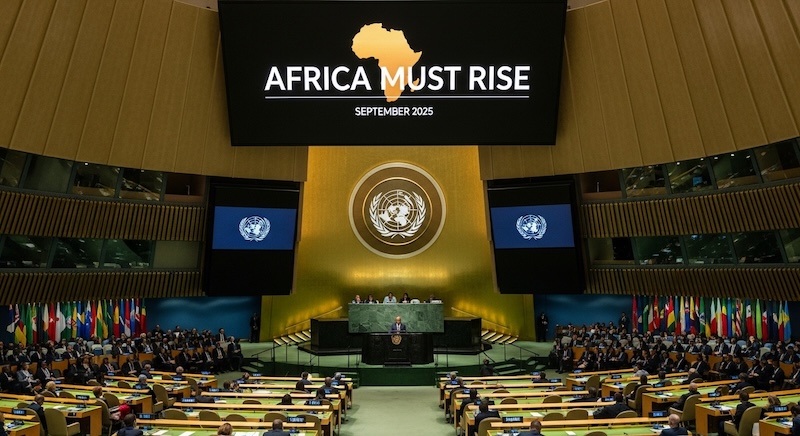
At the 80th Session of the United Nations General Assembly in September 2025, African leaders spoke with unity and clarity on reform, justice, and global development. Their messages reflect the values of social work: equity, inclusion, and the protection of the vulnerable, while positioning Africa as a decisive voice in shaping the future of the world.

A call for representation

The most consistent theme was a demand for reform of the United Nations Security Council. African leaders emphasised that with 54 member states, Africa remains underrepresented in global decision-making. Leaders from South Africa, Nigeria, Senegal and Botswana reiterated the call for permanent African seats and the reform of the veto system. This aligns with social work’s insistence on inclusive participation, where those most affected by global decisions must have a seat at the table.

Reparations and historical justice

The issue of slavery and colonisation was highlighted as an enduring injustice. African heads of state stressed that the transatlantic slave trade remains the greatest crime against humanity and called for reparations. They reminded the world that many Western nations compensated slave owners but never the enslaved or their descendants. For social development, reparations are not simply financial. They represent recognition, healing, and the righting of historical wrongs.

Gaza, Palestine and human rights concerns

Gaza featured prominently in African leaders’ speeches, showing Africa’s continued solidarity with oppressed peoples. Senegal’s President Bassirou Diomaye Faye described the violence in Gaza as an indescribable tragedy that borders on ethnic cleansing, calling for an immediate ceasefire and unrestricted humanitarian access. South Africa’s President Cyril Ramaphosa compared the collective punishment of Palestinians to apartheid and reaffirmed South Africa’s case at the International Court of Justice, which accuses Israel of genocide in Gaza. Angola’s President João Lourenço stressed Israel’s right to security but insisted that such security cannot come at the cost of genocide or mass civilian suffering. For social work, these interventions highlight the responsibility to defend human rights universally, to support displaced communities, and to challenge systems of oppression whether in Africa or beyond.

Climate justice and migration

Leaders also spoke about climate change as a pressing driver of displacement. African countries contribute the least to global greenhouse gas emissions but face the greatest consequences in the form of drought, flooding, desertification and forced migration. South Africa, Liberia and others called for fair climate finance, stronger adaptation mechanisms, and a global recognition of climate refugees. This resonates strongly with social work, which must provide direct support to displaced families while advocating for international accountability.

Economic sovereignty and development

A common demand was for Africa to assert sovereignty over its natural resources. Nigerian President Bola Tinubu and others emphasised the need to end the historic pattern of exploitation where Africa provides raw materials while wealth flows elsewhere. Instead, they called for industrialisation, value addition, and development that benefits African communities directly. For social development, this translates into better health, education, and welfare systems funded by Africa’s own wealth.

Gender and equality

African leaders also highlighted gender justice as a foundation for development. They spoke of a future where women and girls can reach their full potential and take up leadership roles across society. Representation of women in politics, the judiciary, and international organisations was underscored as a marker of progress. Social work shares this commitment, recognising that sustainable development cannot occur without the empowerment of women and girls.

Building another world

The collective African voice at UNGA 2025 was clear: the global order must change. Justice must replace exploitation, inclusion must replace marginalisation, and peace must replace oppression. For social work, the speeches are a call to action, reminding us that practice is not only about service but also about advocacy and solidarity. Africa’s leaders insisted that another world is not only possible but urgently necessary.

Use the form below to subscibe to Owia Bulletin.

Global Tags:United Nations

Post navigation

Previous Post: Africa’s knowledge for the world: The philosophy of Ubuntu and the value of harambee at SWSD 2026
Next Post: Africa’s future, social work, and development: lessons from Ghana’s address to the UN General Assembly

Leave a Reply Cancel reply

You must be logged in to post a comment.

AFRICA-WIDE INSTITUTIONS

ASWEA logo

ASWEA

1971-1989

Umoja waAfrika (AU) Former OAU Toto/Brief | Agenda63

ADF

Part of ADB

ASSWA logo

ASSWA

Since 2005

PAWO (AU Arm)

Facebook | X

COUNTRY INFORMATION (SOCIAL WORK & DEVELOPMENT)

  • Algeria 🇩🇿
  • Angola 🇦🇴
  • Benin 🇧🇯
  • Botswana 🇧🇼
  • Burkina Faso 🇧🇫
  • Burundi 🇧🇮
  • Cabo Verde 🇨🇻
  • Cameroon 🇨🇲
  • Central Africa Republic 🇨🇫
  • Chad 🇹🇩
  • Comoros 🇰🇲
    • Mayotte of Comoro
  • Congo, DR 🇨🇩
  • Congo 🇨🇬
  • Cote D’Ivoire 🇨🇮
  • Djibouti 🇩🇯
  • Egypt 🇪🇬
  • Equatorial Guinea 🇬🇶
  • Eritrea 🇪🇷
  • Eswatini 🇸🇿
  • Ethiopia 🇪🇹
  • Gabon 🇬🇦
  • Gambia, The 🇬🇲
  • Ghana 🇬🇭
  • Guinea 🇬🇳
  • Guinea-Bissau 🇬🇼
  • Kenya 🇰🇪
  • Lesotho 🇱🇸
  • Liberia 🇱🇷
  • Libya 🇱🇾
  • Madagascar 🇲🇬
  • Malawi 🇲🇼
  • Mali 🇲🇱
  • Mauritania 🇲🇷
  • Mauritius 🇲🇺
  • Morocco 🇲🇦
  • Mozambique 🇲🇿
  • Namibia 🇳🇦
  • Niger 🇳🇪
  • Nigeria 🇳🇬
  • Rwanda 🇷🇼
  • Sao Tome and Principe 🇸🇹
  • Senegal 🇸🇳
  • Seychelles 🇸🇨
  • Sierra Leone 🇸🇱
  • Somalia 🇸🇴
  • South Africa 🇿🇦
  • South Sudan 🇸🇸
  • Sudan 🇸🇩
  • Togo 🇹🇬
  • Tanzania 🇹🇿
  • Tunisia 🇹🇳
  • Uganda 🇺🇬
  • Western Sahara (SADR)
  • Zambia 🇿🇲
  • Zimbabwe 🇿🇼
  • “Dongo”
  • ‘Wakanda’
  • Umoja waAfrica (African Union)
  • Afro-Caribbeans
    • Haiti
  • Afro-Latinos
  • Melanesia
    • Aboriginal Countries
    • Papua New Guinea
    • West Papua
  • Afro-Asians ‘Sidi’

Decolonisation Calculator (DECA). What is the rate of decolonisation of social work and development training, education and research in your country? Use this simple calculator.

COVID-19 FINAL UPDATE: Africa Infections: 12.3 million people. Deaths 260 000. World infections: 650 million. Deaths 6.7 million. Data aggregated by ASWDNet on 12 December 2022. View this COVID-19 references list for Africa.

Search

Policies | Guidelines | Checklists

  • AI Policy
  • San Code of Ethics
  • Journal Writing Guide
  • Ubuntu Principles in Fundraising & Charity
  • Comments Policy
  • Publisher Checker
  • Decolonisation Calculator
  • African Research Ethics & Malpractice Statement
  • Privacy & Cookie Policy
  • Email, Data and Social Media Policy
  • How Annonciata Niyibizi Muhayimana created the Ingata of Life Narrative Model
  • When Resilience Becomes a Burden: The Hidden Struggles of Women Researchers in Africa
  • Borderless borders: how Dangote’s African Renaissance Group is putting muscle behind Mbeki’s African Renaissance Theory
  • Social Development Award Statement by Vongai P Mangwiro
  • Development Worker of the Year 2026 Statement by Bikila Tesfaye
  • Become a Blogger Blogging
  • Welcome to the AFRICASOCIALWORK.NET All Posts Basket
  • Become a Blogger All Posts Basket
  • The political, legal, radical and policy role of social work in Africa Admin ASWDNet
  • Egypt’s history of social work and social services All Posts Basket
  • Ubuntu and Social Work Resources All Posts Basket
  • Ubuntu Theories All Posts Basket
  • Ethiopian History of Social Work and Social Services All Posts Basket

Email Sign In


Website Log In


Mfundo | Courses | CPD Log In


Members Portal

COPYRIGHT © 2020 to 2030: Mtandao - Africa Social Work and Development Network (ASWDNet) | UBUNTU ACKNOWLEDGEMENT - We pay our respects to those who came before us, our Elders and forefathers and mothers, who are the sources and protectors (against colonisation) of the knowledge and wisdom that continue to shape lives, teaching, learning, research, and practice across generations. Because they were, we are. Asante. Siyabonga. Tatenda. Waaw. Àṣé.