
Skip to content
  • Home
  • About|Join
  • Ethics
  • Events
  • Certificates
  • OwiaNews
  • Journals
  • DecoloniseCalculators
  • Mfundo|CPD
  • FundiDictionary
  • Awards
  • Ushahidi
  • DACCS
  • Kuumba
  • Submit
  • WSWSD Conference Nairobi | Mtandao Exhibition
  • Mental Health Masterclass
  • Catalogue
  • Consultancy
  • Shop
  • Twitter
  • Facebook
  • LinkedIn
  • YouTube
  • Academia AJSW
  • Instagram
Africa Social Work and Development Network | Mtandao waKazi zaJamii naMaendeleo waAfrica
Africa Social Work & Development Network | Mtandao waKazi zaJamii naMaendeleo waAfrika

Africa Social Work & Development Network | Mtandao waKazi zaJamii naMaendeleo waAfrika

Mtandao creates, aggregates and disseminates information and resources to facilitate Social Work and Development Work in Africa.

  • ACADEMICS
    • Lecture Resources
    • Lectures
    • Fieldwork Resources
    • Approaches to assessing learning
    • Types of University Assessments
    • Book Publishing
      • Book_Professional Social Work in Zimbabwe
    • ASWDNet Guide to Writing (Journals)
    • ASWDNet Guide to Writing and Publishing
  • PRACTITIONERS
    • Values and Ethics in Africa
    • Africa Social Work and Development Awards
    • Continuous Professional Development (CPD)
    • Templates, Models, Frameworks, Assessment Tools and Questionnaires
    • African Theories
    • Supervision
  • STUDENTS
    • Social Work and Development Student Conference (SWDSC)
    • 12 Steps to Get Published
    • Tips for Prospective Doctoral Students
    • ASWDNet Guide to Writing (Academic Research Brief| Proposal | Thesis)
    • Writing a journal article could be as easy as making fufu, nsima, ugali or matoke!
    • Lectures
  • RESEARCHERS
    • Research Methods
    • Qualitative data levels of analysis
    • African Independent Ethics Committee (AIEC)
    • Research Questions Bank
    • Publisher/Journal Checker
    • Research Strategies
    • Reviewers
    • Ubuntu Research Group (URG)
    • Kuumba (Mentoring)
      • SURVEY OF SOCIAL PROBLEMS AND CHALLENGES FOR AFRICA
      • Mentees
      • Mentors
      • Guidelines
    • Afrocentric Mentoring Project (AfroME)
      • Team
      • Partners
      • Call for Applications for the Afrocentric and Decolonial Social Work Mentoring Project (now closed)
  • ASSOCIATIONS
  • TRAINING INSTITUTIONS
  • COMMUNITIES
    • Ubuntu Fundraising and Charity Principles
    • COVID-19
    • Social Work for Children
    • Funda KiSwahili
  • MEMBERS
  • Africa Philosophy
  • African Theories
  • Research Methods
  • Library | Databases
  • Social Work
    • Social Work Education institutions (SWEI) in Africa
    • Biography of Social Development in Africa
      • Charlotte Makgomo-Mannya Maxeke (1871-1939)
      • Zahia Marzoukย (1906 โ€“ 1988)
      • Regina Gelana Twala (1908-1968)
      • Mai Musodzi Chibhaga Ayema (1885-1952)
      • Nnoseng Ellen Kate Kuzwayo (1914 โ€“ 2006)
      • Joshua Mqabuko Nyongolo Nkomo (19 June 1917 โ€“ 1 July 1999)
      • Jairos Jiri (1921 โ€“ 1982)
      • Kenneth Buchizya Kaunda (1924-2021)
      • John Samuel Mbiti (1931-2019)
      • Gibson Mthuthuzeli Kent (1932-2004)
      • Winnie Madikizela-Mandela 1936โ€“2016
      • Ngugi wa Mirii (1951 โ€“ May 3, 2008)
      • Andrew Chad Nyanguru (28 Mar 1953-14 May 2014)
      • Professor Rodreck Mupedziswa
      • Edwell Kaseke (1954-2017)
      • Lovemore Mbigi
      • Selassie Seyoum Gebre (1936-)
      • Arega Yimam (-c1989)
      • Dr Noel Garikai Muridzo
      • Dr Edmos Mthethwa
      • Phillip Manyanye Bohwasi
      • Wassie Kebede
      • Gidraph G Wairire
      • Wangari Muta Maathai
      • Uzoma Odera Okoye, Dr
    • Social Work Journals and Other Serial Publications in Africa (ASWDNet Index)
    • Association of Social Work Education in Africa (ASWEA) โ€“ 1965 to 1989
    • Future of Social Work in Africa
    • Environmental Social Work
  • Development
    • Developmental Work Database
  • Ubuntu
    • Ubuntu Research Group (URG)
    • Ushahidi Platform
    • Ubuntu Fundraising and Charity Principles
    • Ubuntu Bibliography
    • Ubuntu Survey
    • Ubuntu Annual Lecture
    • Ubuntu Interview Guide Sample
  • Africa
    • African Anthem (African Union)
    • Umoja waAfrica (African Union)
    • African symbols and alphabets
    • Fundi โ€“ The African Dictionary and Encyclopaedia of Social Work and Development
    • Africa Religion (uAfrica)
    • Africa Research Ethics and Malpractice Statement (AREMS)
    • The San Code of Research Ethics (San Code)
  • Blog
    • Our Ubuntu-inspired Comments Policy
    • Become a Blogger
    • Admin ASWDNet
    • Babekazi
    • Professor Roy@Indigenous Social Work
    • Mutape J.D.S Sithole
    • Alemayehu Gebru from Ethiopia, Jimma City
    • Rugare Mugumbate
    • Decolonise
    • Writing and Publishing
    • Development
    • Toto
    • Ms. Alexandra Thokozile Mliswa (MSc,LLB, BA)
    • Environmental work
    • Africa religion | Spirituality
    • Kudzai Mwapaura blogger
    • All Posts Basket

[aioseo_breadcrumbs]

How Annonciata Niyibizi Muhayimana created the Ingata of Life Narrative Model Admin ASWDNet
When Resilience Becomes a Burden: The Hidden Struggles of Women Researchers in Africa Admin ASWDNet
Borderless borders: how Dangote’s African Renaissance Group is putting muscle behind Mbeki’s African Renaissance Theory Development

In Memory of Professor Lovemore Mbigi – Philosopher, Theorist and Social Worker

Posted on 5 September 20235 September 2023 By aswnetadmin
Professor Lovemore Mbigi, who died at age 68 years in June 2023 in Harare, Zimbabwe

Professor Lovemore Mbigi was a social worker, philosopher, theorist, consultant, entrepreneur and motivational speaker whose work in South Africa has focused on Ubuntu inspired management. He was born in Zimbabwe. He died in June 2023 in Harare, Zimbabwe.

Mbigi’s ubuntu philosophy of management

His major argument was that Africa has its own management philosophy, and therefore African managers, governments and companies will not succeed by using foreign philosophies in Africa.
This argument is really useful for social work, because most subjects on social work management use management philosophies from western countries yet we have our own philosophies. In social work training the works of Mitzberg, Taylor, Weber, McGregor, Maslow or Fayol is often seen in course outlines, despite being outdated, this work does not align with African values. This is what Mbigi challenged, his African dream in management. Western and eastern methods should not replace or override ubuntu, they need to be put in the context of ubuntu if they are useful. Imitation should be avoided.

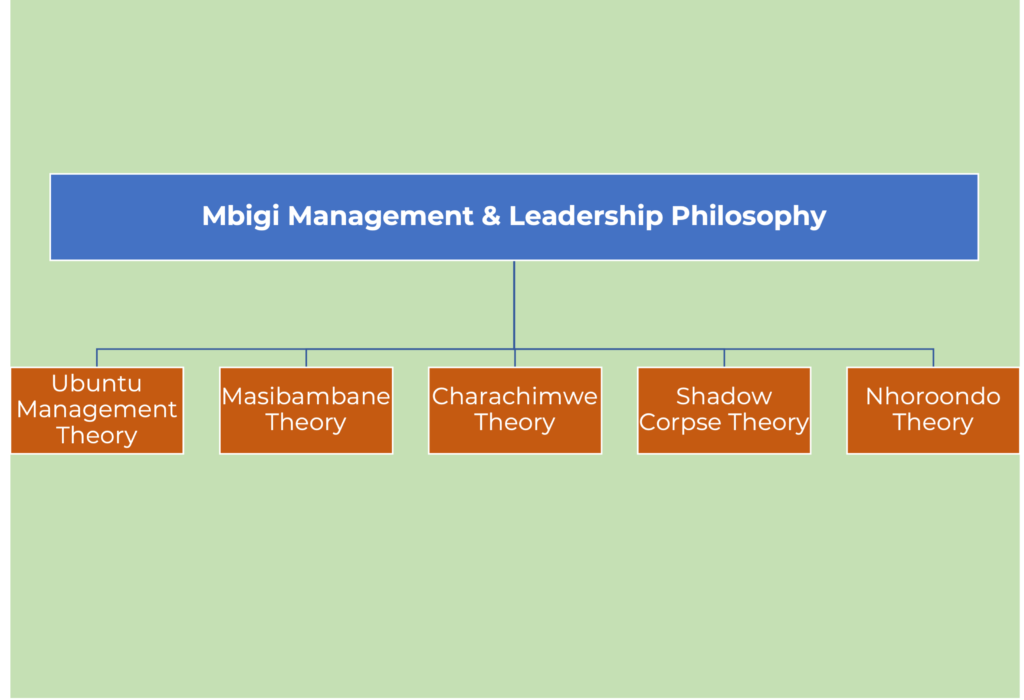
There are several concepts, and theories to his Ubuntu management philosophy, important theories for social work and development are:

  1. Ubuntu management theory: Social and political innovation are more challenging but yet more useful than technical innovation. Managers need to balance social, political and technical innovation to succeed. An example of social innovation is using ubuntu in management, this is achieved by using the social experience of Africans in management. This experience includes oral literature (metaphors, proverbs, maxims etc), rituals, ceremonies, spirit, music and dance. The role of managers is to facilitate the development of spirited and caring organisations. This is a source of motivation for workers.
  2. Masibambane theory, which means ubuntu-inspired business culture marketing, leadership, accountability, training and production. African organisations must be inspired by Africa’s own cultural heritage. African organisations can only compete in the global market by using a uniquely African management concept, embedded in the philosophy of Ubuntu (Mbigi, 1997).
  3. Chara chimwe theory: Collective leadership and decision making is important. Collective fingers theory (chara chimwe hachitswanyi inda) – Survival, Solidarity, Compassion, Respect and Dignity (Mbigi, 1997). All five fingers work together to achieve greater things. Cultural diversity should be valued in organisations.  
  4. Shadow corpse theory – often, when organisations are not functioning, there is a ‘shadow’. This is an Africa metaphors, proverbs or maxim that says if a person dies and their shadow is seen, then there are unresolved issues. Mbigi says if an organisation is not doing well, there will be a shadow, and it will not go away until issues are resolved. This metaphor helps in diagnosing organisational problems.
  5. Nhorowondo theory – understand organisations, needs, motivations, processes and phenomena in their context. Family, community and culture are key considerations in Africa.

Another concept that he used in his management philosophy were harambe which means progressing by working together. Mbigi did not start harambe, but only added it to his management philosophy.

His view was these theories and practices give organisations a competitive advantage, improves production and are a good basis for effective human resource management.

“Western genius in management lies in technical innovation. The Asian genius lies in process improvement. The African genius lies in people management”, (Mbigi, 2000).

“Although African cultures display awesome diversity, they also show remarkable similarities. Community is the cornerstone in African thought and life (Mbigi, 2005, p. 75). 

Mbigi’s model is an important tool in decolonising management and make organisational processes more humane. It is also important to increase productivity in the social services, management of workers, development of organisations and engagement with people who use our services. It is time to teach African management philosophies.

The philosophy of Mbigi is one of many in Africa.
Use the form below to subscibe to Owia Bulletin.

Admin ASWDNet

Post navigation

Previous Post: Citing sources: how to decolonise it
Next Post: Franรงafrique: unethical colonial action that has underdeveloped Africa

AFRICA-WIDE INSTITUTIONS

ASWEA logo

ASWEA

1971-1989

Umoja waAfrika (AU) Former OAU Toto/Brief | Agenda63

ADF

Part of ADB

ASSWA logo

ASSWA

Since 2005

PAWO (AU Arm)

Facebook | X

COUNTRY INFORMATION (SOCIAL WORK & DEVELOPMENT)

  • Algeria ๐Ÿ‡ฉ๐Ÿ‡ฟ
  • Angola ๐Ÿ‡ฆ๐Ÿ‡ด
  • Benin ๐Ÿ‡ง๐Ÿ‡ฏ
  • Botswana ๐Ÿ‡ง๐Ÿ‡ผ
  • Burkina Faso ๐Ÿ‡ง๐Ÿ‡ซ
  • Burundi ๐Ÿ‡ง๐Ÿ‡ฎ
  • Cabo Verde ๐Ÿ‡จ๐Ÿ‡ป
  • Cameroon ๐Ÿ‡จ๐Ÿ‡ฒ
  • Central Africa Republic ๐Ÿ‡จ๐Ÿ‡ซ
  • Chad ๐Ÿ‡น๐Ÿ‡ฉ
  • Comoros ๐Ÿ‡ฐ๐Ÿ‡ฒ
    • Mayotte of Comoro
  • Congo, DR ๐Ÿ‡จ๐Ÿ‡ฉ
  • Congo ๐Ÿ‡จ๐Ÿ‡ฌ
  • Cote D’Ivoire ๐Ÿ‡จ๐Ÿ‡ฎ
  • Djibouti ๐Ÿ‡ฉ๐Ÿ‡ฏ
  • Egypt ๐Ÿ‡ช๐Ÿ‡ฌ
  • Equatorial Guinea ๐Ÿ‡ฌ๐Ÿ‡ถ
  • Eritrea ๐Ÿ‡ช๐Ÿ‡ท
  • Eswatini ๐Ÿ‡ธ๐Ÿ‡ฟ
  • Ethiopia ๐Ÿ‡ช๐Ÿ‡น
  • Gabon ๐Ÿ‡ฌ๐Ÿ‡ฆ
  • Gambia, The ๐Ÿ‡ฌ๐Ÿ‡ฒ
  • Ghana ๐Ÿ‡ฌ๐Ÿ‡ญ
  • Guinea ๐Ÿ‡ฌ๐Ÿ‡ณ
  • Guinea-Bissau ๐Ÿ‡ฌ๐Ÿ‡ผ
  • Kenya ๐Ÿ‡ฐ๐Ÿ‡ช
  • Lesotho ๐Ÿ‡ฑ๐Ÿ‡ธ
  • Liberia ๐Ÿ‡ฑ๐Ÿ‡ท
  • Libya ๐Ÿ‡ฑ๐Ÿ‡พ
  • Madagascar ๐Ÿ‡ฒ๐Ÿ‡ฌ
  • Malawi ๐Ÿ‡ฒ๐Ÿ‡ผ
  • Mali ๐Ÿ‡ฒ๐Ÿ‡ฑ
  • Mauritania ๐Ÿ‡ฒ๐Ÿ‡ท
  • Mauritius ๐Ÿ‡ฒ๐Ÿ‡บ
  • Morocco ๐Ÿ‡ฒ๐Ÿ‡ฆ
  • Mozambique ๐Ÿ‡ฒ๐Ÿ‡ฟ
  • Namibia ๐Ÿ‡ณ๐Ÿ‡ฆ
  • Niger ๐Ÿ‡ณ๐Ÿ‡ช
  • Nigeria ๐Ÿ‡ณ๐Ÿ‡ฌ
  • Rwanda ๐Ÿ‡ท๐Ÿ‡ผ
  • Sao Tome and Principe ๐Ÿ‡ธ๐Ÿ‡น
  • Senegal ๐Ÿ‡ธ๐Ÿ‡ณ
  • Seychelles ๐Ÿ‡ธ๐Ÿ‡จ
  • Sierra Leone ๐Ÿ‡ธ๐Ÿ‡ฑ
  • Somalia ๐Ÿ‡ธ๐Ÿ‡ด
  • South Africa ๐Ÿ‡ฟ๐Ÿ‡ฆ
  • South Sudan ๐Ÿ‡ธ๐Ÿ‡ธ
  • Sudan ๐Ÿ‡ธ๐Ÿ‡ฉ
  • Togo ๐Ÿ‡น๐Ÿ‡ฌ
  • Tanzania ๐Ÿ‡น๐Ÿ‡ฟ
  • Tunisia ๐Ÿ‡น๐Ÿ‡ณ
  • Uganda ๐Ÿ‡บ๐Ÿ‡ฌ
  • Western Sahara (SADR)
  • Zambia ๐Ÿ‡ฟ๐Ÿ‡ฒ
  • Zimbabwe ๐Ÿ‡ฟ๐Ÿ‡ผ
  • โ€œDongoโ€
  • ‘Wakanda’
  • Umoja waAfrica (African Union)
  • Afro-Caribbeans
    • Haiti
  • Afro-Latinos
  • Melanesia
    • Aboriginal Countries
    • Papua New Guinea
    • West Papua
  • Afro-Asians โ€˜Sidiโ€™

Decolonisation Calculator (DECA). What is the rate of decolonisation of social work and development training, education and research in your country? Use this simple calculator.

COVID-19 FINAL UPDATE: Africa Infections: 12.3 million people. Deaths 260 000. World infections: 650 million. Deaths 6.7 million. Data aggregated by ASWDNet on 12 December 2022. View this COVID-19 references list for Africa.

Search

Policies | Guidelines | Checklists

  • AI Policy
  • San Code of Ethics
  • Journal Writing Guide
  • Ubuntu Principles in Fundraising & Charity
  • Comments Policy
  • Publisher Checker
  • Decolonisation Calculator
  • African Research Ethics & Malpractice Statement
  • Privacy & Cookie Policy
  • Email, Data and Social Media Policy
  • How Annonciata Niyibizi Muhayimana created the Ingata of Life Narrative Model
  • When Resilience Becomes a Burden: The Hidden Struggles of Women Researchers in Africa
  • Borderless borders: how Dangote’s African Renaissance Group is putting muscle behind Mbeki’s African Renaissance Theory
  • Social Development Award Statement by Vongai P Mangwiro
  • Development Worker of the Year 2026 Statement by Bikila Tesfaye
  • Become a Blogger Blogging
  • Welcome to the AFRICASOCIALWORK.NET All Posts Basket
  • Become a Blogger All Posts Basket
  • The political, legal, radical and policy role of social work in Africa Admin ASWDNet
  • Egypt’s history of social work and social services All Posts Basket
  • Ubuntu and Social Work Resources All Posts Basket
  • Ubuntu Theories All Posts Basket
  • Ethiopian History of Social Work and Social Services All Posts Basket

Email Sign In


Website Log In


Mfundo | Courses | CPD Log In


Members Portal

COPYRIGHT ยฉ 2020 to 2030: Mtandao - Africa Social Work and Development Network (ASWDNet) | UBUNTU ACKNOWLEDGEMENT - We pay our respects to those who came before us, our Elders and forefathers and mothers, who are the sources and protectors (against colonisation) of the knowledge and wisdom that continue to shape lives, teaching, learning, research, and practice across generations. Because they were, we are. Asante. Siyabonga. Tatenda. Waaw. ร€แนฃรฉ.