[aioseo_breadcrumbs]
Africa’s future, social work, and development: lessons from Ghana’s address to the UN General Assembly
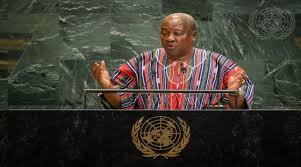
On 25 September 2025, Ghana’s President, H.E. John Dramani Mahama, addressed the 80th Session of the United Nations General Assembly. His speech was not only a call for reform within the UN, but also a reflection on Africa’s history, resilience, and central role in shaping the future. For those in social work and development, his words offer powerful insights into gender, slavery, decolonisation, UN reform, migration, and global justice.
The future is African
President Mahama reminded the world that by 2050, Africa will account for more than a quarter of the global population, and a third of all young people. This demographic reality has profound implications for development and social work. Africa’s youth must not be marginalised; instead, they must be empowered as agents of change. Social work practice will need to strengthen systems that promote education, health, and employment opportunities, ensuring Africa’s youth are not left behind.
Past is prologue
The President recalled Africa’s absence from decision-making tables during the founding of both the League of Nations and the United Nations. The shadow of colonisation still lingers, shaping global inequalities. For social workers and development practitioners, decolonisation is not only about history—it is about dismantling systems of oppression, reclaiming African knowledge systems, and ensuring communities are active participants in shaping their futures.
Slavery and reparations
Perhaps the strongest statement of justice was his call to recognise the transatlantic slave trade as the greatest crime against humanity. More than 12.5 million Africans were taken by force, and the wealth of Western nations was built on their backs. The demand for reparations is not only financial—it is also moral and restorative. In social work, reparative justice means recognising historical trauma, addressing generational inequalities, and ensuring that descendants of the enslaved are part of global development conversations.
The slave trade must be recognised as the greatest crime against humanity.
UN reform and representation
A central point of the address was the outdated structure of the UN Security Council. Africa, despite its size and the number of its member states, still lacks a permanent seat. For social development, this exclusion reflects wider global injustices where African voices are silenced in decision-making forums. Reforming the UN is not just a political issue; it is about fairness, dignity, and ensuring that social justice principles of representation and equity are honoured on the world stage.
If not now, then when?
Migration and climate change
President Mahama drew attention to Sudan’s humanitarian crisis and the plight of 12 million displaced people. He also highlighted how climate change disproportionately affects the Global South, forcing migration. Social workers must address not only the needs of migrants and refugees but also challenge narratives that criminalise them. Migration stories—such as those of Ghanaian immigrants who became judges, mayors, and cultural icons—prove that mobility enriches societies, rather than threatens them.
No one puts their children in a boat unless the water is safer than the land.
Gender and representation
The President ended with a powerful reminder about the need to ensure that women and girls live in a safe and equal world. Gender equality remains central to development. Social workers must champion women’s empowerment, challenge patriarchy, and ensure that girls are equipped to realise their potential. Representation matters, and Ghana’s election of Naana Jane Opoku-Agyemang as Vice President is an example of progress.
I hope this new world…is a place of safety and equality for women and girls.
Resources and sovereignty
The President also warned against the exploitation of Africa’s natural resources. For too long, vast concession areas have been controlled by foreign interests, leaving communities impoverished. A developmental reset must prioritise Africa’s ownership of its resources, ensuring revenues fund social protection, health, education, and welfare systems. For social work, this means advocating for policies that serve people, not profits.
Building another world
President Mahama’s address can be read as a manifesto for justice, equality, and empowerment—the very principles that guide social work and development. From calling out historical wrongs like slavery, to demanding reform of global institutions, to insisting on gender equity, his words challenge us to reimagine development as inclusive, fair, and decolonised.
Another world is not only possible, she is on her way. On a quiet day, I can hear her breathing.
Use the form below to subscibe to Owia Bulletin.