Global social work and development: Africa’s position at the UN 2025 General Assembly
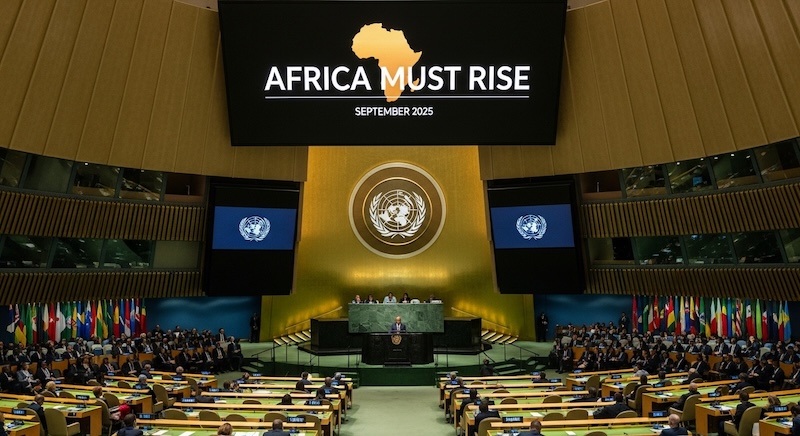
At the 80th Session of the United Nations General Assembly in September 2025, African leaders spoke with unity and clarity on reform, justice, and global development. Their messages reflect the values of social work: equity, inclusion, and the protection of the vulnerable, while positioning Africa as a decisive voice in shaping the future of the world.
A call for representation
The most consistent theme was a demand for reform of the United Nations Security Council. African leaders emphasised that with 54 member states, Africa remains underrepresented in global decision-making. Leaders from South Africa, Nigeria, Senegal and Botswana reiterated the call for permanent African seats and the reform of the veto system. This aligns with social work’s insistence on inclusive participation, where those most affected by global decisions must have a seat at the table.
Reparations and historical justice
The issue of slavery and colonisation was highlighted as an enduring injustice. African heads of state stressed that the transatlantic slave trade remains the greatest crime against humanity and called for reparations. They reminded the world that many Western nations compensated slave owners but never the enslaved or their descendants. For social development, reparations are not simply financial. They represent recognition, healing, and the righting of historical wrongs.
Gaza, Palestine and human rights concerns
Gaza featured prominently in African leaders’ speeches, showing Africa’s continued solidarity with oppressed peoples. Senegal’s President Bassirou Diomaye Faye described the violence in Gaza as an indescribable tragedy that borders on ethnic cleansing, calling for an immediate ceasefire and unrestricted humanitarian access. South Africa’s President Cyril Ramaphosa compared the collective punishment of Palestinians to apartheid and reaffirmed South Africa’s case at the International Court of Justice, which accuses Israel of genocide in Gaza. Angola’s President João Lourenço stressed Israel’s right to security but insisted that such security cannot come at the cost of genocide or mass civilian suffering. For social work, these interventions highlight the responsibility to defend human rights universally, to support displaced communities, and to challenge systems of oppression whether in Africa or beyond.
Climate justice and migration
Leaders also spoke about climate change as a pressing driver of displacement. African countries contribute the least to global greenhouse gas emissions but face the greatest consequences in the form of drought, flooding, desertification and forced migration. South Africa, Liberia and others called for fair climate finance, stronger adaptation mechanisms, and a global recognition of climate refugees. This resonates strongly with social work, which must provide direct support to displaced families while advocating for international accountability.
Economic sovereignty and development
A common demand was for Africa to assert sovereignty over its natural resources. Nigerian President Bola Tinubu and others emphasised the need to end the historic pattern of exploitation where Africa provides raw materials while wealth flows elsewhere. Instead, they called for industrialisation, value addition, and development that benefits African communities directly. For social development, this translates into better health, education, and welfare systems funded by Africa’s own wealth.
Gender and equality
African leaders also highlighted gender justice as a foundation for development. They spoke of a future where women and girls can reach their full potential and take up leadership roles across society. Representation of women in politics, the judiciary, and international organisations was underscored as a marker of progress. Social work shares this commitment, recognising that sustainable development cannot occur without the empowerment of women and girls.
Building another world
The collective African voice at UNGA 2025 was clear: the global order must change. Justice must replace exploitation, inclusion must replace marginalisation, and peace must replace oppression. For social work, the speeches are a call to action, reminding us that practice is not only about service but also about advocacy and solidarity. Africa’s leaders insisted that another world is not only possible but urgently necessary.
Use the form below to subscibe to Owia Bulletin.