Moving from Western models to African realities in social work and social development training
Social work and social development training in Africa has for a long time relied on systems, structures and textbooks developed in the Global North. These were designed for societies with different economic, cultural and social conditions, and they have been applied to African communities with limited adaptation. Training practitioners who can respond to local problems requires a deliberate change in how we educate.
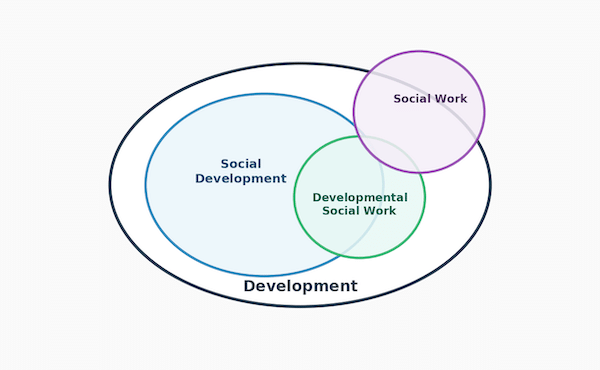
Reforming social work training is one part of this change. Social development also needs to be expanded and strengthened. Social development is a multidisciplinary approach that brings together social work, development administration, community development, social welfare, gender studies, disability studies and gerontology, among others, to address social problems structurally.
Learning from the ASWEA model
The call for African centred training is not new. The Association of Social Work Education in Africa (ASWEA) was formed in 1965 at a meeting in Alexandria, Egypt, and operated from 1971 to 1989. Its founders were Selassie Seyoum Gebre and Arega Yimam of Ethiopia. By 1978, ASWEA had observer status with the Organisation of African Unity (OAU), 50 member training institutions and 100 individual academics. Its members included schools of social work and centres that trained community, agricultural and rural development workers.
ASWEA identified the shortcomings of social work in Africa and proposed solutions. These can be summarised as the ASWEA model.
| Shortcomings of social work in Africa | Solutions proposed by ASWEA |
|---|---|
| Dominance of Western social work curricula | Change the curricula |
| Western models of social services that did not fit African needs | Change the services |
| Dissatisfaction with Christian and Islamic approaches to services | Centre social work on African religion |
| Teaching based on lectures and examinations | African centred pedagogy, including oral and participatory methods, African case studies, role plays, group work and interdisciplinary education |
| Eurocentric knowledge | Research to build a body of social work knowledge that meets the needs of Africans |
| Remedial, curative and maintenance approaches | Preventive, developmental social work and social development |
| Focus on individual problems | A focus on national development planning and policy |
| Social work that conflicted with local cultures | Culturally relevant social work |
| Weak professional identity and unclear areas of competence | Social work redefined around African problems and solutions, with professional associations |
| Urban focused and elitist practice | A focus on the rural majority, including rural research units, rural fieldwork units, rural placements and rural case studies |
| Attention to social issues without economic issues | A focus on income, self sufficiency and growth |
ASWEA produced about 87 case studies for teaching community development and group work, two directories of social work curricula in Africa, courses, surveys and the Journal for Social Work Education in Africa. Its records, about 3,500 pages of correspondence, minutes, reports, conference proceedings and case studies, are now known as the Uhuru Archives. Their digitisation was led by Linda Kreitzer with funding from the International Association of Schools of Social Work (IASSW), and they are held at the Historical Papers Archive at the University of the Witwatersrand in Johannesburg.
ASWEA closed in 1989, mainly because of a shortage of funds. Much of what it proposed was not carried through, and many of the problems it named remain in African training today. The proposals in the rest of this post build on the ASWEA model.
Development at the five levels of Ubuntu
The Ubuntu framework describes a person as part of five connected levels: family, community, society, environment and spiritual. Development, in this view, takes place at all five levels. At each level it has human, economic and political aspects. Western approaches to social development often focus on the individual, the state and the market, and treat family, environment and spiritual life as private or outside the scope of development. The Ubuntu framework brings them back in.
The table below summarises what development involves at each level and the studies, disciplines and professions most relevant to it.
| Level | Human aspects | Economic aspects | Political aspects | Relevant studies, disciplines and professions |
|---|---|---|---|---|
| Family | Care, wellbeing, identity and relationships within the extended family | Household livelihoods, shared income, inheritance and family enterprises | Decision making within families, the roles of elders, and the rights of women, children and older people | Social work, child and youth care, early childhood development, gerontology, gender studies, psychology, family therapy, nursing and midwifery |
| Community | Belonging, mutual support and collective care | Savings groups, shared labour, local markets and community enterprises | Local leadership, chiefs and councils, and community participation in decisions | Community development, social work, youth work, adult education, cooperative and small enterprise development, community health, social anthropology |
| Society | Health, education, economic, political and social services | National economic policy, employment, social protection and fair distribution of resources | Governance, policy, law, rights and the accountability of the state | Social policy, development administration, public administration, development studies, economics, political science, law, sociology, public health, disability studies |
| Environment | The connection between people’s wellbeing and the land, water and other living things | Land, agriculture, natural resources and sustainable use of them | Land rights, environmental policy and decisions about who controls natural resources | Environmental social work, rural development, agriculture and agricultural extension, environmental science, geography, natural resource management, land use and town planning |
| Spiritual | Meaning, values, identity and the relationship with ancestors and the sacred | Spiritual practices linked to land, harvest and resource use | The authority of spiritual leaders and respect for spiritual sites and beliefs in decision making | African philosophy, indigenous knowledge systems, religious studies, theology, indigenous health practice, social anthropology, ethics |
Several disciplines, such as social work, social anthropology and gender studies, work across more than one level. This supports the integrated social development approach discussed later in this post.
Family
The family is the first level of development. In African contexts this means the extended family, not only parents and children. Human development at this level concerns care, wellbeing and relationships. Economic development concerns how households earn, share and pass on resources. Political development concerns how decisions are made within families and how the rights of all members, including women, children and older people, are respected.
Community
The community is where families come together. Human development here is about belonging and collective care. Economic development includes savings groups such as susu, esusu and chama, shared labour and local markets. Political development concerns local leadership, including chiefs and community councils, and the ability of community members to take part in decisions that affect them.
Society
Society includes the nation and wider region. Human development at this level is delivered through health, education, economic, political and social services. Economic development concerns national policy, employment and social protection. Political development concerns governance, law, rights and the accountability of governments to their citizens. This is the level where most social development training is currently concentrated.
Environment
In Ubuntu, people are not separate from the land, water, animals and plants around them. Human development depends on a healthy environment. Economic development depends on land, agriculture and natural resources, and on using them in ways that last. Political development concerns land rights, environmental policy and who controls natural resources. Environmental social work and land based approaches belong at this level.
Spiritual
The spiritual level includes values, meaning, ancestors and the sacred. Human development here concerns identity and a sense of purpose. The spiritual level also has economic aspects, since many practices around land, harvest and resource use carry spiritual meaning. Politically, spiritual leaders hold authority in many communities, and development that ignores spiritual beliefs and sites is often resisted. ASWEA recognised this when it called for social work to be centred on African religion.
Implications for training
Training in social work and social development should prepare students to work at all five levels and to recognise the human, economic and political aspects of each. This means curricula that include family and community economics, environmental and land issues, and indigenous spiritual and health systems, alongside policy and services at the level of society. It also means assessing interventions by their effects across all five levels, not only by their effects on individuals or on national indicators.
Summary of the changes needed today
| Moving away from the Western model | Moving towards an African model |
|---|---|
| Individualised therapy, focusing on personal autonomy and the nuclear family | Communal development grounded in Ubuntu, focusing on interconnectedness and extended family networks |
| Clinical, office based settings such as clinics, private offices and government departments | Community settings such as markets, village meeting places and chiefs’ courts |
| Assumptions of a formal welfare state, relying on state funded safety nets and formal employment data | Integration with the informal sector, including cash economies, agrarian livelihoods and trade associations |
| Separate academic disciplines, with social work, gender studies and public administration taught in isolation | An integrated social development approach linking social work, development administration, disability studies, gerontology and related fields |
| Fixed four year urban degrees based on residential campus study | Flexible, stackable credentials, including short courses, block release field placements and remote learning |
| Eurocentric metrics and journals that value knowledge validated in the Global North | Indigenous knowledge systems, including oral histories, indigenous mediation and local languages |
Integrating disciplines through social development
Western education divides human services into separate, specialised departments. Human problems do not follow these divisions. A grandmother raising grandchildren in a rural village faces issues of ageing, gender, income and community infrastructure at the same time. An African approach to training should use social development as an overarching framework that connects these professions, as ASWEA proposed when it called for interdisciplinary education.
Universities can build shared core subjects. Social work students would study alongside students of development administration, community development, gender studies, disability studies and gerontology, and learn how public policy, community organising and services for particular population groups connect.
Communal development
Western social work tends to treat the client as an individual. It relies on clinical counselling, psychiatric diagnostic manuals and one to one sessions in an office. Social relationships in Africa are organised around communal life and Ubuntu, often expressed as “I am because we are.” Curricula should prepare students to mobilise collective resources rather than only treat individual symptoms.
A student working with a distressed young person, for example, would learn to involve elders, youth groups and chieftaincy structures, and to help set up community based safety nets and peer mentoring groups, in addition to individual counselling.
The informal economy
Western textbooks assume a formal welfare state funded through taxation and formal employment. In most African countries, the majority of people earn their living in the informal economy and in agriculture. Practitioners cannot address poverty without understanding how local economies work. ASWEA made the same point when it called for attention to income, self sufficiency and growth alongside social issues.
Universities can design modules with grassroots economic organisations such as market women’s associations and savings groups, including susu, esusu and chama. Students learn to develop financial literacy programmes and community insurance schemes where people work.
Flexible and stackable credentials
The fixed, multi year residential degree was imported during the colonial period and remains a barrier to access. It requires students to leave their communities and move to costly urban centres. Africa’s large and mobile youth population needs practical skills that can be applied quickly, and training should be modular.
A school leaver could complete a three month certificate in humanitarian logistics to support drought relief in their region. After a year of field work, they could return to complete a module in refugee case management. Over time these credentials would combine into a full degree, with field experience recognised along the way.
Decentralised field training
A student from a rural or regional area should not have to move to a capital city to train as a community practitioner. ASWEA criticised social work education for being urban focused and elitist, and called for rural placements, rural fieldwork units and rural case studies. Training today can use mobile and blended classrooms and block release field placements so that students live and learn in rural, agrarian and pastoralist communities.
Classroom theory can be delivered through short regional seminars, with academic supervisors using mobile technology to review students’ field journals.
Recognising Indigenous knowledge systems
African research in social development has often been disadvantaged by assessment and regulatory frameworks that reward validation from the Global North. When a student or lecturer documents a local method of conflict resolution, it is often overlooked unless it fits the format of Western journals. Assessment criteria and regulatory frameworks need to recognise Indigenous knowledge systems explicitly.
When assessing capstone projects, university boards should give oral histories, participatory action research and case studies in local languages the same standing as work based on Western theory. An evaluation of Indigenous restorative justice processes or community care arrangements for older people should count as a contribution to social policy.
Where to study social development in Africa
Several African universities already offer social development, developmental social work or development studies programmes. The examples below show the range of what is available, from undergraduate majors to research degrees.
University of Cape Town, South Africa
The Department of Social Work and Social Development at the University of Cape Town (UCT) offers an undergraduate major in social development, taken within a Bachelor of Arts (BA) or Bachelor of Social Science (BSocSc). The department also offers Honours, Master’s and Doctor of Philosophy (PhD) degrees in social development and social work. The major is discussed as a case study below.
University of the Witwatersrand, South Africa
The University of the Witwatersrand (Wits) offers a Master of Arts (MA) in Social Development by coursework and research report, alongside its professional Bachelor of Social Work (BSW). The MA takes one year full time or two years part time. It has three modules, on social development, social policy, and programme design and management, followed by a research report of 20,000 to 30,000 words. Teaching is delivered in one week blocks, three in the first year, which allows students to keep working while they study. This is close to the block release model proposed earlier in this post.
University of the Western Cape, South Africa
The Institute for Social Development (ISD) at the University of the Western Cape (UWC) is a research and postgraduate centre in development studies. It offers a coursework Honours and Master’s in Development Studies, a Master’s by thesis and a PhD by thesis. The Master’s programmes train students to use interdisciplinary frameworks to examine development programmes and strategies. About 50 Honours students and 30 Master’s and PhD students graduate each year. Its partners include the Council for the Development of Social Science Research in Africa (CODESRIA).
Africa University, Zimbabwe
Africa University, based in Old Mutare, offers a two year Master of Social Science in Development Studies. The programme is grounded in Africa’s history, experiences and aspirations, and asks students to examine why development has failed in Africa and where development theory and practice do not match. Courses include the political economy of African development, critical social policy in African development, critical gender and development studies in Africa, migration in Africa, and civil society and non governmental organisations in Africa. Students complete a dissertation in the second year.
Midlands State University, Zimbabwe
The School of Social Work at Midlands State University (MSU) in Gweru offers a Master of Science in Social Work (MSW) (Developmental), as well as a Master of Philosophy (MPhil) and Doctor of Philosophy (DPhil) in Social Work. The MSW is discussed as a case study below.
Case study of the social development major at the University of Cape Town
The UCT social development major is an example of social development taught at undergraduate level as part of a general degree rather than only as a professional qualification.
Purpose and approach
UCT describes social development as a planned process that improves the wellbeing of the whole population together with fair and inclusive economic development. The major covers work at the micro level with communities and at the macro level of policy. It is underpinned by a human rights approach and gives weight to community development and developmental social services. People, with their needs, customs, values and knowledge systems, are treated as both the ends and the means of development. This recognition of knowledge systems connects with the case made above for indigenous knowledge in training.
Structure
The major runs over three years and has six courses.
- First year: SWK1004S Basic Professional Interaction and SWK1013F Community Connections
- Second year: SWK2001F Introduction to Political Economy and the Foundations of the Social Service Professions, and SWK2013S Community and Youth Development
- Third year: SWK3001F Political Economy of the Social Service Professions, and SWK3066S Contemporary Social Work Issues
These are the only social work courses that count towards a general BA or BSocSc. Field practicum courses do not count towards the major.
Interdisciplinary links
UCT recommends combining the major with sociology, social anthropology, psychology or other majors that deal with social problems in South Africa, Africa and elsewhere. This is a practical example of the integrated approach discussed earlier, where social development connects several disciplines.
Skills and careers
The major teaches students to design programmes, projects and strategies for social change. It prepares them to work on poverty reduction, social and economic enterprise, community conflict and youth development, and to work with communities, youth, women, families and households in rural and urban areas. Graduates can work in government, non governmental organisations, international aid and development agencies, the business sector, and policy advocacy.
Points for reflection
The UCT major shows that social development can be offered to students who are not training to be registered social workers, which widens access to the field. It also combines community work with political economy, an area ASWEA identified as missing from social work education. The course titles listed do not name African philosophy, Ubuntu or indigenous knowledge directly, although the stated approach recognises people’s knowledge systems. The absence of field practicum credit within the major also means that students’ learning in communities depends on the other courses and activities they choose. These are areas where the major, and similar programmes elsewhere, could draw further on the ASWEA model.
Case study of the developmental social work master’s degree at Midlands State University
The MSW (Developmental) at MSU is an example of developmental social work taught at postgraduate level to qualified social workers. It sits at level 9 of the Zimbabwe National Qualifications Framework (ZNQF), runs for 18 months and carries 270 credits.
Purpose and approach
The programme treats developmental social work as a specialised field. It aims to prepare graduates to lead in the social sector, carry out social planning, advise governments and non governmental organisations on social policies and programmes, and analyse social protection. It also sets out to address the root causes of inequality and poverty among marginalised people, and to develop critical consciousness about structural oppression and exclusion so that people can act as agents of change.
Entry requirements
Applicants need a Bachelor of Science Honours in Social Work with a 2.2 pass or better, or a Postgraduate Diploma in Social Work. They must also be registered with the Council of Social Workers under the Social Workers Act.
Structure
The programme has three semesters.
- Level 1, semester 1: MSW731 Advanced Research Methods and Statistics, MSW732 Management of Social Service Organisations, MSW733 Advanced Social Work Theories and Approaches, and MSW734 Social Policy Theory and Practice
- Level 1, semester 2: MSW740 Advanced Community Development Theory and Practice, MSW741 Comparative Social Policy, MSW742 Advanced Social Planning, MSW743 Social Protection, and MSW744 Critical Social Work
- Level 2, semester 1: MSW831 Work Related Learning, a three month supervised placement, and MSW832 Research Project, a dissertation of at least 16,000 words
Electives include scenario planning, change management, and advanced project management for development interventions. Teaching uses lectures, seminars, group work, field based activities and research projects. Assessment includes written and oral examinations, practical assignments, field reports and seminar presentations.
African content
Several modules place African and Zimbabwean content at the centre of learning. Advanced Community Development Theory and Practice teaches Indigenous knowledge systems for community development and asks students to value them when designing interventions. Comparative Social Policy draws on the African Union Social Policy Framework and the North and South divide, and asks students what social policy would suit Zimbabwe. Advanced Social Planning asks students to propose an approach to social planning for Zimbabwe and other African countries. Social Protection includes a critical analysis of Zimbabwe’s National Social Protection Policy. Critical Social Work draws on African and diaspora writers such as Dambudzo Marechera, Steve Biko and Frantz Fanon, alongside Paulo Freire and Saul Alinsky. The elective in project management examines why development interventions often fail, the place of Indigenous knowledge systems in programme planning, and interventions that lead to both material and mental liberation.
Skills and careers
Graduates are prepared for work in social development, non governmental organisations, social policy and planning, research institutions, academia and disaster management. The degree also leads to doctoral study in social work.
Points for reflection
The MSU programme reflects much of the ASWEA model. It is developmental rather than remedial, it links social work to national planning and policy, and it includes indigenous knowledge systems, African policy frameworks and African critical writers in the curriculum. It combines field placement and research in the final semester, so students apply what they have learnt in practice.
There are also areas to strengthen. The descriptions of the placement and dissertation refer to clinical social work, which does not match the developmental focus of the degree and may be carried over from another programme. Most of the theory listed in the social policy module is Western, and African philosophy, including Ubuntu, is not named as a theoretical base. Entry is limited to registered social workers, which keeps the programme within the profession rather than opening it to the wider social development disciplines discussed earlier in this post.
Read alongside the UCT major, the two case studies show different routes into social development: an undergraduate major open to students across the social sciences, and a professional master’s for practising social workers. Neither yet covers all five levels of the Ubuntu framework, with the environment and spiritual levels receiving the least attention.
What we are doing at Mtandao
The Africa Social Work and Development Network (Mtandao) is working to put these changes into practice, continuing the pan-African direction set by ASWEA. Our work covers publishing, events, African content, and the development of African models and theories for publication in journals.
Publishing
Mtandao publishes four open access journals, including the African Journal of Social Work (AJSW), People Centred: The Journal of Development Administration (JDA) and the Journal of Ubuntu (Nyingi waUbuntu). Open access means that students, practitioners and scholars in Africa can read and publish research without paying subscription fees. The journals give African authors a place to publish work grounded in their own contexts, languages and knowledge systems, without having to fit the expectations of journals based in the Global North.
Events
Mtandao supports conferences and events that bring African students, practitioners and scholars together. These include the Day of the African Child Conference for Students (DACCS), where students present their own research and build knowledge from their communities. At the Social Work and Social Development Conference (SWSD) held in Nairobi in 2026, Mtandao recorded interviews and event videos, including the Mzee Award presentation, so that people who could not attend can still access the conference.
African content
Mtandao produces blog posts, videos and learning materials based on African experience and thought. Topics include African philosophy, the decolonisation of social work, African leadership in global social work and social development, the history of social work in Africa, including ASWEA, and narrative approaches with African origins. Through the Mfundo learning platform, we are developing online courses such as uHarambe, a social development course grounded in Ubuntu, and the Friendship Bench mental health masterclass, based on the model developed by Professor Dixon Chibanda in Zimbabwe. These courses are examples of the short, flexible training described above.
African models and theories for journals
Few published models and theories in social work and social development come from Africa. Students and lecturers are often expected to apply Western theories to African settings. ASWEA called for research to build African social work knowledge, and that work remains unfinished. Mtandao encourages authors to develop and publish African models and theories, drawing on concepts such as Ubuntu, botho, Harambee and Sankofa, and on knowledge held in communities, languages and indigenous practices. Our journals welcome articles that set out such models, test them in practice and show how they can be taught, including work that applies the five levels of the Ubuntu framework to development.
Sources:
- Association of Social Work Education in Africa (ASWEA) 1971 to 1989 (Africa Social Work and Development Network)
- Ubuntu (Africa Social Work and Development Network)
- Social development major (University of Cape Town)
- About us, Department of Social Work and Social Development (University of Cape Town)
- MA Social Development (University of the Witwatersrand)
- Institute for Social Development (University of the Western Cape)
- Master of Social Science in Development Studies (Africa University)
- Master of Science Degree in Social Work (MSW) (Developmental) (Midlands State University)
- School of Social Work (Midlands State University)
Use the form below to subscibe to Owia Bulletin.