Skip to content
  • Home
  • About|Join
  • Ethics
  • Events
  • Certificates
  • OwiaBulletin
  • Journals
  • DecolonisingCalculators
  • Mfundo|Training
  • FundiDictionary
  • Awards
  • Ushahidi
  • DACC
  • Bookshop
  • Twitter
  • Facebook
  • LinkedIn
  • YouTube
  • Academia AJSW
Africa Social Work and Development Network | Mtandao waKazi zaJamii naMaendeleo waAfrica
Africa Social Work & Development Network | Mtandao waKazi zaJamii naMaendeleo waAfrika

Africa Social Work & Development Network | Mtandao waKazi zaJamii naMaendeleo waAfrika

Mtandao creates, aggregates and disseminates information and resources to facilitate Social Work and Development Work in Africa.

  • ACADEMICS
    • Lecture Resources
    • Lectures
    • Fieldwork Resources
    • Types of University Assessments
    • Book Publishing
      • Book_Professional Social Work in Zimbabwe
    • ASWDNet Guide to Writing (Journals)
    • ASWDNet Guide to Writing and Publishing
  • PRACTITIONERS
    • Values and Ethics in Africa
    • Africa Social Work and Development Awards
    • Continuous Professional Development (CPD)
    • Templates, Models, Frameworks and Assessment Tools
    • African Theories
    • Supervision
  • STUDENTS
    • Social Work and Development Student Conference (SWDSC)
    • 12 Steps to Get Published
    • Tips for Prospective Doctoral Students
    • ASWDNet Guide to Writing (Academic Research Brief| Proposal | Thesis)
    • Writing a journal article could be as easy as making fufu, nsima, ugali or matoke!
    • Lectures
  • RESEARCHERS
    • Research Methods
    • African Independent Ethics Committee (AIEC)
    • Research Questions Bank
    • Publisher/Journal Checker
    • Research Strategies
    • Reviewers
    • Ubuntu Research Group (URG)
  • ASSOCIATIONS
  • TRAINING INSTITUTIONS
  • COMMUNITIES
    • Ubuntu Fundraising and Charity Principles
    • COVID-19
    • Social Work for Children
    • Funda KiSwahili
  • MEMBERS
  • Africa Philosophy
  • African Theories
  • Research Methods
  • Library | Databases
  • Social Work
    • Social Work Education institutions (SWEI) in Africa
    • Biography of Social Development in Africa
      • Charlotte Makgomo-Mannya Maxeke (1871-1939)
      • Zahia Marzouk (1906 – 1988)
      • Regina Gelana Twala (1908-1968)
      • Mai Musodzi Chibhaga Ayema (1885-1952)
      • Nnoseng Ellen Kate Kuzwayo (1914 – 2006)
      • Joshua Mqabuko Nyongolo Nkomo (19 June 1917 – 1 July 1999)
      • Jairos Jiri (1921 – 1982)
      • Kenneth Buchizya Kaunda (1924-2021)
      • John Samuel Mbiti (1931-2019)
      • Gibson Mthuthuzeli Kent (1932-2004)
      • Winnie Madikizela-Mandela 1936–2016
      • Ngugi wa Mirii (1951 – May 3, 2008)
      • Andrew Chad Nyanguru (28 Mar 1953-14 May 2014)
      • Professor Rodreck Mupedziswa
      • Edwell Kaseke (1954-2017)
      • Lovemore Mbigi
      • Selassie Seyoum Gebre (1936-)
      • Arega Yimam (-c1989)
      • Dr Noel Garikai Muridzo
      • Dr Edmos Mthethwa
      • Phillip Manyanye Bohwasi
      • Wassie Kebede
      • Gidraph G Wairire
      • Wangari Muta Maathai
      • Uzoma Odera Okoye, Dr
    • Social Work Journals and Other Serial Publications in Africa (ASWDNet Index)
    • Kuumba (Mentoring)
      • SURVEY OF SOCIAL PROBLEMS AND CHALLENGES FOR AFRICA
      • Mentees
      • Mentors
      • Guidelines
    • Association of Social Work Education in Africa (ASWEA) – 1965 to 1989
    • Future of Social Work in Africa
    • Environmental Social Work
  • Development
    • Developmental Work Database
  • Ubuntu
    • Ubuntu Research Group (URG)
    • Ushahidi Platform
    • Ubuntu Fundraising and Charity Principles
    • Ubuntu Bibliography
    • Ubuntu Survey
    • Ubuntu Annual Lecture
    • Ubuntu Interview Guide Sample
  • Africa
    • African Anthem (African Union)
    • Umoja waAfrica (African Union)
    • Fundi – The African Dictionary and Encyclopaedia of Social Work and Development
    • Africa Religion (uAfrica)
    • Africa Research Ethics and Malpractice Statement (AREMS)
    • The San Code of Research Ethics (San Code)
  • Blog
    • Our Ubuntu-inspired Comments Policy
    • Become a Blogger
    • Admin ASWDNet
    • Babekazi
    • Professor Roy@Indigenous Social Work
    • Mutape J.D.S Sithole
    • Alemayehu Gebru from Ethiopia, Jimma City
    • Rugare Mugumbate
    • Decolonise
    • Writing and Publishing
    • Development
    • Toto
    • Ms. Alexandra Thokozile Mliswa (MSc,LLB, BA)
    • Environmental work
    • Africa religion | Spirituality
    • Kudzai Mwapaura blogger
    • All Posts Basket
YOU ARE HERE » Home » Global » Africa’s future, social work, and development: lessons from Ghana’s address to the UN General Assembly
Global social work and development: Africa’s position at the UN 2025 General Assembly Global
Africa’s knowledge for the world: The philosophy of Ubuntu and the value of harambee at SWSD 2026 Conferences
Welcome to 2026 Admin ASWDNet

Africa’s future, social work, and development: lessons from Ghana’s address to the UN General Assembly

Posted on 2 February 20262 February 2026 By aswnetadmin No Comments on Africa’s future, social work, and development: lessons from Ghana’s address to the UN General Assembly
  • The future is African
  • Past is prologue
  • Slavery and reparations
  • UN reform and representation
  • Migration and climate change
  • Gender and representation
  • Resources and sovereignty
  • Building another world

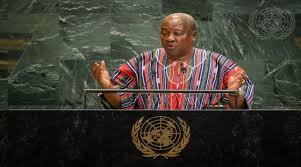
On 25 September 2025, Ghana’s President, H.E. John Dramani Mahama, addressed the 80th Session of the United Nations General Assembly. His speech was not only a call for reform within the UN, but also a reflection on Africa’s history, resilience, and central role in shaping the future. For those in social work and development, his words offer powerful insights into gender, slavery, decolonisation, UN reform, migration, and global justice.

The future is African

President Mahama reminded the world that by 2050, Africa will account for more than a quarter of the global population, and a third of all young people. This demographic reality has profound implications for development and social work. Africa’s youth must not be marginalised; instead, they must be empowered as agents of change. Social work practice will need to strengthen systems that promote education, health, and employment opportunities, ensuring Africa’s youth are not left behind.

Past is prologue

The President recalled Africa’s absence from decision-making tables during the founding of both the League of Nations and the United Nations. The shadow of colonisation still lingers, shaping global inequalities. For social workers and development practitioners, decolonisation is not only about history—it is about dismantling systems of oppression, reclaiming African knowledge systems, and ensuring communities are active participants in shaping their futures.

Slavery and reparations

Perhaps the strongest statement of justice was his call to recognise the transatlantic slave trade as the greatest crime against humanity. More than 12.5 million Africans were taken by force, and the wealth of Western nations was built on their backs. The demand for reparations is not only financial—it is also moral and restorative. In social work, reparative justice means recognising historical trauma, addressing generational inequalities, and ensuring that descendants of the enslaved are part of global development conversations.

The slave trade must be recognised as the greatest crime against humanity.

UN reform and representation

A central point of the address was the outdated structure of the UN Security Council. Africa, despite its size and the number of its member states, still lacks a permanent seat. For social development, this exclusion reflects wider global injustices where African voices are silenced in decision-making forums. Reforming the UN is not just a political issue; it is about fairness, dignity, and ensuring that social justice principles of representation and equity are honoured on the world stage.

If not now, then when?

Migration and climate change

President Mahama drew attention to Sudan’s humanitarian crisis and the plight of 12 million displaced people. He also highlighted how climate change disproportionately affects the Global South, forcing migration. Social workers must address not only the needs of migrants and refugees but also challenge narratives that criminalise them. Migration stories—such as those of Ghanaian immigrants who became judges, mayors, and cultural icons—prove that mobility enriches societies, rather than threatens them.

No one puts their children in a boat unless the water is safer than the land.

Gender and representation

The President ended with a powerful reminder about the need to ensure that women and girls live in a safe and equal world. Gender equality remains central to development. Social workers must champion women’s empowerment, challenge patriarchy, and ensure that girls are equipped to realise their potential. Representation matters, and Ghana’s election of Naana Jane Opoku-Agyemang as Vice President is an example of progress.

I hope this new world…is a place of safety and equality for women and girls.

Resources and sovereignty

The President also warned against the exploitation of Africa’s natural resources. For too long, vast concession areas have been controlled by foreign interests, leaving communities impoverished. A developmental reset must prioritise Africa’s ownership of its resources, ensuring revenues fund social protection, health, education, and welfare systems. For social work, this means advocating for policies that serve people, not profits.

Building another world

President Mahama’s address can be read as a manifesto for justice, equality, and empowerment—the very principles that guide social work and development. From calling out historical wrongs like slavery, to demanding reform of global institutions, to insisting on gender equity, his words challenge us to reimagine development as inclusive, fair, and decolonised.

Another world is not only possible, she is on her way. On a quiet day, I can hear her breathing.

Share this:

  • Click to share on WhatsApp (Opens in new window) WhatsApp
  • Click to share on Facebook (Opens in new window) Facebook
  • Click to email a link to a friend (Opens in new window) Email
  • Click to print (Opens in new window) Print
  • Click to share on LinkedIn (Opens in new window) LinkedIn
  • Click to share on X (Opens in new window) X
  • Click to share on Telegram (Opens in new window) Telegram

Like this:

Like Loading...

Use the form below to subscibe to Owia Bulletin.


Discover more from Africa Social Work & Development Network | Mtandao waKazi zaJamii naMaendeleo waAfrika

Subscribe to get the latest posts sent to your email.
Global Tags:Ghana

Post navigation

Previous Post: Global social work and development: Africa’s position at the UN 2025 General Assembly

Habari, I invite you to interact with others on Mtandao by leaving a comment. Asante sana.Cancel reply

AFRICA-WIDE INSTITUTIONS

ASWEA logo

ASWEA 1965-1989

Umoja waAfrika (AU) Former OAU Toto/Brief | Agenda63

ADF

Part of ADB

ASSWA logo

ASSWA

Since 2005

PAWO (AU Arm)

Facebook | X

COUNTRY INFORMATION (SOCIAL WORK & DEVELOPMENT)

  • Algeria 🇩🇿
  • Angola 🇦🇴
  • Benin 🇧🇯
  • Botswana 🇧🇼
  • Burkina Faso 🇧🇫
  • Burundi 🇧🇮
  • Cabo Verde 🇨🇻
  • Cameroon 🇨🇲
  • Central Africa Republic 🇨🇫
  • Chad 🇹🇩
  • Comoros 🇰🇲
    • Mayotte of Comoro
  • Congo, DR 🇨🇩
  • Congo 🇨🇬
  • Cote D’Ivoire 🇨🇮
  • Djibouti 🇩🇯
  • Egypt 🇪🇬
  • Equatorial Guinea 🇬🇶
  • Eritrea 🇪🇷
  • Eswatini 🇸🇿
  • Ethiopia 🇪🇹
  • Gabon 🇬🇦
  • Gambia, The 🇬🇲
  • Ghana 🇬🇭
  • Guinea 🇬🇳
  • Guinea-Bissau 🇬🇼
  • Kenya 🇰🇪
  • Lesotho 🇱🇸
  • Liberia 🇱🇷
  • Libya 🇱🇾
  • Madagascar 🇲🇬
  • Malawi 🇲🇼
  • Mali 🇲🇱
  • Mauritania 🇲🇷
  • Mauritius 🇲🇺
  • Morocco 🇲🇦
  • Mozambique 🇲🇿
  • Namibia 🇳🇦
  • Niger 🇳🇪
  • Nigeria 🇳🇬
  • Rwanda 🇷🇼
  • Sao Tome and Principe 🇸🇹
  • Senegal 🇸🇳
  • Seychelles 🇸🇨
  • Sierra Leone 🇸🇱
  • Somalia 🇸🇴
  • South Africa 🇿🇦
  • South Sudan 🇸🇸
  • Sudan 🇸🇩
  • Togo 🇹🇬
  • Tanzania 🇹🇿
  • Tunisia 🇹🇳
  • Uganda 🇺🇬
  • Western Sahara (SADR)
  • Zambia 🇿🇲
  • Zimbabwe 🇿🇼
  • “Dongo”
  • ‘Wakanda’
  • Umoja waAfrica (African Union)
  • Afro-Caribbeans
    • Haiti
  • Afro-Latinos
  • Melanesia
    • Aboriginal Countries
    • Papua New Guinea
    • West Papua
  • Afro-Asians ‘Sidi’

COVID-19 FINAL UPDATE: Africa Infections: 12.3 million people. Deaths 260 000. World infections: 650 million. Deaths 6.7 million. Data aggregated by ASWDNet on 12 December 2022. View this COVID-19 references list for Africa.

Search

Timezone Conversion

Choose Date & Time:
- :
From Timezone:
To Timezone:
Converted Time:

Decolonisation Calculator (DECA). What is the rate of decolonisation of social work and development training, education and research in your country? Use this simple calculator.

  • Africa’s future, social work, and development: lessons from Ghana’s address to the UN General Assembly
  • Global social work and development: Africa’s position at the UN 2025 General Assembly
  • Africa’s knowledge for the world: The philosophy of Ubuntu and the value of harambee at SWSD 2026
  • Welcome to 2026
  • Stokvels: an opportunity for development at family, community and national level or not?

Testimonials

Deeply inspired by Mtandao/ASWDNet’s mission

Dear ASWDNet Team,

I hope this message finds you well.

My name is Hilda Ngaja a social worker based in Tanzania. I recently came across the African Social Work and Development Network (ASWDNet) and was deeply inspired by its mission to create, aggregate, and disseminate African knowledges and to promote social work and development rooted in our values, languages, and lived realities.

As a social worker I strongly resonate with your emphasis on African epistemologies and values such as Ubuntu. I am especially drawn to your commitment to building emancipatory knowledge spaces for social work professionals, students, academics, and communities across the continent.

With this in mind, I would be honoured to join ASWDNet as a member and contribute to its efforts in advancing socially relevant and culturally grounded practice and scholarship in Africa.

Kindly receive the details required

Hilda Ngaja, Bachelor Degree in Social work

Referee, Dr Leah Omari, Lecturer, The Institute of Social Work

Thank you for your important work, and I look forward to hearing from you.

Inspired by Mtandao mission and goals (Bikila Tesfaye, Mtandao member number 143)

I am from the Gambella region, specifically Gambela City in Ethiopia. I joined ASWDNet after searching for membership related to my academic and professional background and was inspired by your mission and goals. I envision collaborating through knowledge and skill sharing, as well as joint initiatives that address common challenges in our communities. I recommend enhancing research, training programmes, and networking opportunities. See my interview here.

Bikila Tesfaye


  • Mtandao website now used in all countries of the world (current stats), please like and comment when you use our resources Admin ASWDNet
  • Social Work and Social Development in Africa Admin ASWDNet
  • Ubuntu Digital Platform on Ushahidi: Presentation by Prof Janestic Twikirize and Eriya Turyamureeba at the International Social Work & Social Development Conference 2025, Uganda Teaching and Learning (Fundo)
  • Fundi – The African Dictionary and Encyclopaedia of Social Work and Development (Version 2.0) This Website
  • Mosquitoes, mistrust and the marginalisation of African researchers Admin ASWDNet
  • Wazee Day 2025: Educate, Empower, Prevent Dementia Wazee
  • Unidisciplinary, multidisciplinary, interdisciplinary, and transdisciplinary approaches in social work and development Motivating
  • Artificial Intelligence (AI), technocolonial and decolonisation in African Social Work Education and Practice Admin ASWDNet

Copyright © 2020-2030 Africa Social Work and Development Network (ASWDNet).

%d