Skip to content
  • Home
  • About|Join
  • Ethics
  • Events
  • Certificates
  • OwiaNews
  • Journals
  • DecoloniseCalculators
  • Mfundo|CPD
  • FundiDictionary
  • Awards
  • Ushahidi
  • DACCS
  • Kuumba
  • Submit
  • WSWSD Conference Nairobi | Mtandao Exhibition
  • Mental Health Masterclass
  • Catalogue
  • Consultancy
  • Shop
  • Twitter
  • Facebook
  • LinkedIn
  • YouTube
  • Academia AJSW
  • Instagram
Africa Social Work and Development Network | Mtandao waKazi zaJamii naMaendeleo waAfrica
Africa Social Work & Development Network | Mtandao waKazi zaJamii naMaendeleo waAfrika

Africa Social Work & Development Network | Mtandao waKazi zaJamii naMaendeleo waAfrika

Mtandao creates, aggregates and disseminates information and resources to facilitate Social Work and Development Work in Africa.

  • ACADEMICS
    • Lecture Resources
    • Lectures
    • Fieldwork Resources
    • Approaches to assessing learning
    • Types of University Assessments
    • Book Publishing
      • Book_Professional Social Work in Zimbabwe
    • ASWDNet Guide to Writing (Journals)
    • ASWDNet Guide to Writing and Publishing
  • PRACTITIONERS
    • Values and Ethics in Africa
    • Africa Social Work and Development Awards
    • Continuous Professional Development (CPD)
    • Templates, Models, Frameworks, Assessment Tools and Questionnaires
    • African Theories
    • Supervision
  • STUDENTS
    • Social Work and Development Student Conference (SWDSC)
    • 12 Steps to Get Published
    • Tips for Prospective Doctoral Students
    • ASWDNet Guide to Writing (Academic Research Brief| Proposal | Thesis)
    • Writing a journal article could be as easy as making fufu, nsima, ugali or matoke!
    • Lectures
  • RESEARCHERS
    • Research Methods
    • Qualitative data levels of analysis
    • African Independent Ethics Committee (AIEC)
    • Research Questions Bank
    • Publisher/Journal Checker
    • Research Strategies
    • Reviewers
    • Ubuntu Research Group (URG)
    • Kuumba (Mentoring)
      • SURVEY OF SOCIAL PROBLEMS AND CHALLENGES FOR AFRICA
      • Mentees
      • Mentors
      • Guidelines
    • Afrocentric Mentoring Project (AfroME)
      • Team
      • Partners
      • Call for Applications for the Afrocentric and Decolonial Social Work Mentoring Project (now closed)
  • ASSOCIATIONS
  • TRAINING INSTITUTIONS
  • COMMUNITIES
    • Ubuntu Fundraising and Charity Principles
    • COVID-19
    • Social Work for Children
    • Funda KiSwahili
  • MEMBERS
  • Africa Philosophy
  • African Theories
  • Research Methods
  • Library | Databases
  • Social Work
    • Social Work Education institutions (SWEI) in Africa
    • Biography of Social Development in Africa
      • Charlotte Makgomo-Mannya Maxeke (1871-1939)
      • Zahia Marzouk (1906 – 1988)
      • Regina Gelana Twala (1908-1968)
      • Mai Musodzi Chibhaga Ayema (1885-1952)
      • Nnoseng Ellen Kate Kuzwayo (1914 – 2006)
      • Joshua Mqabuko Nyongolo Nkomo (19 June 1917 – 1 July 1999)
      • Jairos Jiri (1921 – 1982)
      • Kenneth Buchizya Kaunda (1924-2021)
      • John Samuel Mbiti (1931-2019)
      • Gibson Mthuthuzeli Kent (1932-2004)
      • Winnie Madikizela-Mandela 1936–2016
      • Ngugi wa Mirii (1951 – May 3, 2008)
      • Andrew Chad Nyanguru (28 Mar 1953-14 May 2014)
      • Professor Rodreck Mupedziswa
      • Edwell Kaseke (1954-2017)
      • Lovemore Mbigi
      • Selassie Seyoum Gebre (1936-)
      • Arega Yimam (-c1989)
      • Dr Noel Garikai Muridzo
      • Dr Edmos Mthethwa
      • Phillip Manyanye Bohwasi
      • Wassie Kebede
      • Gidraph G Wairire
      • Wangari Muta Maathai
      • Uzoma Odera Okoye, Dr
    • Social Work Journals and Other Serial Publications in Africa (ASWDNet Index)
    • Association of Social Work Education in Africa (ASWEA) – 1965 to 1989
    • Future of Social Work in Africa
    • Environmental Social Work
  • Development
    • Developmental Work Database
  • Ubuntu
    • Ubuntu Research Group (URG)
    • Ushahidi Platform
    • Ubuntu Fundraising and Charity Principles
    • Ubuntu Bibliography
    • Ubuntu Survey
    • Ubuntu Annual Lecture
    • Ubuntu Interview Guide Sample
  • Africa
    • African Anthem (African Union)
    • Umoja waAfrica (African Union)
    • African symbols and alphabets
    • Fundi – The African Dictionary and Encyclopaedia of Social Work and Development
    • Africa Religion (uAfrica)
    • Africa Research Ethics and Malpractice Statement (AREMS)
    • The San Code of Research Ethics (San Code)
  • Blog
    • Our Ubuntu-inspired Comments Policy
    • Become a Blogger
    • Admin ASWDNet
    • Babekazi
    • Professor Roy@Indigenous Social Work
    • Mutape J.D.S Sithole
    • Alemayehu Gebru from Ethiopia, Jimma City
    • Rugare Mugumbate
    • Decolonise
    • Writing and Publishing
    • Development
    • Toto
    • Ms. Alexandra Thokozile Mliswa (MSc,LLB, BA)
    • Environmental work
    • Africa religion | Spirituality
    • Kudzai Mwapaura blogger
    • All Posts Basket

[aioseo_breadcrumbs]

How Annonciata Niyibizi Muhayimana created the Ingata of Life Narrative Model Admin ASWDNet
When Resilience Becomes a Burden: The Hidden Struggles of Women Researchers in Africa Admin ASWDNet
Borderless borders: how Dangote’s African Renaissance Group is putting muscle behind Mbeki’s African Renaissance Theory Development

Cultural and spiritual artifacts of Africa stolen by colonising countries
Posted on 7 April 20237 February 2026 By aswnetadmin 2 Comments on Cultural and spiritual artifacts of Africa stolen by colonising countries
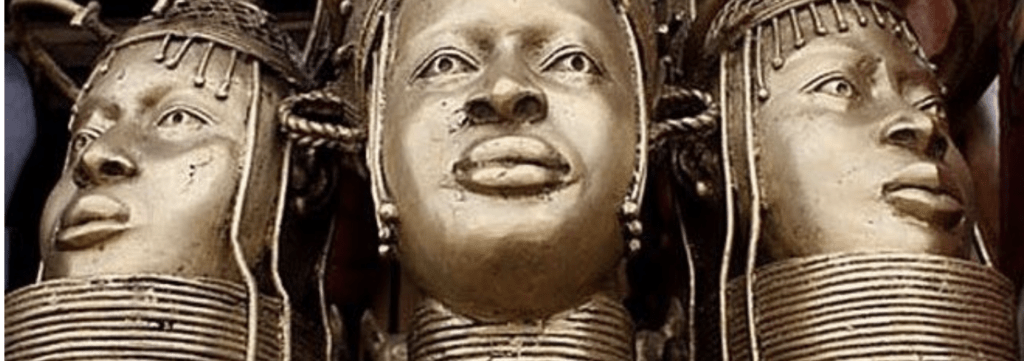
Some Benin bronze artifacts, Nigeria. These were created by the Edo people of the Edo Kingdom (now part of Edo State). They are about 5 000 artifacts. Some of the artifacts are over 10 000 years old. Colonisers doubted they were made by Africans, one of the reasons why they stole them and exported them to Europe. The truth is, these are works of art by Africa’s people that should be returned.
  • What are artifacts?
  • The role of Christianity and Islam in cultural colonisation and artifacts theft
  • Hundreds of African artifacts hidden from Africans
  • Abrahamic artifacts were introduced to replace African artifacts
  • What could social workers around the world do to address this form of injustice
  • Further reading

What are artifacts?

Artifacts are works of art that are inspired by people’s religion, philosophy and culture. In fact, artifacts are culture, philosophy and religion. Africa developed many artifacts along the years, and continues to do so today.

The role of Christianity and Islam in cultural colonisation and artifacts theft

When Abrahamic religion preachers of the Christian and Islamic faith came to Africa, and colonised its religion, they called these artifacts pagan, yet, they took them to their countries, and thousands of these artifacts were sold to individuals, corporates or put in museums.

Hundreds of African artifacts hidden from Africans

  • 70,000 artifacts are at Musee du Quai Branly in France,
  • 69,000 are at the British Museum
  • 37,000 artifacts are at the Weltmuseum in Austria
  • 75,000 artifacts are at the Future Humboldt Forum in Germany/Germany’s Ethnological Museum
  • 180,000 at the Musee Royal de l’Afrique Centrale in Belgium
  • Netherlands’ National Museum of World Cultures has 66,000
  • about 50,000 in United States of America
  • Many artifacts in Arab countries outside Africa
  • Thousands are in private hands globally but mostly in Europe

Only a few hundreds have been returned. At one point, France promised to return only 26! Nigeria, Benin City received only 2 statues at one time. This is gross hypocrisy and paternalism.

Abrahamic artifacts were introduced to replace African artifacts

While these artifacts were taken, Abrahamic artifacts were introduced, and these include:

  • The cross
  • Artifacts depicting Mary
  • Artifacts depicting Jesus
  • Artifacts depicting the bible
  • Candles
  • Figures of angels
  • Artifacts of Islam

These artifacts promote the cultures, religions and philosophies of the source countries, and contribute to the colonisation of Africa.

What could social workers around the world do to address this form of injustice

  1. The stealing and refusal to return the artifacts is a major social justice issue which often, social workers neglect to focus on issues of less importance to colonised nations. Often social workers from the west write or lobby Africa to adopt ‘rights’ that they choose, but they are silent when it comes to historical injustices, cultural and spiritual rights. Social justice in social work can not be achieved by neglecting older injustices.
  2. Some social workers in western and middle-eastern countries see these artefacts, with their families in museums, and even have some at their places of work or at home. It would be helpful, if they join the collective lobbying for the return of these artifacts.
  3. Global social work organisations, among them the IFSW and IASSW, should also be joining this kind of lobbying, in the same manner they respond to injustices in other regions of the world. Work may have been done previously, but a continuous process of lobbying is desirable, not only for Africa but many other cultures whose works of art was stolen and not yet returned.
  4. There are many African social workers who are now working in colonising countries, and would be beneficial if they join movements or even form some, to lobby for the return of stolen property.
  5. Africa’s social workers, wherever they are, should be defending the return of the artifacts, and challenge colonial thinking that Africa is unable to keep its own artifacts, therefore, it should not have access to its own artifacts – a denial of its tangible culture, philosophy, heritage and spirituality.

Further reading

Who are Westerners guarding African artifacts from – Africans themselves? They are denying Africans from their culture and religion for their own and economic benefits enjoyment but they in turn say African’s religion and culture is bad. The solution – all artifacts from public and private places must be returned.

Use the form below to subscibe to Owia Bulletin.

Admin ASWDNet, All Posts Basket, Babekazi

Post navigation

Previous Post: African symbols and their usefulness in social work and development
Next Post: Types of University Assessments – A Developmental Approach

Comments (2) on “Cultural and spiritual artifacts of Africa stolen by colonising countries”

  1. Pam Halfmann says:
    8 April 2023 at 08:07

    Thank you for this article. I agree all items looted from Africa should be returned Immediately. It makes me sick that this happened and also that countries and museums are refusing or slow walking the return of items. When I read that some museums are considering LOANING some items to Africa it made me so angry. How dare they say this. These western countries and institutions, which I am a white citizen of, have NO RIGHTS to these items and never did. In so many cases the West stole items after burning down African villages, homes and cities and killing or enslaving African people. What will it take for the west to acknowledge this? You said it so well “Who are Westerners guarding African artifacts from – Africans themselves? They are denying Africans from their culture and religion for their own and economic benefits enjoyment but they in turn say African’s religion and culture is bad. The solution – all artifacts from public and private places must be returned” I read so many of these places are refusing to give Africans back their possessions. It’s very heartbreaking. What will it take for the West to acknowledge the trauma and frustration this is causing from looting these items and remains and refusing to give them back. Maybe we should dig up the West’s grandmothers, children, leaders, and valuables and display them to the public. Would the West be ok w that?Maybe have an auction for the remains of people from the US, UK, Denmark, etc. and give them to the highest bidder. Or should we say to the West we will give back your grandmothers remains and items when you give Africa back their grandmothers remains and items. Maybe tell them we’ll give back their relatives remains and valuables on loan. The Wests justifications to keep these remains and items is repulsive. I’ll write some emails to these museums and tell others to do the same. I know it’s an ongoing struggle to get them back and I hope all items are returned to their rightful home very soon.

  2. aswnetadmin says:
    14 April 2023 at 14:31

    Dear Pam Halfmann,
    Thank you for your contribution to this blog post and for promising to write some letters to the museums.
    It is when we act that justice can be realised.
    ASWNET

Comments are closed.

AFRICA-WIDE INSTITUTIONS

ASWEA logo

ASWEA

1971-1989

Umoja waAfrika (AU) Former OAU Toto/Brief | Agenda63

ADF

Part of ADB

ASSWA logo

ASSWA

Since 2005

PAWO (AU Arm)

Facebook | X

COUNTRY INFORMATION (SOCIAL WORK & DEVELOPMENT)

  • Algeria 🇩🇿
  • Angola 🇦🇴
  • Benin 🇧🇯
  • Botswana 🇧🇼
  • Burkina Faso 🇧🇫
  • Burundi 🇧🇮
  • Cabo Verde 🇨🇻
  • Cameroon 🇨🇲
  • Central Africa Republic 🇨🇫
  • Chad 🇹🇩
  • Comoros 🇰🇲
    • Mayotte of Comoro
  • Congo, DR 🇨🇩
  • Congo 🇨🇬
  • Cote D’Ivoire 🇨🇮
  • Djibouti 🇩🇯
  • Egypt 🇪🇬
  • Equatorial Guinea 🇬🇶
  • Eritrea 🇪🇷
  • Eswatini 🇸🇿
  • Ethiopia 🇪🇹
  • Gabon 🇬🇦
  • Gambia, The 🇬🇲
  • Ghana 🇬🇭
  • Guinea 🇬🇳
  • Guinea-Bissau 🇬🇼
  • Kenya 🇰🇪
  • Lesotho 🇱🇸
  • Liberia 🇱🇷
  • Libya 🇱🇾
  • Madagascar 🇲🇬
  • Malawi 🇲🇼
  • Mali 🇲🇱
  • Mauritania 🇲🇷
  • Mauritius 🇲🇺
  • Morocco 🇲🇦
  • Mozambique 🇲🇿
  • Namibia 🇳🇦
  • Niger 🇳🇪
  • Nigeria 🇳🇬
  • Rwanda 🇷🇼
  • Sao Tome and Principe 🇸🇹
  • Senegal 🇸🇳
  • Seychelles 🇸🇨
  • Sierra Leone 🇸🇱
  • Somalia 🇸🇴
  • South Africa 🇿🇦
  • South Sudan 🇸🇸
  • Sudan 🇸🇩
  • Togo 🇹🇬
  • Tanzania 🇹🇿
  • Tunisia 🇹🇳
  • Uganda 🇺🇬
  • Western Sahara (SADR)
  • Zambia 🇿🇲
  • Zimbabwe 🇿🇼
  • “Dongo”
  • ‘Wakanda’
  • Umoja waAfrica (African Union)
  • Afro-Caribbeans
    • Haiti
  • Afro-Latinos
  • Melanesia
    • Aboriginal Countries
    • Papua New Guinea
    • West Papua
  • Afro-Asians ‘Sidi’

Decolonisation Calculator (DECA). What is the rate of decolonisation of social work and development training, education and research in your country? Use this simple calculator.

COVID-19 FINAL UPDATE: Africa Infections: 12.3 million people. Deaths 260 000. World infections: 650 million. Deaths 6.7 million. Data aggregated by ASWDNet on 12 December 2022. View this COVID-19 references list for Africa.

Search

Policies | Guidelines | Checklists

  • AI Policy
  • San Code of Ethics
  • Journal Writing Guide
  • Ubuntu Principles in Fundraising & Charity
  • Comments Policy
  • Publisher Checker
  • Decolonisation Calculator
  • African Research Ethics & Malpractice Statement
  • Privacy & Cookie Policy
  • Email, Data and Social Media Policy
  • How Annonciata Niyibizi Muhayimana created the Ingata of Life Narrative Model
  • When Resilience Becomes a Burden: The Hidden Struggles of Women Researchers in Africa
  • Borderless borders: how Dangote’s African Renaissance Group is putting muscle behind Mbeki’s African Renaissance Theory
  • Social Development Award Statement by Vongai P Mangwiro
  • Development Worker of the Year 2026 Statement by Bikila Tesfaye
  • Become a Blogger Blogging
  • Welcome to the AFRICASOCIALWORK.NET All Posts Basket
  • Become a Blogger All Posts Basket
  • The political, legal, radical and policy role of social work in Africa Admin ASWDNet
  • Egypt’s history of social work and social services All Posts Basket
  • Ubuntu and Social Work Resources All Posts Basket
  • Ubuntu Theories All Posts Basket
  • Ethiopian History of Social Work and Social Services All Posts Basket

Email Sign In


Website Log In


Mfundo | Courses | CPD Log In


Members Portal

COPYRIGHT © 2020 to 2030: Mtandao - Africa Social Work and Development Network (ASWDNet) | UBUNTU ACKNOWLEDGEMENT - We pay our respects to those who came before us, our Elders and forefathers and mothers, who are the sources and protectors (against colonisation) of the knowledge and wisdom that continue to shape lives, teaching, learning, research, and practice across generations. Because they were, we are. Asante. Siyabonga. Tatenda. Waaw. Àṣé.