Skip to content
  • Home
  • About|Join
  • Ethics
  • Events
  • Certificates
  • OwiaNews
  • Journals
  • DecoloniseCalculators
  • Mfundo|CPD
  • FundiDictionary
  • Awards
  • Ushahidi
  • DACC
  • Kuumba
  • Shop
  • Twitter
  • Facebook
  • LinkedIn
  • YouTube
  • Academia AJSW
  • Instagram
Africa Social Work and Development Network | Mtandao waKazi zaJamii naMaendeleo waAfrica
Africa Social Work & Development Network | Mtandao waKazi zaJamii naMaendeleo waAfrika

Africa Social Work & Development Network | Mtandao waKazi zaJamii naMaendeleo waAfrika

Mtandao creates, aggregates and disseminates information and resources to facilitate Social Work and Development Work in Africa.

  • ACADEMICS
    • Lecture Resources
    • Lectures
    • Fieldwork Resources
    • Approaches to assessing learning
    • Types of University Assessments
    • Book Publishing
      • Book_Professional Social Work in Zimbabwe
    • ASWDNet Guide to Writing (Journals)
    • ASWDNet Guide to Writing and Publishing
  • PRACTITIONERS
    • Values and Ethics in Africa
    • Africa Social Work and Development Awards
    • Continuous Professional Development (CPD)
    • Templates, Models, Frameworks and Assessment Tools
    • African Theories
    • Supervision
  • STUDENTS
    • Social Work and Development Student Conference (SWDSC)
    • 12 Steps to Get Published
    • Tips for Prospective Doctoral Students
    • ASWDNet Guide to Writing (Academic Research Brief| Proposal | Thesis)
    • Writing a journal article could be as easy as making fufu, nsima, ugali or matoke!
    • Lectures
  • RESEARCHERS
    • Research Methods
    • Qualitative data levels of analysis
    • African Independent Ethics Committee (AIEC)
    • Research Questions Bank
    • Publisher/Journal Checker
    • Research Strategies
    • Reviewers
    • Ubuntu Research Group (URG)
    • Kuumba (Mentoring)
      • SURVEY OF SOCIAL PROBLEMS AND CHALLENGES FOR AFRICA
      • Mentees
      • Mentors
      • Guidelines
    • Afrocentric Mentoring Project (AfroME)
      • Team
      • Partners
      • Call for Applications for the Afrocentric and Decolonial Social Work Mentoring Project
  • ASSOCIATIONS
  • TRAINING INSTITUTIONS
  • COMMUNITIES
    • Ubuntu Fundraising and Charity Principles
    • COVID-19
    • Social Work for Children
    • Funda KiSwahili
  • MEMBERS
  • Africa Philosophy
  • African Theories
  • Research Methods
  • Library | Databases
  • Social Work
    • Social Work Education institutions (SWEI) in Africa
    • Biography of Social Development in Africa
      • Charlotte Makgomo-Mannya Maxeke (1871-1939)
      • Zahia Marzouk (1906 – 1988)
      • Regina Gelana Twala (1908-1968)
      • Mai Musodzi Chibhaga Ayema (1885-1952)
      • Nnoseng Ellen Kate Kuzwayo (1914 – 2006)
      • Joshua Mqabuko Nyongolo Nkomo (19 June 1917 – 1 July 1999)
      • Jairos Jiri (1921 – 1982)
      • Kenneth Buchizya Kaunda (1924-2021)
      • John Samuel Mbiti (1931-2019)
      • Gibson Mthuthuzeli Kent (1932-2004)
      • Winnie Madikizela-Mandela 1936–2016
      • Ngugi wa Mirii (1951 – May 3, 2008)
      • Andrew Chad Nyanguru (28 Mar 1953-14 May 2014)
      • Professor Rodreck Mupedziswa
      • Edwell Kaseke (1954-2017)
      • Lovemore Mbigi
      • Selassie Seyoum Gebre (1936-)
      • Arega Yimam (-c1989)
      • Dr Noel Garikai Muridzo
      • Dr Edmos Mthethwa
      • Phillip Manyanye Bohwasi
      • Wassie Kebede
      • Gidraph G Wairire
      • Wangari Muta Maathai
      • Uzoma Odera Okoye, Dr
    • Social Work Journals and Other Serial Publications in Africa (ASWDNet Index)
    • Association of Social Work Education in Africa (ASWEA) – 1965 to 1989
    • Future of Social Work in Africa
    • Environmental Social Work
  • Development
    • Developmental Work Database
  • Ubuntu
    • Ubuntu Research Group (URG)
    • Ushahidi Platform
    • Ubuntu Fundraising and Charity Principles
    • Ubuntu Bibliography
    • Ubuntu Survey
    • Ubuntu Annual Lecture
    • Ubuntu Interview Guide Sample
  • Africa
    • African Anthem (African Union)
    • Umoja waAfrica (African Union)
    • Fundi – The African Dictionary and Encyclopaedia of Social Work and Development
    • Africa Religion (uAfrica)
    • Africa Research Ethics and Malpractice Statement (AREMS)
    • The San Code of Research Ethics (San Code)
  • Blog
    • Our Ubuntu-inspired Comments Policy
    • Become a Blogger
    • Admin ASWDNet
    • Babekazi
    • Professor Roy@Indigenous Social Work
    • Mutape J.D.S Sithole
    • Alemayehu Gebru from Ethiopia, Jimma City
    • Rugare Mugumbate
    • Decolonise
    • Writing and Publishing
    • Development
    • Toto
    • Ms. Alexandra Thokozile Mliswa (MSc,LLB, BA)
    • Environmental work
    • Africa religion | Spirituality
    • Kudzai Mwapaura blogger
    • All Posts Basket
YOU ARE HERE » Home » Admin ASWDNet » The Dangote framework for Africa’s development
Decolonising Social Work Education as a Catalyst for Africa’s Socio-Economic Renewal Admin ASWDNet
frank fanon Frantz Fanon and the social roots of mental health Admin ASWDNet
Togo challenges the world map: why this is practical decolonisation Decolonise

The Dangote framework for Africa’s development

Posted on 8 May 20268 May 2026 By Babe Kazi No Comments on The Dangote framework for Africa’s development

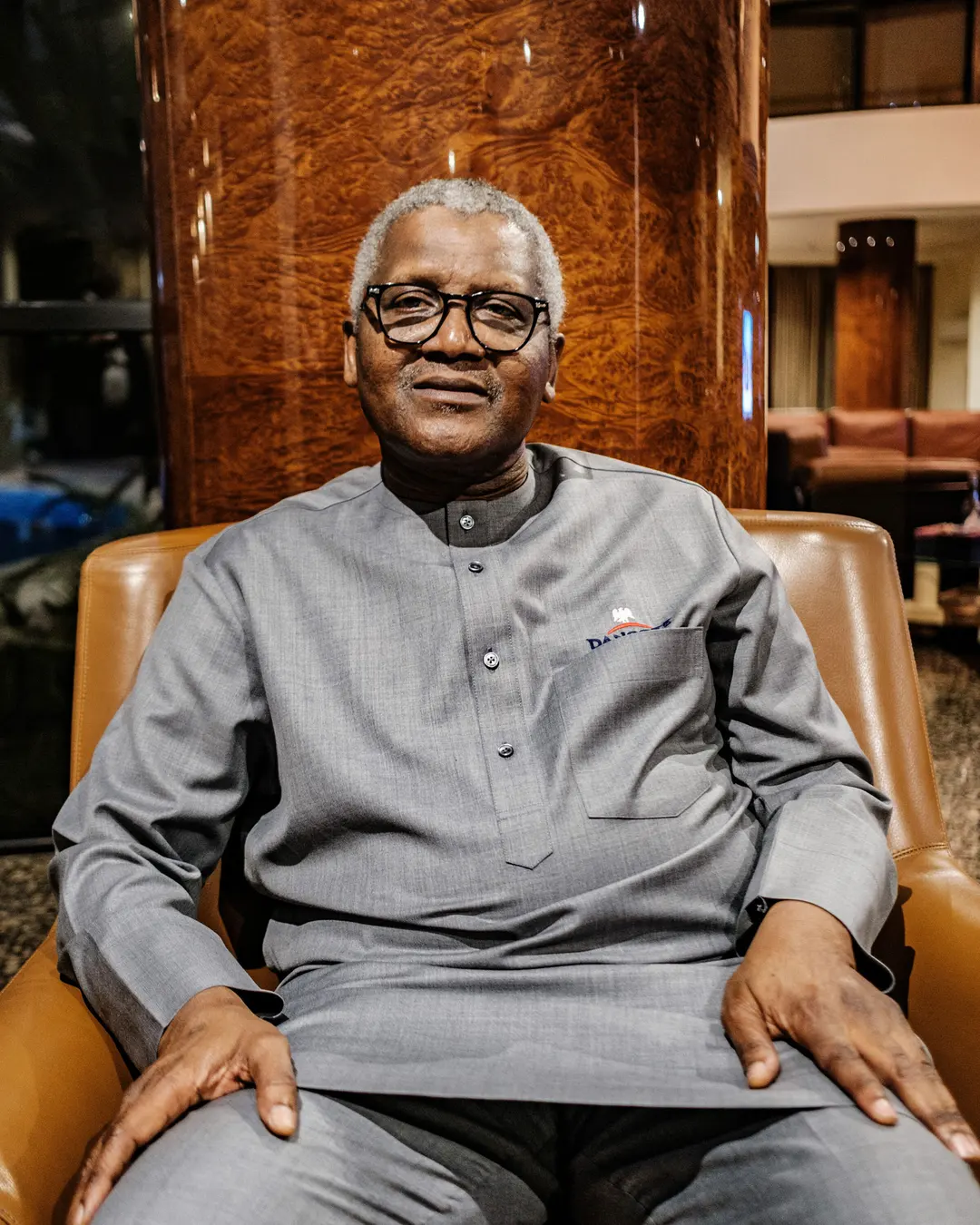
The Dangote framework is a blueprint for African industrialisation, developed by Aliko Dangote. The framework holds that Africa’s path to prosperity lies in self-sufficiency, large-scale local production and the removal of regional barriers.

  • In Dangote' own words
  • Who is Aliko Dangote?
  • The 8 pillars of the Dangote framework
  • Implications for development professionals

In Dangote’ own words

“We need to understand that we are the only people that can make Africa great. Nobody will do that for us. Africa can only be made great by Africans.”

“We are waiting for foreign investors to come and develop our own land. It’s not possible. If we don’t commit our own funds to develop our continent, nobody will do that for us.”

“We don’t need theory. What we need is action. If we invest in Africa, if we open up Africa, we will create prosperity for our people.”

“Manufacture, don’t just trade. There is money in manufacturing even though it is capital intensive. To achieve a big breakthrough, I had to start manufacturing the same product I was trading on.”

Who is Aliko Dangote?

Born in Kano on 10 April 1957, Aliko Dangote was raised in a prominent trading family. His entrepreneurial drive appeared early. As a primary school student he bought cartons of sweets to resell for profit. After earning a business degree from Al-Azhar University in Cairo, he returned to Nigeria and used a small loan from his uncle to start a trading firm in 1977.

Over the following decades he transformed that trading house into the Dangote Group, the largest industrial conglomerate in West Africa. He is consistently ranked as Africa’s wealthiest person and uses his influence to advocate for African-led development.

The 8 pillars of the Dangote framework

PillarCore conceptStrategy
1Import substitutionMove from trading to manufacturing to stop importing what can be made locally.
2Vertical integrationControl the entire value chain, from raw material sourcing to final distribution.
3Aggressive reinvestmentReinvest profits into expansion rather than immediate consumption or luxury.
4Mastery and focusStart small, master one sector such as cement, and then scale strategically.
5Long-term patienceInvest in decades-long projects, like refineries, that hold up through economic volatility.
6Solve critical needsBuild businesses around essentials: food, construction and energy.
7Brand resiliencePrioritise reputation and reliability to maintain market confidence over decades.
8Continental mobilityAdvocate for visa-free travel and seamless borders to unlock intra-African trade.

Implications for development professionals

For those working in policy, economics or international development, the Dangote framework offers a shift in thinking from aid to industry.

From assembly to manufacturing. The focus should move away from supporting assembly plants towards deep manufacturing that draws on local raw materials, which helps conserve foreign exchange.

Infrastructure as a public good. Development programmes need to recognise that privately led infrastructure, such as the Dangote Refinery, can act as a catalyst for entire regional supply chains, creating linkages between industrial sectors.

Reducing trade friction. Policy experts should prioritise the African Continental Free Trade Area (AfCFTA) and visa-free regimes. Dangote’s own situation, requiring 35 different visas to visit his operations across the continent, illustrates how fragmentation holds back growth.

Engineering success. Development is increasingly understood as something engineered rather than improvised. Professionals are encouraged to support coordinated leadership that aligns education and infrastructure with industrial goals.

Share this:

  • Share on WhatsApp (Opens in new window) WhatsApp
  • Share on Facebook (Opens in new window) Facebook
  • Email a link to a friend (Opens in new window) Email
  • Print (Opens in new window) Print
  • Share on LinkedIn (Opens in new window) LinkedIn
  • Share on X (Opens in new window) X
  • Share on Telegram (Opens in new window) Telegram

Like this:

Like Loading…

Use the form below to subscibe to Owia Bulletin.


Discover more from Africa Social Work & Development Network | Mtandao waKazi zaJamii naMaendeleo waAfrika

Subscribe to get the latest posts sent to your email.

Admin ASWDNet Tags:Dangote

Post navigation

Previous Post: Decolonising Social Work Education as a Catalyst for Africa’s Socio-Economic Renewal

Habari, I invite you to interact with others on Mtandao by leaving a comment. Asante sana.Cancel reply

AFRICA-WIDE INSTITUTIONS

ASWEA logo

ASWEA 1965-1989

Umoja waAfrika (AU) Former OAU Toto/Brief | Agenda63

ADF

Part of ADB

ASSWA logo

ASSWA

Since 2005

PAWO (AU Arm)

Facebook | X

COUNTRY INFORMATION (SOCIAL WORK & DEVELOPMENT)

  • Algeria 🇩🇿
  • Angola 🇦🇴
  • Benin 🇧🇯
  • Botswana 🇧🇼
  • Burkina Faso 🇧🇫
  • Burundi 🇧🇮
  • Cabo Verde 🇨🇻
  • Cameroon 🇨🇲
  • Central Africa Republic 🇨🇫
  • Chad 🇹🇩
  • Comoros 🇰🇲
    • Mayotte of Comoro
  • Congo, DR 🇨🇩
  • Congo 🇨🇬
  • Cote D’Ivoire 🇨🇮
  • Djibouti 🇩🇯
  • Egypt 🇪🇬
  • Equatorial Guinea 🇬🇶
  • Eritrea 🇪🇷
  • Eswatini 🇸🇿
  • Ethiopia 🇪🇹
  • Gabon 🇬🇦
  • Gambia, The 🇬🇲
  • Ghana 🇬🇭
  • Guinea 🇬🇳
  • Guinea-Bissau 🇬🇼
  • Kenya 🇰🇪
  • Lesotho 🇱🇸
  • Liberia 🇱🇷
  • Libya 🇱🇾
  • Madagascar 🇲🇬
  • Malawi 🇲🇼
  • Mali 🇲🇱
  • Mauritania 🇲🇷
  • Mauritius 🇲🇺
  • Morocco 🇲🇦
  • Mozambique 🇲🇿
  • Namibia 🇳🇦
  • Niger 🇳🇪
  • Nigeria 🇳🇬
  • Rwanda 🇷🇼
  • Sao Tome and Principe 🇸🇹
  • Senegal 🇸🇳
  • Seychelles 🇸🇨
  • Sierra Leone 🇸🇱
  • Somalia 🇸🇴
  • South Africa 🇿🇦
  • South Sudan 🇸🇸
  • Sudan 🇸🇩
  • Togo 🇹🇬
  • Tanzania 🇹🇿
  • Tunisia 🇹🇳
  • Uganda 🇺🇬
  • Western Sahara (SADR)
  • Zambia 🇿🇲
  • Zimbabwe 🇿🇼
  • “Dongo”
  • ‘Wakanda’
  • Umoja waAfrica (African Union)
  • Afro-Caribbeans
    • Haiti
  • Afro-Latinos
  • Melanesia
    • Aboriginal Countries
    • Papua New Guinea
    • West Papua
  • Afro-Asians ‘Sidi’

Decolonisation Calculator (DECA). What is the rate of decolonisation of social work and development training, education and research in your country? Use this simple calculator.

Search

Member Testimonials

What attracts me to Mtandao

My name is Okima Innocent Lawrence. I am deeply passionate about social work, community empowerment, and ethical social work practice across Africa. My professional journey over the past eight years has involved community stakeholder engagement, psychosocial support
…
My name is Okima Innocent Lawrence. I am deeply passionate about social work, community empowerment, and ethical social work practice across Africa. My professional journey over the past eight years has involved community stakeholder engagement, psychosocial support coordination, survivor restoration, mentorship, and grassroots mobilization. I have worked closely with vulnerable communities, facilitated over 100 stakeholder mentorship engagements, supported survivors of gender-based violence and land injustices, and helped establish women’s support groups.
What attracts me to Mtandao/ASWDNet is its strong commitment to advancing African-led social work knowledge, contextual practice, and professional solidarity. I believe in strengthening indigenous approaches to social work and contributing to knowledge production that reflects African realities.
I bring practical field experience, research interest in trauma-informed care, documentation skills, and commitment to ethical and transformative practice. I hope to contribute through active engagement in discussions, sharing practice insights from Uganda, contributing articles where possible, and collaborating in regional knowledge exchange initiatives.
Okima Innocent Lawrence
Mtandao Member Number 143, Joined February 2026
Read more “What attracts me to Mtandao”

Inspired by Mtandao mission and goals (Bikila Tesfaye, Mtandao member number 143)

I am from the Gambella region, specifically Gambela City in Ethiopia. I joined ASWDNet after searching for membership related to my academic and professional background and was inspired by your mission and goals. I envision collaborating
…
I am from the Gambella region, specifically Gambela City in Ethiopia. I joined ASWDNet after searching for membership related to my academic and professional background and was inspired by your mission and goals. I envision collaborating through knowledge and skill sharing, as well as joint initiatives that address common challenges in our communities. I recommend enhancing research, training programmes, and networking opportunities. See my interview here.

Bikila Tesfaye
 

Read more “Inspired by Mtandao mission and goals (Bikila Tesfaye, Mtandao member number 143)”

Deeply inspired by Mtandao/ASWDNet’s mission

Dear ASWDNet Team, I hope this message finds you well. My name is Hilda Ngaja a social worker based in Tanzania. I recently came across the African Social Work and Development Network (ASWDNet) and was deeply
…
Dear ASWDNet Team,
I hope this message finds you well.
My name is Hilda Ngaja a social worker based in Tanzania. I recently came across the African Social Work and Development Network (ASWDNet) and was deeply inspired by its mission to create, aggregate, and disseminate African knowledges and to promote social work and development rooted in our values, languages, and lived realities.

As a social worker I strongly resonate with your emphasis on African epistemologies and values such as Ubuntu. I am especially drawn to your commitment to building emancipatory knowledge spaces for social work professionals, students, academics, and communities across the continent.
With this in mind, I would be honoured to join ASWDNet as a member and contribute to its efforts in advancing socially relevant and culturally grounded practice and scholarship in Africa.
Kindly receive the details required
Hilda Ngaja, Bachelor Degree in Social work
Referee, Dr Leah Omari, Lecturer, The Institute of Social Work
Thank you for your important work, and I look forward to hearing from you.

Read more “Deeply inspired by Mtandao/ASWDNet’s mission”

Policies | Guidelines | Checklists

  • AI Policy
  • San Code of Ethics
  • Journal Writing Guide
  • Ubuntu Principles in Fundraising & Charity
  • Comments Policy
  • Publisher Checker
  • Decolonisation Calculator
  • African Research Ethics & Malpractice Statement
  • Privacy & Cookie Policy
  • The Dangote framework for Africa’s development
  • Decolonising Social Work Education as a Catalyst for Africa’s Socio-Economic Renewal
  • Frantz Fanon and the social roots of mental health
  • Togo challenges the world map: why this is practical decolonisation
  • Decolonising higher education: theories and the Mtandao framework
  • Mtandao website now used in all countries of the world (current stats), please like and comment when you use our resources Admin ASWDNet
  • Social Work and Social Development in Africa Admin ASWDNet
  • Ubuntu Digital Platform on Ushahidi: Presentation by Prof Janestic Twikirize and Eriya Turyamureeba at the International Social Work & Social Development Conference 2025, Uganda Teaching and Learning (Fundo)
  • Fundi – The African Dictionary and Encyclopaedia of Social Work and Development (Version 2.0) This Website
  • Mosquitoes, mistrust and the marginalisation of African researchers Admin ASWDNet
  • Wazee Day 2025: Educate, Empower, Prevent Dementia Wazee
  • Unidisciplinary, multidisciplinary, interdisciplinary, and transdisciplinary approaches in social work and development Motivating
  • Artificial Intelligence (AI), technocolonial and decolonisation in African Social Work Education and Practice Admin ASWDNet

Copyright © 2020-2030 | Mtandao - Africa Social Work and Development Network (ASWDNet).

%d