Skip to content
  • Home
  • About|Join
  • Ethics
  • Events
  • Certificates
  • OwiaNews
  • Journals
  • DecoloniseCalculators
  • Mfundo|CPD
  • FundiDictionary
  • Awards
  • Ushahidi
  • DACCS
  • Kuumba
  • Submit
  • WSWSD Conference Nairobi | Mtandao Exhibition
  • Mental Health Masterclass
  • Catalogue
  • Consultancy
  • Shop
  • Twitter
  • Facebook
  • LinkedIn
  • YouTube
  • Academia AJSW
  • Instagram
Africa Social Work and Development Network | Mtandao waKazi zaJamii naMaendeleo waAfrica
Africa Social Work & Development Network | Mtandao waKazi zaJamii naMaendeleo waAfrika

Africa Social Work & Development Network | Mtandao waKazi zaJamii naMaendeleo waAfrika

Mtandao creates, aggregates and disseminates information and resources to facilitate Social Work and Development Work in Africa.

  • ACADEMICS
    • Lecture Resources
    • Lectures
    • Fieldwork Resources
    • Approaches to assessing learning
    • Book Publishing
      • Book_Professional Social Work in Zimbabwe
    • Types of University Assessments
    • ASWDNet Guide to Writing (Journals)
    • ASWDNet Guide to Writing and Publishing
  • PRACTITIONERS
    • Values and Ethics in Africa
    • Africa Social Work and Development Awards
    • Continuous Professional Development (CPD)
    • Templates, Models, Frameworks, Assessment Tools and Questionnaires
    • African Theories
    • Supervision
  • STUDENTS
    • Social Work and Development Student Conference (SWDSC)
    • 12 Steps to Get Published
    • Tips for Prospective Doctoral Students
    • ASWDNet Guide to Writing (Academic Research Brief| Proposal | Thesis)
    • Writing a journal article could be as easy as making fufu, nsima, ugali or matoke!
    • Lectures
    • Glossary of Publishing Terms
  • RESEARCHERS
    • Research Methods
    • Qualitative data levels of analysis
    • African Independent Ethics Committee (AIEC)
    • Research Questions Bank
    • Publisher/Journal Checker
    • Research Strategies
    • Reviewers
    • Ubuntu Research Group (URG)
    • Kuumba (Mentoring)
      • SURVEY OF SOCIAL PROBLEMS AND CHALLENGES FOR AFRICA
      • Mentees
      • Mentors
      • Guidelines
    • Afrocentric Mentoring Project (AfroME)
      • Team
      • Partners
      • Call for Applications for the Afrocentric and Decolonial Social Work Mentoring Project (now closed)
  • ASSOCIATIONS
  • TRAINING INSTITUTIONS
  • COMMUNITIES
    • Ubuntu Fundraising and Charity Principles
    • COVID-19
    • Social Work for Children
    • Funda KiSwahili
  • MEMBERS
  • Africa Philosophy
  • African Theories
  • Research Methods
  • Library | Databases
  • Social Work
    • Social Work Education institutions (SWEI) in Africa
    • Biography of Social Development in Africa
      • Charlotte Makgomo-Mannya Maxeke (1871-1939)
      • Zahia Marzoukย (1906 โ€“ 1988)
      • Regina Gelana Twala (1908-1968)
      • Mai Musodzi Chibhaga Ayema (1885-1952)
      • Nnoseng Ellen Kate Kuzwayo (1914 โ€“ 2006)
      • Joshua Mqabuko Nyongolo Nkomo (19 June 1917 โ€“ 1 July 1999)
      • Jairos Jiri (1921 โ€“ 1982)
      • Kenneth Buchizya Kaunda (1924-2021)
      • John Samuel Mbiti (1931-2019)
      • Gibson Mthuthuzeli Kent (1932-2004)
      • Winnie Madikizela-Mandela 1936โ€“2016
      • Ngugi wa Mirii (1951 โ€“ May 3, 2008)
      • Andrew Chad Nyanguru (28 Mar 1953-14 May 2014)
      • Professor Rodreck Mupedziswa
      • Edwell Kaseke (1954-2017)
      • Lovemore Mbigi
      • Selassie Seyoum Gebre (1936-)
      • Arega Yimam (-c1989)
      • Dr Noel Garikai Muridzo
      • Dr Edmos Mthethwa
      • Phillip Manyanye Bohwasi
      • Wassie Kebede
      • Gidraph G Wairire
      • Wangari Muta Maathai
      • Uzoma Odera Okoye, Dr
    • Social Work Journals and Other Serial Publications in Africa (ASWDNet Index)
    • Association of Social Work Education in Africa (ASWEA) โ€“ 1965 to 1989
    • Future of Social Work in Africa
    • Environmental Social Work
  • Development
    • Developmental Work Database
  • Ubuntu
    • Ubuntu Research Group (URG)
    • Ushahidi Platform
    • Ubuntu Fundraising and Charity Principles
    • Ubuntu Bibliography
    • Ubuntu Survey
    • Ubuntu Annual Lecture
    • Ubuntu Interview Guide Sample
  • Africa
    • African Anthem (African Union)
    • Umoja waAfrica (African Union)
    • African symbols and alphabets
    • Fundi โ€“ The African Dictionary and Encyclopaedia of Social Work and Development
    • Africa Religion (uAfrica)
    • Africa Research Ethics and Malpractice Statement (AREMS)
    • The San Code of Research Ethics (San Code)
  • Blog
    • Our Ubuntu-inspired Comments Policy
    • Become a Blogger
    • Admin ASWDNet
    • Babekazi
    • Professor Roy@Indigenous Social Work
    • Mutape J.D.S Sithole
    • Alemayehu Gebru from Ethiopia, Jimma City
    • Rugare Mugumbate
    • Decolonise
    • Writing and Publishing
    • Development
    • Toto
    • Ms. Alexandra Thokozile Mliswa (MSc,LLB, BA)
    • Environmental work
    • Africa religion | Spirituality
    • Kudzai Mwapaura blogger
    • All Posts Basket

[aioseo_breadcrumbs]

How Annonciata Niyibizi Muhayimana created the Ingata of Life Narrative Model Admin ASWDNet
When Resilience Becomes a Burden: The Hidden Struggles of Women Researchers in Africa Admin ASWDNet
Borderless borders: how Dangote’s African Renaissance Group is putting muscle behind Mbeki’s African Renaissance Theory Development

Ubuntu Theories

Posted on 13 March 202122 March 2025 By mugumbatej

Ubuntu PHILOSOPHY

Whose fault is it if no one knows about the philosophy of your grandfather and mine? Is it not your fault and mine? We are the intellectuals of (Africa). It is our business to distill this philosophy and set it out for the world to see (Samkange, 1980).

Samkange (1980) argued that Africans need to learn, write and practice ubuntu. Just as westerners use philosophies of their ancestors, Africans should find pride in the philosophies of their ancestors like ubuntu. There are several theories, frameworks and models built on ubuntu. For a start, this article might be useful. More articles are available in the Special Issue published by the African Journal of Social Work in 2020.

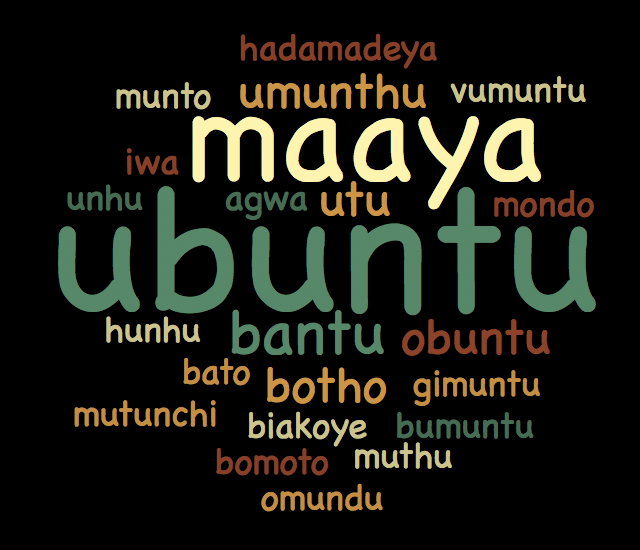
Ubuntu is a collection of values, practices and theories that Black people of Africa view as making people and their communities authentic. While the nuances of these values and practices vary across different ethnic groups, they all point to one thing – an authentic individual human being is part of a larger and more significant relational, communal, societal, environmental and spiritual world. The term ubuntu is expressed differently is several African communities and languages but all referring to the same thing. In Angola, it is known as gimuntu, Botswana (muthu), Burkina Faso (maaya), Burundi (ubuntu), Cameroon (bato), Congo (bantu), Congo Democratic Republic (bomoto/bantu), Cote d’Ivoire (maaya), Equatorial Guinea (maaya), Guinea (maaya), Gambia (maaya), Ghana (biako ye), Kenya (utu/munto/mondo), Liberia (maaya), Malawi (umunthu), Mali (maaya/hadama de ya), Mozambique (vumuntu), Namibia (omundu), Nigeria (mutunchi/iwa/agwa), Rwanda (bantu), Sierra Leonne (maaya), South Africa (ubuntu/botho), Tanzania (utu/obuntu/bumuntu), Uganda (obuntu), Zambia (umunthu/ubuntu) and Zimbabwe (hunhu/unhu/botho/ubuntu). It is also found in other Bantu countries not mentioned here. Different-frameworks-of-ubuntu-for-social-workers

UNHU (UBUNTU) EDUCATION THEORY

In education, ubuntu has been used to guide and promote African ideas, and to decolonise it from western educational philosophies. Ubuntu education uses the family, community and environment as sources of knowledge but also as teaching and learning media. The essence of education is family, community, societal and environmental well being. Interaction, liberation, participation, recognition, respect and inclusion are important aspects of ubuntu education. Methods of teaching and learning include groups and community approaches. In short, ubuntu shapes the objectives, content, methodology and outcomes of education.

UBUNTU SOCIAL WORK, WELFARE AND DEVELOPMENT THEORY

This refers to Afrocentric ways of providing a social safety net to vulnerable members of society. Common elements include collectivity, ukama (ralationality), ujamaa (collaboration) and looking at people holistically. These approaches are indigenous, and help to decolonise. Ubuntu is against materialism and individualism. The social interventions done by social workers, welfare workers and development workers should strengthen, not weaken families, communities, society, the environment and peoples’s spirituality. These are the 5 pillars of ubuntu intervention: family, community. society, environment and spirituality. 

UBUNTU RESEARCH THEORY

Ubuntu can guide research objectives, ethics and methodology, and decolonise research agenda and methodology. The objectives of ubuntu research are to empower families, communities and society at large. In doing ubuntu research, the position of the researcher is important because it helps form relationships with the participants. The agenda of the research belongs to the community, and true participation is highly valued. Ujamaa, which means pulling together and is about collaboration, is highly valued. Oral literature (orature is valued because most of African thought is not written. Relational and collective approaches too research are valued. Human beings are seen as part of nature, not as separate from it. Data collection methods include dare, an approach that involves participants sitting together, often in a circle, and sharing respectively, in turn. Story telling nyaya and dialogue hurukuro are valued. In true ubuntu research, written consent is of no significance, it is not valued because relationships are more important than contracts. Research is incomplete without asking the participants to verify what you are going to publish, how you will gain from the research and how the community will gain. The research itself, together with feedback, must be provided in appropriate language and formats Ubuntu values good communication, that is, how you say what you have to say. How deep is what you say? Other participants and leaders, require opportunities to talk at length kuseva, orating using proverbs, idioms, folklores, maxims (short statements) and even songs. Ubuntu research values humane approaches and discourages cheating, deceit, harm and disrespect. 

UBUNTU MORAL PHILOSOPHY OR UBUNTU MORALITY

‘…actions are right roughly insofar as they are a matter of living harmoniously with others or honouring communal relationships’ (Metz and Gaie, 2010, p. 273). ‘One’s ultimate goal should be to become a full person, a real self or a genuine human being, Metz and Gaie, 2010, p. 275. Relationships (ukama) are important. Among the Shona people for example, when a person dies, his or her property is shared amongst relatives and there are culturally approved ways of doing this. The practice is called kugova. Life is valued. As Samkange said, “If and when one is faced with a decisive choice between wealth and the preservation of the life of another human being, then one should opt for the preservation of life” (Samkange, 1980, p. 7)

UBUNTU POLITICAL PHILOSOPHY

In the book Hunhuism or Ubuntuism, Samkange (1980) said ‘Is there a philosophy or ideology indegenous to (a) country that can serve its people just as well, if not better than, foreign ideologies?”. Samkange’s maxim for leadership is “The king owes his status, including all the powers associated with it, to the will of the people under him” (Samkange, 1980, p. 7). Here, a king refers to a leader of a home, family, school, work place, village, community, organisation, country, nation or international. It also refers to a professionals like a social workers because of the statutory authority they have when working with families, community or clients.

SAMKANGE’S THEORY OF UBUNTU

Samkange’stheory has three maxims (short statements) as shown in the table. For a history of Samkange, see this document.

SummaryMaxims (ubuntu statements)
Human relations“To be human is to affirm one’s humanity by recognizing the humanity of others and, on that basis, establish respectful human relations with them” (Samkange and Samkange, 1980, p. 6   “The attention one human being gives to another: the kindness, courtesy, consideration and friendliness in the relationship between people; a code of behaviour, an attitude to other people and to life, is embodied in hunhu or Ubuntu” (Samkange and Samkange, 1980, p. 6).
Sanctity of life“If and when one is faced with a decisive choice between wealth and the preservation of the life of another human being, then one should opt for the preservation of life” (Samkange and Samkange, 1980, p. 7)   This is an ethical principle.
People-centred status“The king owes his status, including all the powers associated with it, to the will of the people under him” (Samkange and Samkange, 1980, p. 7)   Here, a king refers to a leader of a home, family, school, work place, village, community, organisation, country, nation or international. It also means a professional like a social worker because of the power they have when working with service users, community or clients.

Other maxims

Motho ke motho ka batho. This is Sotho or Tswana language meaning a person is a person through other people. In Zulu it is Umuntu ngumuntu ngabantu. In Shona it is Munhu munhu nevanhu. The maxim I am because we are, means Ndiri nekuti tiri (Shona).

UBUNTU SPIRITUALITY

Ubuntu spirituality is communalised, and values the family and environment. 

UBUNTU SOCIAL JUSTICE, CRIMINAL JUSTICE AND JURISPRUDENCE

Ubuntu justice emphasises these elements:

  1. Deterrence which can be done socially, physically, economically or spiritually
  2. Returning and Replacement – meaning bringing back what has been stolen, replacing it or compensating. In Shona language this is called kudzora and kuripa
  3. Apology, Forgiveness and Reconciliation (restoration of ukama or relations) after meeting the above
  4. Warnings and Punishments (retribution) from community, leaders and elders if the above have not been achieved or ignored
  5. Warnings and Punishments from spiritual beings if the above have not been met. In Shona culture, these are called jambwa and ngozi

Families, and communities are involved in the processes of justice.

Use the form below to subscibe to Owia Bulletin.

All Posts Basket

Post navigation

Previous Post: Ubuntu and Social Work Resources
Next Post: Ethiopian History of Social Work and Social Services

AFRICA-WIDE INSTITUTIONS

ASWEA logo

ASWEA

1971-1989

Umoja waAfrika (AU) Former OAU Toto/Brief | Agenda63

ADF

Part of ADB

ASSWA logo

ASSWA

Since 2005

PAWO (AU Arm)

Facebook | X

COUNTRY INFORMATION (SOCIAL WORK & DEVELOPMENT)

  • Algeria ๐Ÿ‡ฉ๐Ÿ‡ฟ
  • Angola ๐Ÿ‡ฆ๐Ÿ‡ด
  • Benin ๐Ÿ‡ง๐Ÿ‡ฏ
  • Botswana ๐Ÿ‡ง๐Ÿ‡ผ
  • Burkina Faso ๐Ÿ‡ง๐Ÿ‡ซ
  • Burundi ๐Ÿ‡ง๐Ÿ‡ฎ
  • Cabo Verde ๐Ÿ‡จ๐Ÿ‡ป
  • Cameroon ๐Ÿ‡จ๐Ÿ‡ฒ
  • Central Africa Republic ๐Ÿ‡จ๐Ÿ‡ซ
  • Chad ๐Ÿ‡น๐Ÿ‡ฉ
  • Comoros ๐Ÿ‡ฐ๐Ÿ‡ฒ
    • Mayotte of Comoro
  • Congo, DR ๐Ÿ‡จ๐Ÿ‡ฉ
  • Congo ๐Ÿ‡จ๐Ÿ‡ฌ
  • Cote D’Ivoire ๐Ÿ‡จ๐Ÿ‡ฎ
  • Djibouti ๐Ÿ‡ฉ๐Ÿ‡ฏ
  • Egypt ๐Ÿ‡ช๐Ÿ‡ฌ
  • Equatorial Guinea ๐Ÿ‡ฌ๐Ÿ‡ถ
  • Eritrea ๐Ÿ‡ช๐Ÿ‡ท
  • Eswatini ๐Ÿ‡ธ๐Ÿ‡ฟ
  • Ethiopia ๐Ÿ‡ช๐Ÿ‡น
  • Gabon ๐Ÿ‡ฌ๐Ÿ‡ฆ
  • Gambia, The ๐Ÿ‡ฌ๐Ÿ‡ฒ
  • Ghana ๐Ÿ‡ฌ๐Ÿ‡ญ
  • Guinea ๐Ÿ‡ฌ๐Ÿ‡ณ
  • Guinea-Bissau ๐Ÿ‡ฌ๐Ÿ‡ผ
  • Kenya ๐Ÿ‡ฐ๐Ÿ‡ช
  • Lesotho ๐Ÿ‡ฑ๐Ÿ‡ธ
  • Liberia ๐Ÿ‡ฑ๐Ÿ‡ท
  • Libya ๐Ÿ‡ฑ๐Ÿ‡พ
  • Madagascar ๐Ÿ‡ฒ๐Ÿ‡ฌ
  • Malawi ๐Ÿ‡ฒ๐Ÿ‡ผ
  • Mali ๐Ÿ‡ฒ๐Ÿ‡ฑ
  • Mauritania ๐Ÿ‡ฒ๐Ÿ‡ท
  • Mauritius ๐Ÿ‡ฒ๐Ÿ‡บ
  • Morocco ๐Ÿ‡ฒ๐Ÿ‡ฆ
  • Mozambique ๐Ÿ‡ฒ๐Ÿ‡ฟ
  • Namibia ๐Ÿ‡ณ๐Ÿ‡ฆ
  • Niger ๐Ÿ‡ณ๐Ÿ‡ช
  • Nigeria ๐Ÿ‡ณ๐Ÿ‡ฌ
  • Rwanda ๐Ÿ‡ท๐Ÿ‡ผ
  • Sao Tome and Principe ๐Ÿ‡ธ๐Ÿ‡น
  • Senegal ๐Ÿ‡ธ๐Ÿ‡ณ
  • Seychelles ๐Ÿ‡ธ๐Ÿ‡จ
  • Sierra Leone ๐Ÿ‡ธ๐Ÿ‡ฑ
  • Somalia ๐Ÿ‡ธ๐Ÿ‡ด
  • South Africa ๐Ÿ‡ฟ๐Ÿ‡ฆ
  • South Sudan ๐Ÿ‡ธ๐Ÿ‡ธ
  • Sudan ๐Ÿ‡ธ๐Ÿ‡ฉ
  • Togo ๐Ÿ‡น๐Ÿ‡ฌ
  • Tanzania ๐Ÿ‡น๐Ÿ‡ฟ
  • Tunisia ๐Ÿ‡น๐Ÿ‡ณ
  • Uganda ๐Ÿ‡บ๐Ÿ‡ฌ
  • Western Sahara (SADR)
  • Zambia ๐Ÿ‡ฟ๐Ÿ‡ฒ
  • Zimbabwe ๐Ÿ‡ฟ๐Ÿ‡ผ
  • โ€œDongoโ€
  • ‘Wakanda’
  • Umoja waAfrica (African Union)
  • Afro-Caribbeans
    • Haiti
  • Afro-Latinos
  • Melanesia
    • Aboriginal Countries
    • Papua New Guinea
    • West Papua
  • Afro-Asians โ€˜Sidiโ€™

Decolonisation Calculator (DECA). What is the rate of decolonisation of social work and development training, education and research in your country? Use this simple calculator.

COVID-19 FINAL UPDATE: Africa Infections: 12.3 million people. Deaths 260 000. World infections: 650 million. Deaths 6.7 million. Data aggregated by ASWDNet on 12 December 2022. View this COVID-19 references list for Africa.

Search

Policies | Guidelines | Checklists

  • AI Policy
  • San Code of Ethics
  • Journal Writing Guide
  • Ubuntu Principles in Fundraising & Charity
  • Comments Policy
  • Publisher Checker
  • Decolonisation Calculator
  • African Research Ethics & Malpractice Statement
  • Privacy & Cookie Policy
  • Email, Data and Social Media Policy
  • How Annonciata Niyibizi Muhayimana created the Ingata of Life Narrative Model
  • When Resilience Becomes a Burden: The Hidden Struggles of Women Researchers in Africa
  • Borderless borders: how Dangote’s African Renaissance Group is putting muscle behind Mbeki’s African Renaissance Theory
  • Social Development Award Statement by Vongai P Mangwiro
  • Development Worker of the Year 2026 Statement by Bikila Tesfaye
  • Become a Blogger Blogging
  • Welcome to the AFRICASOCIALWORK.NET All Posts Basket
  • Become a Blogger All Posts Basket
  • The political, legal, radical and policy role of social work in Africa Admin ASWDNet
  • Egypt’s history of social work and social services All Posts Basket
  • Ubuntu and Social Work Resources All Posts Basket
  • Ethiopian History of Social Work and Social Services All Posts Basket
  • Ignatius Mabasa’s thesis in an African language: Why it is important to use African languages in education, research and publishing Admin ASWDNet

Email Sign In


Website Log In


Mfundo | Courses | CPD Log In


Members Portal

COPYRIGHT ยฉ 2020 to 2030: Mtandao - Africa Social Work and Development Network (ASWDNet) | UBUNTU ACKNOWLEDGEMENT - We pay our respects to those who came before us, our Elders and forefathers and mothers, who are the sources and protectors (against colonisation) of the knowledge and wisdom that continue to shape lives, teaching, learning, research, and practice across generations. Because they were, we are. Asante. Siyabonga. Tatenda. Waaw. ร€แนฃรฉ.