Skip to content
  • Home
  • About|Join
  • Ethics
  • Events
  • Certificates
  • OwiaNews
  • Journals
  • DecoloniseCalculators
  • Mfundo|CPD
  • FundiDictionary
  • Awards
  • Ushahidi
  • DACCS
  • Kuumba
  • Submit
  • WSWSD Conference Nairobi | Mtandao Exhibition
  • Mental Health Masterclass
  • Catalogue
  • Consultancy
  • Shop
  • Twitter
  • Facebook
  • LinkedIn
  • YouTube
  • Academia AJSW
  • Instagram
Africa Social Work and Development Network | Mtandao waKazi zaJamii naMaendeleo waAfrica
Africa Social Work & Development Network | Mtandao waKazi zaJamii naMaendeleo waAfrika

Africa Social Work & Development Network | Mtandao waKazi zaJamii naMaendeleo waAfrika

Mtandao creates, aggregates and disseminates information and resources to facilitate Social Work and Development Work in Africa.

  • ACADEMICS
    • Lecture Resources
    • Lectures
    • Fieldwork Resources
    • Approaches to assessing learning
    • Types of University Assessments
    • Book Publishing
      • Book_Professional Social Work in Zimbabwe
    • ASWDNet Guide to Writing (Journals)
    • ASWDNet Guide to Writing and Publishing
  • PRACTITIONERS
    • Values and Ethics in Africa
    • Africa Social Work and Development Awards
    • Continuous Professional Development (CPD)
    • Templates, Models, Frameworks, Assessment Tools and Questionnaires
    • African Theories
    • Supervision
  • STUDENTS
    • Social Work and Development Student Conference (SWDSC)
    • 12 Steps to Get Published
    • Tips for Prospective Doctoral Students
    • ASWDNet Guide to Writing (Academic Research Brief| Proposal | Thesis)
    • Writing a journal article could be as easy as making fufu, nsima, ugali or matoke!
    • Lectures
  • RESEARCHERS
    • Research Methods
    • Qualitative data levels of analysis
    • African Independent Ethics Committee (AIEC)
    • Research Questions Bank
    • Publisher/Journal Checker
    • Research Strategies
    • Reviewers
    • Ubuntu Research Group (URG)
    • Kuumba (Mentoring)
      • SURVEY OF SOCIAL PROBLEMS AND CHALLENGES FOR AFRICA
      • Mentees
      • Mentors
      • Guidelines
    • Afrocentric Mentoring Project (AfroME)
      • Team
      • Partners
      • Call for Applications for the Afrocentric and Decolonial Social Work Mentoring Project (now closed)
  • ASSOCIATIONS
  • TRAINING INSTITUTIONS
  • COMMUNITIES
    • Ubuntu Fundraising and Charity Principles
    • COVID-19
    • Social Work for Children
    • Funda KiSwahili
  • MEMBERS
  • Africa Philosophy
  • African Theories
  • Research Methods
  • Library | Databases
  • Social Work
    • Social Work Education institutions (SWEI) in Africa
    • Biography of Social Development in Africa
      • Charlotte Makgomo-Mannya Maxeke (1871-1939)
      • Zahia Marzoukย (1906 โ€“ 1988)
      • Regina Gelana Twala (1908-1968)
      • Mai Musodzi Chibhaga Ayema (1885-1952)
      • Nnoseng Ellen Kate Kuzwayo (1914 โ€“ 2006)
      • Joshua Mqabuko Nyongolo Nkomo (19 June 1917 โ€“ 1 July 1999)
      • Jairos Jiri (1921 โ€“ 1982)
      • Kenneth Buchizya Kaunda (1924-2021)
      • John Samuel Mbiti (1931-2019)
      • Gibson Mthuthuzeli Kent (1932-2004)
      • Winnie Madikizela-Mandela 1936โ€“2016
      • Ngugi wa Mirii (1951 โ€“ May 3, 2008)
      • Andrew Chad Nyanguru (28 Mar 1953-14 May 2014)
      • Professor Rodreck Mupedziswa
      • Edwell Kaseke (1954-2017)
      • Lovemore Mbigi
      • Selassie Seyoum Gebre (1936-)
      • Arega Yimam (-c1989)
      • Dr Noel Garikai Muridzo
      • Dr Edmos Mthethwa
      • Phillip Manyanye Bohwasi
      • Wassie Kebede
      • Gidraph G Wairire
      • Wangari Muta Maathai
      • Uzoma Odera Okoye, Dr
    • Social Work Journals and Other Serial Publications in Africa (ASWDNet Index)
    • Association of Social Work Education in Africa (ASWEA) โ€“ 1965 to 1989
    • Future of Social Work in Africa
    • Environmental Social Work
  • Development
    • Developmental Work Database
  • Ubuntu
    • Ubuntu Research Group (URG)
    • Ushahidi Platform
    • Ubuntu Fundraising and Charity Principles
    • Ubuntu Bibliography
    • Ubuntu Survey
    • Ubuntu Annual Lecture
    • Ubuntu Interview Guide Sample
  • Africa
    • African Anthem (African Union)
    • Umoja waAfrica (African Union)
    • African symbols and alphabets
    • Fundi โ€“ The African Dictionary and Encyclopaedia of Social Work and Development
    • Africa Religion (uAfrica)
    • Africa Research Ethics and Malpractice Statement (AREMS)
    • The San Code of Research Ethics (San Code)
  • Blog
    • Our Ubuntu-inspired Comments Policy
    • Become a Blogger
    • Admin ASWDNet
    • Babekazi
    • Professor Roy@Indigenous Social Work
    • Mutape J.D.S Sithole
    • Alemayehu Gebru from Ethiopia, Jimma City
    • Rugare Mugumbate
    • Decolonise
    • Writing and Publishing
    • Development
    • Toto
    • Ms. Alexandra Thokozile Mliswa (MSc,LLB, BA)
    • Environmental work
    • Africa religion | Spirituality
    • Kudzai Mwapaura blogger
    • All Posts Basket

[aioseo_breadcrumbs]

How Annonciata Niyibizi Muhayimana created the Ingata of Life Narrative Model Admin ASWDNet
When Resilience Becomes a Burden: The Hidden Struggles of Women Researchers in Africa Admin ASWDNet
Borderless borders: how Dangote’s African Renaissance Group is putting muscle behind Mbeki’s African Renaissance Theory Development

Understanding Indigenous peoples of the Americas

Posted on 12 March 202622 February 2026 By mugumbatej No Comments on Understanding Indigenous peoples of the Americas

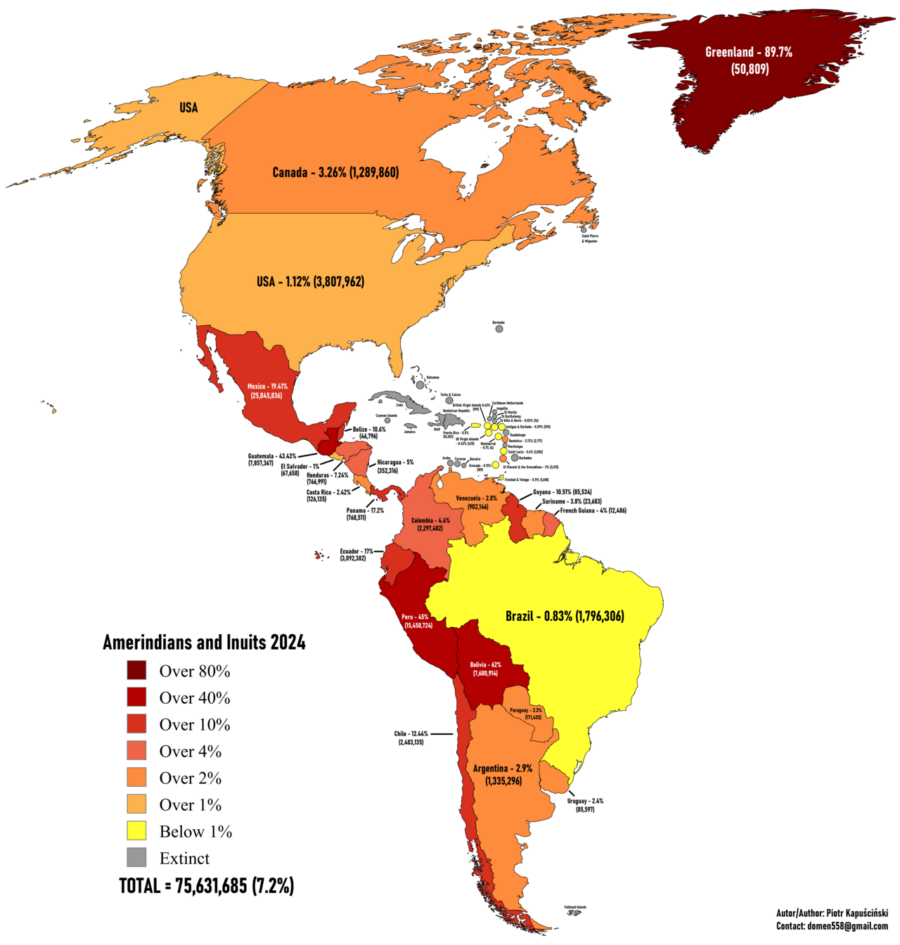
“Seventy five million Indigenous peoples survive across the Americas today. Without colonisation and the resulting death rate of up to 90 per cent from disease and violence, the Indigenous population of the Americas in 1492, conservatively estimated at 50 to 60 million and in some scholarship as high as 100 million, would have continued to grow. At the same historical moment, geographic Europe, is estimated to have had roughly 70 to 90 million people. Today, geographic Europe has approximately 740 million inhabitants. If the surviving ten per cent in the Americas represented roughly 50 million people, a comparable proportional share of today’s global population would exceed 700 million.”

For an African readership shaped by histories of conquest, extraction, missionary intrusion and liberation struggle, the experience of Indigenous peoples of the Americas offers a striking parallel. It is a history of ancient, sophisticated civilisations, the original stewards of the Western Hemisphere, who have spent centuries resisting a unique form of settler colonialism designed not just to rule them, but to replace them.

When we think of the Americas, we often picture skyscrapers, Hollywood or the history of slavery. Yet long before European ships arrived in 1492, the Americas, known by many Indigenous peoples as Turtle Island, were home to thousands of thriving and distinct nations with complex languages, political systems and cultures. Indigenous America is therefore not simply a minority question within modern nation states. It is a foundational question about land, sovereignty, identity and historical truth.

Who are the Indigenous peoples of the Americas?

Indigenous peoples are the original inhabitants of North, Central and South America and the Caribbean. Prior to 1492, the hemisphere was home to tens of millions across highly differentiated societies, urban, agrarian, maritime, nomadic, imperial and confederated.

Civilisations such as the Aztec Empire, the Maya civilization and the Inca Empire developed sophisticated systems of governance, architecture, astronomy, mathematics, agriculture and medicine long before Europe’s so called Age of Discovery. The term discovery itself is epistemologically flawed, one does not discover lands already inhabited by organised polities.

Today, approximately 75 million Indigenous people live across the Americas. In settler dominant states such as the United States and Canada, Indigenous peoples are minorities within political systems built on their dispossession. In contrast, in countries such as Bolivia and Guatemala, Indigenous peoples constitute majorities or near majorities, though demographic strength has not automatically translated into structural power.

Turtle Island: settler colonialism as blueprint

Many Indigenous nations refer to North America as Turtle Island, a cosmological framing that centres land as relational rather than proprietary. The colonisation of this territory became a laboratory for settler colonial governance, later exported globally, including to Africa and the Pacific.

Terra nullius and the legal fiction of emptiness

European powers declared lands empty if they were not enclosed, titled or cultivated according to European agrarian norms. This doctrine, terra nullius, transformed inhabited territories into legally vacant property. Africans will recognise the pattern, similar reasoning justified land seizure in Kenya’s White Highlands, in Zimbabwe’s settler estates and in South Africa’s expropriations. Communal tenure was dismissed as absence of ownership.

The logic of elimination

Settler colonialism differs from extractive colonialism. It seeks permanence. It therefore seeks elimination, physical, cultural or legal. In both the United States and Canada, residential schools aimed to kill the Indian, save the man, a programme of linguistic erasure and spiritual dislocation. Mission schooling in Africa operated on a comparable civilising logic, detach the child from land, language and cosmology, then reconstruct identity in the image of empire.

Reservation systems and spatial containment

The reserve system confined Indigenous nations to marginal territories while freeing fertile lands for settlers. African parallels are evident in the Bantustan architecture of apartheid South Africa and Native Reserves elsewhere. Spatial segregation served economic objectives, land control, labour extraction and political containment.

Decolonisation as an ongoing struggle

Unlike many African states that achieved juridical independence, Indigenous peoples in the Americas often remain within settler colonial states whose foundational sovereignty rests upon their dispossession. Decolonisation is therefore not a completed event, it is a structural contest.

Language and epistemic renewal

Language reclamation moves beyond preservation towards restoration of worldview. The Miami Tribe of Oklahoma has revived the Myaamia language through archival reconstruction and community pedagogy. In Paraguay, Guaraní holds official language status alongside Spanish, an important though incomplete recognition of Indigenous epistemology.

Spiritual recentring

Ceremonies once criminalised, such as the Sun Dance, have re emerged as acts of continuity and sovereignty. Spiritual practice is not folklore, it is governance, ethics and ecological philosophy embedded in ritual.

Land back and sovereignty

The Land Back movement frames land not as commodity but as relational inheritance. In 2023, nearly 1.2 million hectares were returned to Indigenous nations in the United States. While symbolic in proportion to historical dispossession, such returns represent a shift from recognition politics to material restitution.

Identity and public assertion

For centuries, Indian was an imposed classification. Contemporary powwows and cultural festivals are not mere performance, they are political acts of presence. The Stewart Father’s Day Powwow, held annually in Nevada, gathers drummers, dancers and artists from northwestern nations. Such gatherings affirm continuity across generations and resist assimilationist narratives.

Selected cultural events (2026)

  • Voices of The Land, February 2026, Idaho. A community workshop focusing on Indigenous music, regalia and dance traditions.
  • Indigenous Wisdom Retreat, 1 May 2026, New York. A programme led by spiritual mentors exploring Indigenous centred ways of knowing.
  • Stewart Father’s Day Powwow, 19 June 2026, Nevada. An annual celebration featuring intertribal participation.
  • Waší∙šiw ɁitdéɁ Indigenous Culture and Arts Festival, 25 July 2026, California. A celebration of Washoe heritage, language and arts.

Concluding reflection

For Africans, the Indigenous American struggle should not be read as distant sympathy but as comparative insight. Both continents reveal how coloniality persists beyond flags and constitutions. The question is not whether colonisation occurred, it is how deeply its logics remain embedded in land tenure systems, education structures, religious authority and national myth. Decolonisation, in both Africa and the Americas, is therefore not nostalgia. It is a structural reordering of power, knowledge and belonging.

Use the form below to subscibe to Owia Bulletin.

Americas, Global, Indigenous

Post navigation

Previous Post: New member resources (including Zoom and Google Meet virtual backgrounds)
Next Post: Themed questions and answers from Ubuntu and harambee master class discussion

Leave a Reply Cancel reply

You must be logged in to post a comment.

AFRICA-WIDE INSTITUTIONS

ASWEA logo

ASWEA

1971-1989

Umoja waAfrika (AU) Former OAU Toto/Brief | Agenda63

ADF

Part of ADB

ASSWA logo

ASSWA

Since 2005

PAWO (AU Arm)

Facebook | X

COUNTRY INFORMATION (SOCIAL WORK & DEVELOPMENT)

  • Algeria ๐Ÿ‡ฉ๐Ÿ‡ฟ
  • Angola ๐Ÿ‡ฆ๐Ÿ‡ด
  • Benin ๐Ÿ‡ง๐Ÿ‡ฏ
  • Botswana ๐Ÿ‡ง๐Ÿ‡ผ
  • Burkina Faso ๐Ÿ‡ง๐Ÿ‡ซ
  • Burundi ๐Ÿ‡ง๐Ÿ‡ฎ
  • Cabo Verde ๐Ÿ‡จ๐Ÿ‡ป
  • Cameroon ๐Ÿ‡จ๐Ÿ‡ฒ
  • Central Africa Republic ๐Ÿ‡จ๐Ÿ‡ซ
  • Chad ๐Ÿ‡น๐Ÿ‡ฉ
  • Comoros ๐Ÿ‡ฐ๐Ÿ‡ฒ
    • Mayotte of Comoro
  • Congo, DR ๐Ÿ‡จ๐Ÿ‡ฉ
  • Congo ๐Ÿ‡จ๐Ÿ‡ฌ
  • Cote D’Ivoire ๐Ÿ‡จ๐Ÿ‡ฎ
  • Djibouti ๐Ÿ‡ฉ๐Ÿ‡ฏ
  • Egypt ๐Ÿ‡ช๐Ÿ‡ฌ
  • Equatorial Guinea ๐Ÿ‡ฌ๐Ÿ‡ถ
  • Eritrea ๐Ÿ‡ช๐Ÿ‡ท
  • Eswatini ๐Ÿ‡ธ๐Ÿ‡ฟ
  • Ethiopia ๐Ÿ‡ช๐Ÿ‡น
  • Gabon ๐Ÿ‡ฌ๐Ÿ‡ฆ
  • Gambia, The ๐Ÿ‡ฌ๐Ÿ‡ฒ
  • Ghana ๐Ÿ‡ฌ๐Ÿ‡ญ
  • Guinea ๐Ÿ‡ฌ๐Ÿ‡ณ
  • Guinea-Bissau ๐Ÿ‡ฌ๐Ÿ‡ผ
  • Kenya ๐Ÿ‡ฐ๐Ÿ‡ช
  • Lesotho ๐Ÿ‡ฑ๐Ÿ‡ธ
  • Liberia ๐Ÿ‡ฑ๐Ÿ‡ท
  • Libya ๐Ÿ‡ฑ๐Ÿ‡พ
  • Madagascar ๐Ÿ‡ฒ๐Ÿ‡ฌ
  • Malawi ๐Ÿ‡ฒ๐Ÿ‡ผ
  • Mali ๐Ÿ‡ฒ๐Ÿ‡ฑ
  • Mauritania ๐Ÿ‡ฒ๐Ÿ‡ท
  • Mauritius ๐Ÿ‡ฒ๐Ÿ‡บ
  • Morocco ๐Ÿ‡ฒ๐Ÿ‡ฆ
  • Mozambique ๐Ÿ‡ฒ๐Ÿ‡ฟ
  • Namibia ๐Ÿ‡ณ๐Ÿ‡ฆ
  • Niger ๐Ÿ‡ณ๐Ÿ‡ช
  • Nigeria ๐Ÿ‡ณ๐Ÿ‡ฌ
  • Rwanda ๐Ÿ‡ท๐Ÿ‡ผ
  • Sao Tome and Principe ๐Ÿ‡ธ๐Ÿ‡น
  • Senegal ๐Ÿ‡ธ๐Ÿ‡ณ
  • Seychelles ๐Ÿ‡ธ๐Ÿ‡จ
  • Sierra Leone ๐Ÿ‡ธ๐Ÿ‡ฑ
  • Somalia ๐Ÿ‡ธ๐Ÿ‡ด
  • South Africa ๐Ÿ‡ฟ๐Ÿ‡ฆ
  • South Sudan ๐Ÿ‡ธ๐Ÿ‡ธ
  • Sudan ๐Ÿ‡ธ๐Ÿ‡ฉ
  • Togo ๐Ÿ‡น๐Ÿ‡ฌ
  • Tanzania ๐Ÿ‡น๐Ÿ‡ฟ
  • Tunisia ๐Ÿ‡น๐Ÿ‡ณ
  • Uganda ๐Ÿ‡บ๐Ÿ‡ฌ
  • Western Sahara (SADR)
  • Zambia ๐Ÿ‡ฟ๐Ÿ‡ฒ
  • Zimbabwe ๐Ÿ‡ฟ๐Ÿ‡ผ
  • โ€œDongoโ€
  • ‘Wakanda’
  • Umoja waAfrica (African Union)
  • Afro-Caribbeans
    • Haiti
  • Afro-Latinos
  • Melanesia
    • Aboriginal Countries
    • Papua New Guinea
    • West Papua
  • Afro-Asians โ€˜Sidiโ€™

Decolonisation Calculator (DECA). What is the rate of decolonisation of social work and development training, education and research in your country? Use this simple calculator.

COVID-19 FINAL UPDATE: Africa Infections: 12.3 million people. Deaths 260 000. World infections: 650 million. Deaths 6.7 million. Data aggregated by ASWDNet on 12 December 2022. View this COVID-19 references list for Africa.

Search

Policies | Guidelines | Checklists

  • AI Policy
  • San Code of Ethics
  • Journal Writing Guide
  • Ubuntu Principles in Fundraising & Charity
  • Comments Policy
  • Publisher Checker
  • Decolonisation Calculator
  • African Research Ethics & Malpractice Statement
  • Privacy & Cookie Policy
  • Email, Data and Social Media Policy
  • How Annonciata Niyibizi Muhayimana created the Ingata of Life Narrative Model
  • When Resilience Becomes a Burden: The Hidden Struggles of Women Researchers in Africa
  • Borderless borders: how Dangote’s African Renaissance Group is putting muscle behind Mbeki’s African Renaissance Theory
  • Social Development Award Statement by Vongai P Mangwiro
  • Development Worker of the Year 2026 Statement by Bikila Tesfaye
  • Become a Blogger Blogging
  • Welcome to the AFRICASOCIALWORK.NET All Posts Basket
  • Become a Blogger All Posts Basket
  • The political, legal, radical and policy role of social work in Africa Admin ASWDNet
  • Egypt’s history of social work and social services All Posts Basket
  • Ubuntu and Social Work Resources All Posts Basket
  • Ubuntu Theories All Posts Basket
  • Ethiopian History of Social Work and Social Services All Posts Basket

Email Sign In


Website Log In


Mfundo | Courses | CPD Log In


Members Portal

COPYRIGHT ยฉ 2020 to 2030: Mtandao - Africa Social Work and Development Network (ASWDNet) | UBUNTU ACKNOWLEDGEMENT - We pay our respects to those who came before us, our Elders and forefathers and mothers, who are the sources and protectors (against colonisation) of the knowledge and wisdom that continue to shape lives, teaching, learning, research, and practice across generations. Because they were, we are. Asante. Siyabonga. Tatenda. Waaw. ร€แนฃรฉ.