Skip to content
  • Home
  • About|Join
  • Ethics
  • Events
  • Certificates
  • OwiaNews
  • Journals
  • DecoloniseCalculators
  • Mfundo|CPD
  • FundiDictionary
  • Awards
  • Ushahidi
  • DACCS
  • Kuumba
  • Submit
  • WSWSD Conference Nairobi | Mtandao Exhibition
  • Mental Health Masterclass
  • Catalogue
  • Consultancy
  • Shop
  • Twitter
  • Facebook
  • LinkedIn
  • YouTube
  • Academia AJSW
  • Instagram
Africa Social Work and Development Network | Mtandao waKazi zaJamii naMaendeleo waAfrica

Africa Social Work & Development Network | Mtandao waKazi zaJamii naMaendeleo waAfrika

Mtandao creates, aggregates and disseminates information and resources to facilitate Social Work and Development Work in Africa.

  • ACADEMICS
    • Lecture Resources
    • Lectures
    • Fieldwork Resources
    • Approaches to assessing learning
    • Book Publishing
      • Book_Professional Social Work in Zimbabwe
    • Types of University Assessments
    • ASWDNet Guide to Writing (Journals)
    • ASWDNet Guide to Writing and Publishing
  • PRACTITIONERS
    • Values and Ethics in Africa
    • Africa Social Work and Development Awards
    • Continuous Professional Development (CPD)
    • Templates, Models, Frameworks, Assessment Tools and Questionnaires
    • African Theories
    • Supervision
  • STUDENTS
    • Social Work and Development Student Conference (SWDSC)
    • 12 Steps to Get Published
    • Tips for Prospective Doctoral Students
    • ASWDNet Guide to Writing (Academic Research Brief| Proposal | Thesis)
    • Writing a journal article could be as easy as making fufu, nsima, ugali or matoke!
    • Lectures
    • Glossary of Publishing Terms
  • RESEARCHERS
    • Research Methods
    • Qualitative data levels of analysis
    • African Independent Ethics Committee (AIEC)
    • Research Questions Bank
    • Publisher/Journal Checker
    • Research Strategies
    • Reviewers
    • Ubuntu Research Group (URG)
    • Kuumba (Mentoring)
      • SURVEY OF SOCIAL PROBLEMS AND CHALLENGES FOR AFRICA
      • Mentees
      • Mentors
      • Guidelines
    • Afrocentric Mentoring Project (AfroME)
      • Team
      • Partners
      • Call for Applications for the Afrocentric and Decolonial Social Work Mentoring Project (now closed)
  • ASSOCIATIONS
  • TRAINING INSTITUTIONS
  • COMMUNITIES
    • Ubuntu Fundraising and Charity Principles
    • COVID-19
    • Social Work for Children
    • Funda KiSwahili
  • MEMBERS
  • Africa Philosophy
  • African Theories
  • Research Methods
  • Library | Databases
  • Social Work
    • Social Work Education institutions (SWEI) in Africa
    • Biography of Social Development in Africa
      • Charlotte Makgomo-Mannya Maxeke (1871-1939)
      • Zahia Marzoukย (1906 โ€“ 1988)
      • Regina Gelana Twala (1908-1968)
      • Mai Musodzi Chibhaga Ayema (1885-1952)
      • Nnoseng Ellen Kate Kuzwayo (1914 โ€“ 2006)
      • Joshua Mqabuko Nyongolo Nkomo (19 June 1917 โ€“ 1 July 1999)
      • Jairos Jiri (1921 โ€“ 1982)
      • Kenneth Buchizya Kaunda (1924-2021)
      • John Samuel Mbiti (1931-2019)
      • Gibson Mthuthuzeli Kent (1932-2004)
      • Winnie Madikizela-Mandela 1936โ€“2016
      • Ngugi wa Mirii (1951 โ€“ May 3, 2008)
      • Andrew Chad Nyanguru (28 Mar 1953-14 May 2014)
      • Professor Rodreck Mupedziswa
      • Edwell Kaseke (1954-2017)
      • Lovemore Mbigi
      • Selassie Seyoum Gebre (1936-)
      • Arega Yimam (-c1989)
      • Dr Noel Garikai Muridzo
      • Dr Edmos Mthethwa
      • Phillip Manyanye Bohwasi
      • Wassie Kebede
      • Gidraph G Wairire
      • Wangari Muta Maathai
      • Uzoma Odera Okoye, Dr
    • Social Work Journals and Other Serial Publications in Africa (ASWDNet Index)
    • Association of Social Work Education in Africa (ASWEA) โ€“ 1965 to 1989
    • Future of Social Work in Africa
    • Environmental Social Work
  • Development
    • Developmental Work Database
  • Ubuntu
    • Ubuntu Research Group (URG)
    • Ushahidi Platform
    • Ubuntu Fundraising and Charity Principles
    • Ubuntu Bibliography
    • Ubuntu Survey
    • Ubuntu Annual Lecture
    • Ubuntu Interview Guide Sample
  • Africa
    • African Anthem (African Union)
    • Umoja waAfrica (African Union)
    • African symbols and alphabets
    • Fundi โ€“ The African Dictionary and Encyclopaedia of Social Work and Development
    • Africa Religion (uAfrica)
    • Africa Research Ethics and Malpractice Statement (AREMS)
    • The San Code of Research Ethics (San Code)
  • Blog
    • Our Ubuntu-inspired Comments Policy
    • Become a Blogger
    • Admin ASWDNet
    • Babekazi
    • Professor Roy@Indigenous Social Work
    • Mutape J.D.S Sithole
    • Alemayehu Gebru from Ethiopia, Jimma City
    • Rugare Mugumbate
    • Decolonise
    • Writing and Publishing
    • Development
    • Toto
    • Ms. Alexandra Thokozile Mliswa (MSc,LLB, BA)
    • Environmental work
    • Africa religion | Spirituality
    • Kudzai Mwapaura blogger
    • All Posts Basket
  • Mfundo | CPD
    • Profile
    • Mfundo|Training
    • Research Ethics Course (REC)
    • Ubuntu Basics Course
    • Peer Reviewers Course (Hwe Mu Dua)
    • How to do Mfundo courses
    • Mfundo Terms and Conditions

[aioseo_breadcrumbs]
What Children Have to Say: A Love Letter to Eswatini’s Children, and a Gentle Rethink Children
Designing philosophical, theoretical, and conceptual approaches in research Research
‘Come through the door, not the window’: The San Code of Research Ethics (San Code) Admin ASWDNet

Restoring the balance: why the United Nations (UN) adopted the the Togo-Equal Earth Projection (TEEP) world map

Posted on 5 September 20265 September 2026 By Babe Kazi No Comments on Restoring the balance: why the United Nations (UN) adopted the the Togo-Equal Earth Projection (TEEP) world map
  • The distortion of the Mercator map
    • How the distortion affects Africa
  • Togo and the Correct the Map campaign
  • The lone dissent from the United States
  • The Equal Earth projection
    • What the resolution does and does not do
  • Key concepts behind this shift
    • Cartographic power and bias
    • Justice and agency
    • Education and diplomacy
  • What institutions might do next
    • Universities and schools
    • NGOs, media and technology
    • Togo's own timeline
  • A look at global leaders in social work and development and where they can start
    • The institutional blindspot: the case of the IASSW logo
    • Fractured perspectives: the IFSW branding contradiction
    • Shifting focus to the margins: the ICSW globe
  • Conclusion

Led by Togo, 164 nations vote to correct the global map, while only the United States votes against.

As leaders in global social work and social development, the International Association of Schools of Social Work (IASSW), the International Federation of Social Workers (IFSW) and the International Council on Social Welfare (ICSW) have a responsibility to ensure their own visual identities reflect the equity they promote, starting with the maps they choose to represent the world.

The world map most people grew up with is the Mercator projection, a design from 1569 in which Greenland appears roughly the same size as Africa and Europe sits at the centre of the globe.

Mtandao’s previous post on this issue – Togo challenges the world map: why this is practical decolonisation

On 4 September 2026, the UN General Assembly voted to change this. By 164 votes to one, with six abstentions, member states adopted a resolution promoting the Equal Earth projection as a fairer standard for how the world is mapped.

The distortion of the Mercator map

The Mercator map was created by Gerardus Mercator, a Flemish cartographer, for the purpose of maritime navigation. It preserved straight compass bearings, which made it useful at sea, but this came at a cost. Mapping a sphere onto a flat surface always involves some form of distortion, and Mercator chose to preserve shape and direction at the expense of scale.

How the distortion affects Africa

The effect is that landmasses further from the equator appear much larger than they actually are. Africa, in reality about 14 times the size of Greenland, appears roughly equivalent to it on a Mercator map. The continent could fit the United States, China, India, Japan and most of Europe within its borders, yet the Mercator projection consistently shrinks it and other equatorial regions while enlarging those in the global north.

Togo and the Correct the Map campaign

The push for change was led by Togo. Under the Correct the Map campaign, backed by the African Union and civil society groups including Africa No Filter and Speak Up Africa, Togolese diplomats argued that map distortion reinforces outdated assumptions about which regions of the world matter most.

Togo’s foreign minister, Robert Dussey, told the General Assembly that maps shape education, imagination and collective perception, and that the persistence of these distortions has had real consequences over time. The resolution was formally sponsored by Togo on behalf of the African Group at the UN and supported by the African Union.

The lone dissent from the United States

Of the 193 UN member states, 164 voted in favour. Six countries, Serbia, Estonia, Georgia, Lithuania, Moldova and Ukraine, abstained. The United States was the only country to vote against the resolution.

US officials pointed to the cost of reprinting educational materials and updating mapping software. Supporters of the resolution have suggested the dissent reflects a reluctance to move away from a map that has long minimised the scale and significance of the global south, though this remains a matter of interpretation rather than an official US position.

The Equal Earth projection

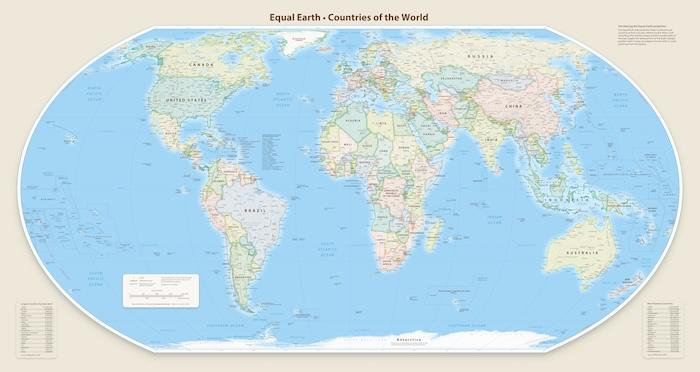
The alternative promoted by the resolution is the Equal Earth projection, designed in 2018 by cartographers Bojan Šavrič, Bernhard Jenny and Tom Patterson. It is an equal area map, meaning that every country and continent is shown at its correct proportional size relative to the others. Africa, South America and South Asia appear at their true scale, while the curved edges of the projection keep continental shapes recognisable.

What the resolution does and does not do

The resolution is not legally binding. It does not ban the Mercator map, which remains suited to maritime and aerial navigation, and it does not require any organisation to change its maps. Instead, it encourages governments, schools, international bodies and technology companies to adopt equal area projections such as Equal Earth.

Key concepts behind this shift

This vote touches on several concepts relevant to decolonisation and global equity.

Cartographic power and bias

Cartographic power is the use of map design to assert cultural or political dominance. Eurocentric bias refers to framing the world from a Western vantage point that overstates the significance of the global north.

Justice and agency

Spatial justice means ensuring geographic representation reflects real world proportions. Global south agency describes nations of the global south leading structural reform rather than waiting for it. Institutional equity involves reshaping systemic practices so all regions are represented fairly.

Education and diplomacy

Curricula reform means revising academic materials that were built on colonial era assumptions. Geopolitical accuracy is the representation of the physical scale of states without structural distortion. Multilateral diplomacy refers to nations working through bodies such as the UN to address long standing imbalances. Visual representation concerns how everyday imagery shapes public understanding of the world.

What institutions might do next

The resolution places the responsibility for change on the institutions that produce and distribute maps.

Universities and schools

Universities could update the maps used in geography, international relations and political science courses, and use this shift as a case study in how visual media carries assumptions. Schools and education boards could work with textbook publishers to bring equal area maps into classrooms, since children form much of their sense of global scale at an early age.

NGOs, media and technology

Non-governmental organisations working in development, climate and human rights could review the maps used in their own reports and materials. Media organisations and technology companies could incorporate the Equal Earth projection into news graphics, data visualisation and digital mapping tools, which would likely do more to shift public perception than any single textbook change.

Togo’s own timeline

Togo has said it intends to update its own school geography materials by the end of 2026 and plans to engage other governments and technology companies on wider adoption over the following months.

A look at global leaders in social work and development and where they can start

The institutional blindspot: the case of the IASSW logo

Cartographic bias is not limited to classrooms and newsrooms. It also appears in the branding of organisations that describe their own mission in terms of equity. The IASSW is one example. The organisation states that it works towards a decolonising agenda and aims to counter Western dominance in global education. Its logo uses an oval pseudocylindrical projection, a map style that distorts landmass proportions in the same way as the Mercator projection, reducing the visual size of the global south while enlarging the global north. This creates an inconsistency for an organisation built around social justice. It suggests that the UN resolution has relevance beyond governments and schools, extending also to organisations whose stated values depend on accurate representation. Aligning a logo with those values would mean auditing visual materials and updating branding to reflect the Equal Earth projection, so that the symbols an organisation uses match the principles it promotes.

Fractured perspectives: the IFSW branding contradiction

A similar inconsistency appears in the logo of the IFSW, the global body representing social workers and their work on human rights. The IFSW emblem splits the world into two separate circular globes, a design that distorts continental shapes and compresses Africa to fit within the frame. For a federation built around structural equality, a logo that visibly cuts off and reduces parts of the global south sits at odds with its stated commitments. The distortion is not a matter of artistic style alone. It repeats, in miniature, the same pattern the UN resolution was written to address. Adopting the Togo Equal Earth projection would allow the IFSW to replace a divided, colonial era map style with a single unified globe, bringing its visual identity closer to the spatial justice it advocates for in its work.

Shifting focus to the margins: the ICSW globe

The logo of the ICSW presents a further example of cartographic distortion. Its circular, globe style emblem centres the map in a way that pushes the global south to the edge of the frame, curving and compressing South America and Africa at sharp angles. This placement visually diminishes the regions that are most central to global development work. For the ICSW, an organisation whose mandate is to foster international cooperation and address systemic poverty, a map that structurally marginalises developing nations sits at odds with its purpose. Moving to the flat, undistorted view offered by the Equal Earth projection would give the communities the ICSW works with a more central and proportionate place in its own visual identity, rather than positioning them at the periphery.

Conclusion

Maps carry assumptions about scale and significance, whether or not this is intended. The UN vote does not compel any institution to change how it represents the world, but it gives formal international backing to the argument that accuracy in mapping matters. The examples of the IASSW, IFSW and ICSW logos show that this issue extends beyond governments and schools into the branding of the very organisations that speak in the language of equity and social justice. As leaders in the field, these bodies are well placed to act first, auditing their own visual identities and adopting the TEEP ahead of the wider institutions they encourage to follow.

Use the form below to subscibe to Owia Bulletin.

Admin ASWDNet, Decolonise

Post navigation

Previous Post: What Children Have to Say: A Love Letter to Eswatini’s Children, and a Gentle Rethink

Leave a Reply Cancel reply

You must be logged in to post a comment.

AFRICA-WIDE INSTITUTIONS

ASWEA logo

ASWEA

1971-1989

Umoja waAfrika (AU) Former OAU Toto/Brief | Agenda63

ADF

Part of ADB

ASSWA logo

ASSWA

Since 2005

PAWO (AU Arm)

Facebook | X

COUNTRY INFORMATION (SOCIAL WORK & DEVELOPMENT)

  • Algeria ๐Ÿ‡ฉ๐Ÿ‡ฟ
  • Angola ๐Ÿ‡ฆ๐Ÿ‡ด
  • Benin ๐Ÿ‡ง๐Ÿ‡ฏ
  • Botswana ๐Ÿ‡ง๐Ÿ‡ผ
  • Burkina Faso ๐Ÿ‡ง๐Ÿ‡ซ
  • Burundi ๐Ÿ‡ง๐Ÿ‡ฎ
  • Cabo Verde ๐Ÿ‡จ๐Ÿ‡ป
  • Cameroon ๐Ÿ‡จ๐Ÿ‡ฒ
  • Central Africa Republic ๐Ÿ‡จ๐Ÿ‡ซ
  • Chad ๐Ÿ‡น๐Ÿ‡ฉ
  • Comoros ๐Ÿ‡ฐ๐Ÿ‡ฒ
    • Mayotte of Comoro
  • Congo, DR ๐Ÿ‡จ๐Ÿ‡ฉ
  • Congo ๐Ÿ‡จ๐Ÿ‡ฌ
  • Cote D’Ivoire ๐Ÿ‡จ๐Ÿ‡ฎ
  • Djibouti ๐Ÿ‡ฉ๐Ÿ‡ฏ
  • Egypt ๐Ÿ‡ช๐Ÿ‡ฌ
  • Equatorial Guinea ๐Ÿ‡ฌ๐Ÿ‡ถ
  • Eritrea ๐Ÿ‡ช๐Ÿ‡ท
  • Eswatini ๐Ÿ‡ธ๐Ÿ‡ฟ
  • Ethiopia ๐Ÿ‡ช๐Ÿ‡น
  • Gabon ๐Ÿ‡ฌ๐Ÿ‡ฆ
  • Gambia, The ๐Ÿ‡ฌ๐Ÿ‡ฒ
  • Ghana ๐Ÿ‡ฌ๐Ÿ‡ญ
  • Guinea ๐Ÿ‡ฌ๐Ÿ‡ณ
  • Guinea-Bissau ๐Ÿ‡ฌ๐Ÿ‡ผ
  • Kenya ๐Ÿ‡ฐ๐Ÿ‡ช
  • Lesotho ๐Ÿ‡ฑ๐Ÿ‡ธ
  • Liberia ๐Ÿ‡ฑ๐Ÿ‡ท
  • Libya ๐Ÿ‡ฑ๐Ÿ‡พ
  • Madagascar ๐Ÿ‡ฒ๐Ÿ‡ฌ
  • Malawi ๐Ÿ‡ฒ๐Ÿ‡ผ
  • Mali ๐Ÿ‡ฒ๐Ÿ‡ฑ
  • Mauritania ๐Ÿ‡ฒ๐Ÿ‡ท
  • Mauritius ๐Ÿ‡ฒ๐Ÿ‡บ
  • Morocco ๐Ÿ‡ฒ๐Ÿ‡ฆ
  • Mozambique ๐Ÿ‡ฒ๐Ÿ‡ฟ
  • Namibia ๐Ÿ‡ณ๐Ÿ‡ฆ
  • Niger ๐Ÿ‡ณ๐Ÿ‡ช
  • Nigeria ๐Ÿ‡ณ๐Ÿ‡ฌ
  • Rwanda ๐Ÿ‡ท๐Ÿ‡ผ
  • Sao Tome and Principe ๐Ÿ‡ธ๐Ÿ‡น
  • Senegal ๐Ÿ‡ธ๐Ÿ‡ณ
  • Seychelles ๐Ÿ‡ธ๐Ÿ‡จ
  • Sierra Leone ๐Ÿ‡ธ๐Ÿ‡ฑ
  • Somalia ๐Ÿ‡ธ๐Ÿ‡ด
  • South Africa ๐Ÿ‡ฟ๐Ÿ‡ฆ
  • South Sudan ๐Ÿ‡ธ๐Ÿ‡ธ
  • Sudan ๐Ÿ‡ธ๐Ÿ‡ฉ
  • Togo ๐Ÿ‡น๐Ÿ‡ฌ
  • Tanzania ๐Ÿ‡น๐Ÿ‡ฟ
  • Tunisia ๐Ÿ‡น๐Ÿ‡ณ
  • Uganda ๐Ÿ‡บ๐Ÿ‡ฌ
  • Western Sahara (SADR)
  • Zambia ๐Ÿ‡ฟ๐Ÿ‡ฒ
  • Zimbabwe ๐Ÿ‡ฟ๐Ÿ‡ผ
  • โ€œDongoโ€
  • ‘Wakanda’
  • Umoja waAfrica (African Union)
  • Afro-Caribbeans
    • Haiti
  • Afro-Latinos
  • Melanesia
    • Aboriginal Countries
    • Papua New Guinea
    • West Papua
  • Afro-Asians โ€˜Sidiโ€™

Decolonisation Calculator (DECA). What is the rate of decolonisation of social work and development training, education and research in your country? Use this simple calculator.

COVID-19 FINAL UPDATE: Africa Infections: 12.3 million people. Deaths 260 000. World infections: 650 million. Deaths 6.7 million. Data aggregated by ASWDNet on 12 December 2022. View this COVID-19 references list for Africa.

Search

Policies | Guidelines | Checklists

  • AI Policy
  • San Code of Ethics
  • Journal Writing Guide
  • Ubuntu Principles in Fundraising & Charity
  • Comments Policy
  • Publisher Checker
  • Decolonisation Calculator
  • African Research Ethics & Malpractice Statement
  • Privacy & Cookie Policy
  • Email, Data and Social Media Policy
  • Restoring the balance: why the United Nations (UN) adopted the the Togo-Equal Earth Projection (TEEP) world map
  • What Children Have to Say: A Love Letter to Eswatini’s Children, and a Gentle Rethink
  • Designing philosophical, theoretical, and conceptual approaches in research
  • ‘Come through the door, not the window’: The San Code of Research Ethics (San Code)
  • How do I live Ubuntu if it is not my people’s philosophy?
  • Become a Blogger Blogging
  • Welcome to the AFRICASOCIALWORK.NET All Posts Basket
  • Become a Blogger All Posts Basket
  • The political, legal, radical and policy role of social work in Africa Admin ASWDNet
  • Egypt’s history of social work and social services All Posts Basket
  • Ubuntu and Social Work Resources All Posts Basket
  • Ubuntu Theories All Posts Basket
  • Ethiopian History of Social Work and Social Services All Posts Basket

Email Sign In


Website Log In


Mfundo | Courses | CPD Log In


Members Portal

COPYRIGHT ยฉ 2020 to 2030: Mtandao - Africa Social Work and Development Network (ASWDNet) | UBUNTU ACKNOWLEDGEMENT - We pay our respects to those who came before us, our Elders and forefathers and mothers, who are the sources and protectors (against colonisation) of the knowledge and wisdom that continue to shape lives, teaching, learning, research, and practice across generations. Because they were, we are. Asante. Siyabonga. Tatenda. Waaw. ร€แนฃรฉ.