
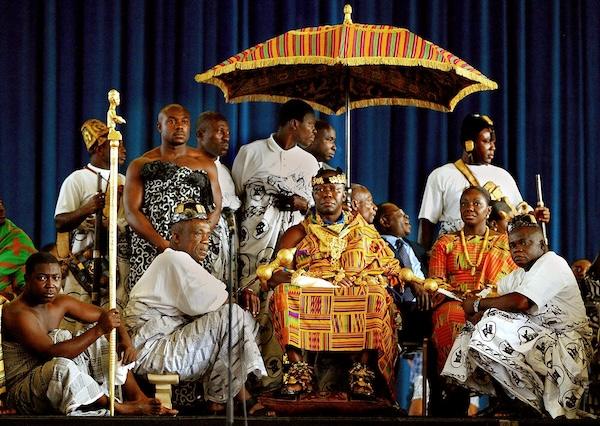
Reclaiming our future: three takeaways from the Asantehene’s Howard University address
On 25 August 2026, Cramton Auditorium at Howard University in the United Sates of America hosted a meeting of academic scholarship and centuries old African governance. His Majesty Otumfuo Osei Tutu II, the Asantehene of the Asante Kingdom of Ghana, delivered a Royal Guest Lecture.
Convened by the Millennium Excellence Foundation, the event brought together members of the global African diaspora, chieftaincy leaders, and university leadership. The King’s speech went beyond ceremonial address, setting out a clear position on cultural continuity, modern governance, and collaborative action.
Below are the key points from the Asantehene’s address, with quotes taken directly from the event.
Redefining Sankofa for a modern era
The concept of Sankofa, returning to fetch what has been left behind, is well known across the diaspora. The Asantehene challenged the audience to rethink how it is applied. He cautioned against treating African identity as a purely backward glance, and framed history instead as a starting point for the future.
“Sankofa does not ask us to remain permanently facing backwards, we recover memory to move into the future with greater wisdom.” — Instagram
He noted that a genuine connection to African heritage requires more than surface level markers. A true inheritance, he said, involves deep engagement, so that the younger generation inherits a living legacy rather than names and symbols alone.
A mandate for twenty first century leaders
Speaking directly to political figures and chieftaincy leaders, the Asantehene set out what is required of modern leadership. He described chieftaincy as trusteeship, holding a people’s collective heritage on behalf of generations not yet born.
He was direct in his criticism of leaders who focus on prestige rather than community welfare.
“A chief who is concerned only with ceremony, privileges, titles and public adulation diminishes the institution he represents.” — Instagram
He then set out the demands that leadership must answer to in the present age.
“[Indigenous] leadership in the 21st century cannot therefore be limited to festivals and ceremonial occasions. It must be capable of responding to educational inequality, unemployment, environmental degradation, land disputes, public health emergencies, community conflict, and the anxieties of young people.” — Modern Ghana
Culture and language as geopolitical power
The Asantehene urged the African diaspora and continental youth to recognise that a society’s strength lies in its self worth. He reminded the audience that globalisation should not lead to cultural erasure, beginning with native languages.
“Participation in the modern world shouldn’t require us to abandon our own languages.” — Instagram
He linked the loss of cultural confidence to a loss of collective agency, warning of the consequences for African civilisations.
“A society that loses confidence in its culture, eventually loses confidence in itself.” — Instagram
He closed by referring to W.E.B. Du Bois’s The Souls of Black Folk, noting that the interests and aspirations of Black people everywhere are closely connected. He stated that “Africa is not just a figure of space, but the very construct of the human soul”, and called on the diaspora to act as structural investors and advocates for the continent’s future.
Bridging the gap
The Royal Guest Lecture concluded with a focus on structural action, as the King expressed a wish for future academic and cultural partnerships.
Use the form below to subscibe to Owia Bulletin.