Skip to content
  • Home
  • About|Join
  • Ethics
  • Events
  • Certificates
  • OwiaNews
  • Journals
  • DecoloniseCalculators
  • Mfundo|CPD
  • FundiDictionary
  • Awards
  • Ushahidi
  • DACC
  • Kuumba
  • Shop
  • Twitter
  • Facebook
  • LinkedIn
  • YouTube
  • Academia AJSW
Africa Social Work and Development Network | Mtandao waKazi zaJamii naMaendeleo waAfrica
Africa Social Work & Development Network | Mtandao waKazi zaJamii naMaendeleo waAfrika

Africa Social Work & Development Network | Mtandao waKazi zaJamii naMaendeleo waAfrika

Mtandao creates, aggregates and disseminates information and resources to facilitate Social Work and Development Work in Africa.

  • ACADEMICS
    • Lecture Resources
    • Lectures
    • Fieldwork Resources
    • Types of University Assessments
    • Book Publishing
      • Book_Professional Social Work in Zimbabwe
    • ASWDNet Guide to Writing (Journals)
    • ASWDNet Guide to Writing and Publishing
  • PRACTITIONERS
    • Values and Ethics in Africa
    • Africa Social Work and Development Awards
    • Continuous Professional Development (CPD)
    • Templates, Models, Frameworks and Assessment Tools
    • African Theories
    • Supervision
  • STUDENTS
    • Social Work and Development Student Conference (SWDSC)
    • 12 Steps to Get Published
    • Tips for Prospective Doctoral Students
    • ASWDNet Guide to Writing (Academic Research Brief| Proposal | Thesis)
    • Writing a journal article could be as easy as making fufu, nsima, ugali or matoke!
    • Lectures
  • RESEARCHERS
    • Research Methods
    • African Independent Ethics Committee (AIEC)
    • Research Questions Bank
    • Publisher/Journal Checker
    • Research Strategies
    • Reviewers
    • Ubuntu Research Group (URG)
  • ASSOCIATIONS
  • TRAINING INSTITUTIONS
  • COMMUNITIES
    • Ubuntu Fundraising and Charity Principles
    • COVID-19
    • Social Work for Children
    • Funda KiSwahili
  • MEMBERS
  • Africa Philosophy
  • African Theories
  • Research Methods
  • Library | Databases
  • Social Work
    • Social Work Education institutions (SWEI) in Africa
    • Biography of Social Development in Africa
      • Charlotte Makgomo-Mannya Maxeke (1871-1939)
      • Zahia Marzouk (1906 – 1988)
      • Regina Gelana Twala (1908-1968)
      • Mai Musodzi Chibhaga Ayema (1885-1952)
      • Nnoseng Ellen Kate Kuzwayo (1914 – 2006)
      • Joshua Mqabuko Nyongolo Nkomo (19 June 1917 – 1 July 1999)
      • Jairos Jiri (1921 – 1982)
      • Kenneth Buchizya Kaunda (1924-2021)
      • John Samuel Mbiti (1931-2019)
      • Gibson Mthuthuzeli Kent (1932-2004)
      • Winnie Madikizela-Mandela 1936–2016
      • Ngugi wa Mirii (1951 – May 3, 2008)
      • Andrew Chad Nyanguru (28 Mar 1953-14 May 2014)
      • Professor Rodreck Mupedziswa
      • Edwell Kaseke (1954-2017)
      • Lovemore Mbigi
      • Selassie Seyoum Gebre (1936-)
      • Arega Yimam (-c1989)
      • Dr Noel Garikai Muridzo
      • Dr Edmos Mthethwa
      • Phillip Manyanye Bohwasi
      • Wassie Kebede
      • Gidraph G Wairire
      • Wangari Muta Maathai
      • Uzoma Odera Okoye, Dr
    • Social Work Journals and Other Serial Publications in Africa (ASWDNet Index)
    • Kuumba (Mentoring)
      • SURVEY OF SOCIAL PROBLEMS AND CHALLENGES FOR AFRICA
      • Mentees
      • Mentors
      • Guidelines
    • Association of Social Work Education in Africa (ASWEA) – 1965 to 1989
    • Future of Social Work in Africa
    • Environmental Social Work
  • Development
    • Developmental Work Database
  • Ubuntu
    • Ubuntu Research Group (URG)
    • Ushahidi Platform
    • Ubuntu Fundraising and Charity Principles
    • Ubuntu Bibliography
    • Ubuntu Survey
    • Ubuntu Annual Lecture
    • Ubuntu Interview Guide Sample
  • Africa
    • African Anthem (African Union)
    • Umoja waAfrica (African Union)
    • Fundi – The African Dictionary and Encyclopaedia of Social Work and Development
    • Africa Religion (uAfrica)
    • Africa Research Ethics and Malpractice Statement (AREMS)
    • The San Code of Research Ethics (San Code)
  • Blog
    • Our Ubuntu-inspired Comments Policy
    • Become a Blogger
    • Admin ASWDNet
    • Babekazi
    • Professor Roy@Indigenous Social Work
    • Mutape J.D.S Sithole
    • Alemayehu Gebru from Ethiopia, Jimma City
    • Rugare Mugumbate
    • Decolonise
    • Writing and Publishing
    • Development
    • Toto
    • Ms. Alexandra Thokozile Mliswa (MSc,LLB, BA)
    • Environmental work
    • Africa religion | Spirituality
    • Kudzai Mwapaura blogger
    • All Posts Basket
YOU ARE HERE » Home » Writing and Publishing » Credo Mutwa’s theoretical framework
frank fanon Frantz Fanon and the social roots of mental health Admin ASWDNet
Togo challenges the world map: why this is practical decolonisation Decolonise
Decolonising higher education: theories and the Mtandao framework Advanced knowledge in social work and development

Credo Mutwa’s theoretical framework

Posted on 15 April 202615 April 2026 By aswnetadmin No Comments on Credo Mutwa’s theoretical framework
Show Table of Contents
Hide Table of Contents
  • The balance of the two minds
  • Pedagogical theory
  • Epistemological theory

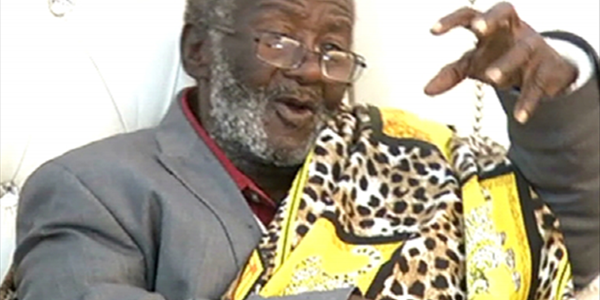
Mutwa’s theoretical framework has 3 theories which are the balance of the two minds, experiential storytelling and living museums, and intuitive revelation. Vusamazulu Credo Mutwa (1921–2020) was a prominent South African sangoma, author, and artist who sought to document and preserve African indigenous knowledge (Edwards, 2015; Hlongwane & Weber, 2021; Podolecka, 2023). Born in Zululand, he transitioned from being an English-trained Christian teacher to a shamanic practitioner after receiving a calling from his grandfather (Mutwa, 2003). He became a “keeper of folklore” and a spiritual leader renowned for his prophecies and cultural installations (Hlongwane & Weber, 2021; Mutwa, 2003).

The balance of the two minds

The general theory posits that the human psyche consists of two distinct mentalities: the mother mind, representing feminine energy, and the warrior mind, representing masculine energy (Global Oneness Project, 2008; Rapitsenyane, 2023). Mutwa argues that human health and environmental survival depend on balancing these two internal forces (Rapitsenyane, 2023). The theory assumes that every human, regardless of gender, possesses both minds (Rapitsenyane, 2023). It further assumes that the ego is a “deformed” byproduct of an imbalanced warrior mind and that this psychic disharmony is the primary driver of the modern climate crisis (Rapitsenyane, 2023).

Key points

  1. Dual psyche consisting of the mother mind and the warrior mind (Rapitsenyane, 2023).
  2. Linear versus web thinking (Global Oneness Project, 2008; Rapitsenyane, 2023).
  3. Ego as a conquering mind arising from psychic imbalance (Rapitsenyane, 2023).
  4. Subjectivity of nature where all entities are viewed as living subjects (Global Oneness Project, 2008).
  5. Ecological salvation achieved through the awakening of the mother mind (Rapitsenyane, 2023).

The warrior mind is logical and strategic, operating in a linear “2+2 is 4” fashion (Global Oneness Project, 2008). In contrast, the mother mind is intuitive and considerate, thinking “sideways, upwards, and downwards” (Global Oneness Project, 2008). Mutwa suggests that modern society has over-activated the warrior mind, leading to an ego-driven desire to conquer and objectify nature (Rapitsenyane, 2023). The theory provides a holistic framework connecting individual psychology to global ecological health and emphasizes cultural concepts like ubuntu and ukama (Edwards, 2015; Horsthemke, 2015). Critics characterize his ideas as superstition or fertile imagination lacking scientific evidence (Horsthemke, 2015). Additionally, his cultural villages were sometimes viewed as aligning with the tribalist rhetoric of the apartheid era (Hlongwane & Weber, 2021).

Pedagogical theory

Mutwa’s pedagogical theory emphasizes the preservation of indigenous wisdom through experiential learning, oral storytelling, and the creation of “living museums” (Hlongwane & Weber, 2021; Mutwa, 2003). He views education as a spiritual initiation rather than academic instruction (Mutwa, 2003). The theory assumes that ancestral wisdom is encoded in folklore and myths which must be preserved through active practice (Mutwa, 2003). It also assumes that the natural world is a living classroom where plants and stones are “growing people” capable of instruction (Mutwa, 2003).

Key points

  1. Storytelling as a form of spiritual initiation (Mutwa, 2003).
  2. Living museums as open-air classrooms for African culture (Hlongwane & Weber, 2021).
  3. Experiential learning through direct dialogue with nature (Mutwa, 2003).
  4. Artistic transmission using sculpture, painting, and plays like uNosilimela (Mutwa, 2003; Podolecka, 2023).
  5. Inner self connection attained by quieting the mind to receive divine energy (Mutwa, 2003).

Mutwa established living museums like Kwa-Khaya Lendaba to serve as physical sites for preserving “African culture” (Hlongwane & Weber, 2021). His pedagogy involves teaching students to “talk to” and “thank” trees, treating nature as a person rather than an object (Mutwa, 2003). This approach challenges colonial “scientific racism” by centering indigenous identity (Mutwa, 2003; Rapitsenyane, 2023). It offers a culturally relevant educational model that effectively preserves oral history and fosters a deep connection to ancestral roots (Edwards, 2015). Some aspects of his teaching, such as using a “slap” to demand a student’s attention, are seen as outdated or confrontational (Mutwa, 2003). Scholars also debate whether his narratives represent authentic Zulu tradition or his own inventions (Podolecka, 2023).

Epistemological theory

This theory argues that true knowledge is accessed through intuition, ancestral communication, and a collective spiritual reservoir (Edwards, 2015; Mutwa, 2003). Mutwa prioritizes “felt” truths and inspiration over strictly rationalist logic (Global Oneness Project, 2008; Mutwa, 2003). The theory assumes that a divine essence exists within all objects and that knowledge is revealed through spiritual tuning (Mutwa, 2003). It posits that ancestors act as guardians and conduits of universal truths (Edwards, 2015; Mutwa, 2003).

Key points

  1. The hidden lake as a vast reservoir of universal knowledge (Mutwa, 2003).
  2. Umbilini as the “hot coiled snake” energy used to access psychic power (Edwards, 2015; Mutwa, 2003).
  3. Animistic knowing where stones and trees share dormant future knowledge (Global Oneness Project, 2008; Mutwa, 2003).
  4. Ancestral consciousness providing guidance through dreams and visions (Edwards, 2015; Mutwa, 2003).
  5. Mother mind epistemology that perceives reality as an integrated whole (Global Oneness Project, 2008; Horsthemke, 2015).

Knowledge is retrieved from the “hidden lake” by summoning “umbilini” energy through deep meditation and drumming (Edwards, 2015; Mutwa, 2003). This allows the “mother mind” to engage in “web thinking,” perceiving the interconnectedness of all life—minerals, plants, and humans—rather than viewing the world as “shattered fragments” (Global Oneness Project, 2008; Horsthemke, 2015). The theory provides a powerful alternative to Western anthropocentrism, promoting a profound sense of “oneness” and interconnectedness with the cosmos (Edwards, 2015; Horsthemke, 2015). The theory relies heavily on subjective experiences that cannot be empirically verified (Horsthemke, 2015). Furthermore, Mutwa’s claims regarding “Chitauri aliens” altering human communication are viewed by many as conspiratorial or purely mythological (Podolecka, 2023).

References

Edwards, S. (2015). Some Southern African views on interconnectedness with special reference to indigenous knowledge. Indilinga: African Journal of Indigenous Knowledge Systems, 14(2), 272-283.

Global Oneness Project. (2008). Credo Mutwa: The mother mind. [Video]. YouTube. https://www.youtube.com/watch?v=Vv3R6hddPfI.

Hlongwane, A. K., & Weber, T. (2021). Re-historicising Credo Mutwa’s Kwa Khaya Lendaba cultural village in Soweto. In H. Judin (Ed.), Falling monuments, reluctant ruins: The persistence of the past in the architecture of apartheid (pp. 212-233). Wits University Press.

Horsthemke, K. (2015). Animals and African ethics. Palgrave MacMillan.

Mutwa, V. C. (1969). My people, my Africa. John Day Co.

Mutwa, V. C. (1996). Isilwane: The animal. Struik.

Mutwa, V. C. (2003). Zulu shaman: Dreams, prophecies, and mysteries. Destiny Books.

Podolecka, A. (2023). History of the Bantu peoples by Credo Mutwa–Zulu tradition or Mutwa’s invention? Rocznik Orientalistyczny, 2023(2), 120-138.

Rapitsenyane, D. B. (2023). “Awakening the mother mind”: Exploring the relationship between ego and the climate crisis. HTS Teologiese Studies/Theological Studies, 79(3), a8065. https://doi.org/10.4102/hts.v79i3.8065.

Share this:

  • Share on WhatsApp (Opens in new window) WhatsApp
  • Share on Facebook (Opens in new window) Facebook
  • Email a link to a friend (Opens in new window) Email
  • Print (Opens in new window) Print
  • Share on LinkedIn (Opens in new window) LinkedIn
  • Share on X (Opens in new window) X
  • Share on Telegram (Opens in new window) Telegram

Like this:

Like Loading...

Use the form below to subscibe to Owia Bulletin.


Discover more from Africa Social Work & Development Network | Mtandao waKazi zaJamii naMaendeleo waAfrika

Subscribe to get the latest posts sent to your email.

Research, Research - African methods, Teaching and Learning (Fundo), Writing and Publishing Tags:Credo Mutwa, South Africa

Post navigation

Previous Post: Ubuntu Theory of Conscience 
Next Post: Decolonising higher education: theories and the Mtandao framework

Habari, I invite you to interact with others on Mtandao by leaving a comment. Asante sana.Cancel reply

AFRICA-WIDE INSTITUTIONS

ASWEA logo

ASWEA 1965-1989

Umoja waAfrika (AU) Former OAU Toto/Brief | Agenda63

ADF

Part of ADB

ASSWA logo

ASSWA

Since 2005

PAWO (AU Arm)

Facebook | X

COUNTRY INFORMATION (SOCIAL WORK & DEVELOPMENT)

  • Algeria 🇩🇿
  • Angola 🇦🇴
  • Benin 🇧🇯
  • Botswana 🇧🇼
  • Burkina Faso 🇧🇫
  • Burundi 🇧🇮
  • Cabo Verde 🇨🇻
  • Cameroon 🇨🇲
  • Central Africa Republic 🇨🇫
  • Chad 🇹🇩
  • Comoros 🇰🇲
    • Mayotte of Comoro
  • Congo, DR 🇨🇩
  • Congo 🇨🇬
  • Cote D’Ivoire 🇨🇮
  • Djibouti 🇩🇯
  • Egypt 🇪🇬
  • Equatorial Guinea 🇬🇶
  • Eritrea 🇪🇷
  • Eswatini 🇸🇿
  • Ethiopia 🇪🇹
  • Gabon 🇬🇦
  • Gambia, The 🇬🇲
  • Ghana 🇬🇭
  • Guinea 🇬🇳
  • Guinea-Bissau 🇬🇼
  • Kenya 🇰🇪
  • Lesotho 🇱🇸
  • Liberia 🇱🇷
  • Libya 🇱🇾
  • Madagascar 🇲🇬
  • Malawi 🇲🇼
  • Mali 🇲🇱
  • Mauritania 🇲🇷
  • Mauritius 🇲🇺
  • Morocco 🇲🇦
  • Mozambique 🇲🇿
  • Namibia 🇳🇦
  • Niger 🇳🇪
  • Nigeria 🇳🇬
  • Rwanda 🇷🇼
  • Sao Tome and Principe 🇸🇹
  • Senegal 🇸🇳
  • Seychelles 🇸🇨
  • Sierra Leone 🇸🇱
  • Somalia 🇸🇴
  • South Africa 🇿🇦
  • South Sudan 🇸🇸
  • Sudan 🇸🇩
  • Togo 🇹🇬
  • Tanzania 🇹🇿
  • Tunisia 🇹🇳
  • Uganda 🇺🇬
  • Western Sahara (SADR)
  • Zambia 🇿🇲
  • Zimbabwe 🇿🇼
  • “Dongo”
  • ‘Wakanda’
  • Umoja waAfrica (African Union)
  • Afro-Caribbeans
    • Haiti
  • Afro-Latinos
  • Melanesia
    • Aboriginal Countries
    • Papua New Guinea
    • West Papua
  • Afro-Asians ‘Sidi’

Decolonisation Calculator (DECA). What is the rate of decolonisation of social work and development training, education and research in your country? Use this simple calculator.

Search

Member Testimonials

What attracts me to Mtandao

My name is Okima Innocent Lawrence. I am deeply passionate about social work, community empowerment, and ethical social work practice across Africa. My professional journey over the past eight years has involved community stakeholder engagement, psychosocial support
…
My name is Okima Innocent Lawrence. I am deeply passionate about social work, community empowerment, and ethical social work practice across Africa. My professional journey over the past eight years has involved community stakeholder engagement, psychosocial support coordination, survivor restoration, mentorship, and grassroots mobilization. I have worked closely with vulnerable communities, facilitated over 100 stakeholder mentorship engagements, supported survivors of gender-based violence and land injustices, and helped establish women’s support groups.
What attracts me to Mtandao/ASWDNet is its strong commitment to advancing African-led social work knowledge, contextual practice, and professional solidarity. I believe in strengthening indigenous approaches to social work and contributing to knowledge production that reflects African realities.
I bring practical field experience, research interest in trauma-informed care, documentation skills, and commitment to ethical and transformative practice. I hope to contribute through active engagement in discussions, sharing practice insights from Uganda, contributing articles where possible, and collaborating in regional knowledge exchange initiatives.
Okima Innocent Lawrence
Mtandao Member Number 143, Joined February 2026
Read more “What attracts me to Mtandao”

Inspired by Mtandao mission and goals (Bikila Tesfaye, Mtandao member number 143)

I am from the Gambella region, specifically Gambela City in Ethiopia. I joined ASWDNet after searching for membership related to my academic and professional background and was inspired by your mission and goals. I envision collaborating
…
I am from the Gambella region, specifically Gambela City in Ethiopia. I joined ASWDNet after searching for membership related to my academic and professional background and was inspired by your mission and goals. I envision collaborating through knowledge and skill sharing, as well as joint initiatives that address common challenges in our communities. I recommend enhancing research, training programmes, and networking opportunities. See my interview here.

Bikila Tesfaye
 

Read more “Inspired by Mtandao mission and goals (Bikila Tesfaye, Mtandao member number 143)”

Deeply inspired by Mtandao/ASWDNet’s mission

Dear ASWDNet Team, I hope this message finds you well. My name is Hilda Ngaja a social worker based in Tanzania. I recently came across the African Social Work and Development Network (ASWDNet) and was deeply
…
Dear ASWDNet Team,
I hope this message finds you well.
My name is Hilda Ngaja a social worker based in Tanzania. I recently came across the African Social Work and Development Network (ASWDNet) and was deeply inspired by its mission to create, aggregate, and disseminate African knowledges and to promote social work and development rooted in our values, languages, and lived realities.

As a social worker I strongly resonate with your emphasis on African epistemologies and values such as Ubuntu. I am especially drawn to your commitment to building emancipatory knowledge spaces for social work professionals, students, academics, and communities across the continent.
With this in mind, I would be honoured to join ASWDNet as a member and contribute to its efforts in advancing socially relevant and culturally grounded practice and scholarship in Africa.
Kindly receive the details required
Hilda Ngaja, Bachelor Degree in Social work
Referee, Dr Leah Omari, Lecturer, The Institute of Social Work
Thank you for your important work, and I look forward to hearing from you.

Read more “Deeply inspired by Mtandao/ASWDNet’s mission”

Policies | Guidelines | Checklists

  • AI Policy
  • San Code of Ethics
  • Journal Writing Guide
  • Ubuntu Principles in Fundraising & Charity
  • Comments Policy
  • Publisher Checker
  • Decolonisation Calculator
  • African Research Ethics & Malpractice Statement
  • Privacy & Cookie Policy
  • Frantz Fanon and the social roots of mental health
  • Togo challenges the world map: why this is practical decolonisation
  • Decolonising higher education: theories and the Mtandao framework
  • Credo Mutwa’s theoretical framework
  • Ubuntu Theory of Conscience 
  • Mtandao website now used in all countries of the world (current stats), please like and comment when you use our resources Admin ASWDNet
  • Social Work and Social Development in Africa Admin ASWDNet
  • Ubuntu Digital Platform on Ushahidi: Presentation by Prof Janestic Twikirize and Eriya Turyamureeba at the International Social Work & Social Development Conference 2025, Uganda Teaching and Learning (Fundo)
  • Fundi – The African Dictionary and Encyclopaedia of Social Work and Development (Version 2.0) This Website
  • Mosquitoes, mistrust and the marginalisation of African researchers Admin ASWDNet
  • Wazee Day 2025: Educate, Empower, Prevent Dementia Wazee
  • Unidisciplinary, multidisciplinary, interdisciplinary, and transdisciplinary approaches in social work and development Motivating
  • Artificial Intelligence (AI), technocolonial and decolonisation in African Social Work Education and Practice Admin ASWDNet

Copyright © 2020-2030 | Mtandao - Africa Social Work and Development Network (ASWDNet).

%d