
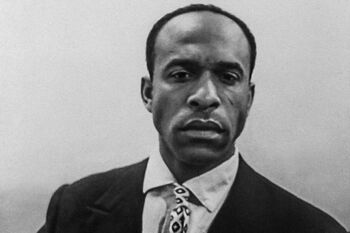
Frantz Fanon and the social roots of mental health
Key practice points from Fanon
moja❶. Always assess mental health within its social, political and historical context
mbili❷. Treat distress as potentially a rational response to injustice, not only pathology
tatu❸. Centre culture, language and identity in all interventions
nne❹. Challenge systems that reproduce inequality, not just individual symptoms
tano❺. Promote agency, dignity and collective empowerment as part of healing
sita❻. Use community-based and culturally grounded approaches in practice
Frantz Fanon and the social roots of mental health
My name is Ngozi the Practitioner. I am a new blogger 📝 at Mtandao and my focus is practice. In this post, I reflect on the work of Frantz Fanon and what it means for everyday social work and human services.
Fanon’s contribution sits at the intersection of psychology and politics. His central argument is clear. Mental health cannot be separated from the social world. For practitioners, this shifts how we assess, interpret and respond to distress.
Sociogeny and practice
Fanon’s idea of sociogeny explains that human distress is shaped by social and economic conditions. This challenges approaches that isolate problems within the individual.

In practice, this means when we encounter anxiety, depression or trauma, we must ask deeper questions. What are the living conditions of this person. What forms of exclusion or injustice are present. What histories are shaping this experience.
In many cases, what appears as disorder is a reasonable response to an unreasonable environment. Practice must therefore include both support and advocacy. Intervention is incomplete without attention to structural change.
Colonial alienation and identity in practice
In Black Skin, White Masks, Fanon shows how identity is shaped under domination.
He explains how individuals internalise negative meanings about themselves. This process produces alienation, where a person becomes disconnected from their own culture and sense of self. The adoption of dominant language and values may offer access, but it can also deepen this fracture.
For practitioners, this raises critical issues. Whose language are we using. Whose knowledge is considered valid. Are our tools reinforcing inferiority or restoring dignity.
Practice must actively affirm identity. This includes valuing local knowledge, supporting cultural expression and resisting frameworks that erase difference.
Resistance, dignity and healing
In The Wretched of the Earth, Fanon links resistance to psychological restoration.
His argument is grounded in the realities of colonial violence. Where people are dominated, reclaiming agency becomes part of healing. This is not about promoting harm. It is about recognising that dignity and voice are central to wellbeing.
In practice, this translates into empowerment. Clients are not passive recipients of care. They are active agents. Supporting participation, voice and collective action becomes part of therapeutic work.
Beyond independence in practice contexts
Fanon warned that change at the top does not always transform systems. New leadership can reproduce old patterns.
For practitioners, this is relevant in many settings. Policies may change, but inequalities persist. Services may exist, but access remains uneven.
This calls for critical practice. We must examine whether our work is sustaining the status quo or contributing to transformation. African-centred approaches such as Ubuntu as reciprocity and justice, and ujamaa as communalism, offer alternative pathways grounded in collective wellbeing.
Methods such as baliano, where communities generate and analyse their own knowledge, can strengthen this direction in practice.
Institutional care and community connection
Fanon’s clinical work emphasised community. He moved away from isolation and introduced collective activities that reconnected patients to culture and society.
This approach remains relevant. Healing does not occur in isolation. It is relational and contextual.
For practitioners, this means designing interventions that engage families, communities and cultural systems. It also means recognising that services themselves are social spaces shaped by power and identity.
Implications for practice
Fanon’s work pushes us to rethink core assumptions.
Mental health is not only clinical
Assessment must include context and history
Culture is central, not optional
Empowerment is part of healing
Systems must be challenged, not bypassed
Conclusion
Fanon’s work remains a strong guide for practice. It insists that we look beyond symptoms and engage with the conditions that produce them.
As Ngozi the Practitioner, my reflection is this. Good practice does not stop at helping individuals cope. It also asks how we change the world that makes coping necessary.
Please like 👍🏾 my blog and comment. Share too. 😍
Use the form below to subscibe to Owia Bulletin.