This is the decade of Africa in global social work and social development. Why? An answer from Mtandao with options for the next decade
Africa’s philosophy of Ubuntu has anchored the global agenda for social work, an African city has hosted the largest gathering of the profession, and Africans have taken up leadership of its two main international bodies. Mtandao offers this as an answer to why this decade belongs to Africa.
Ubuntu as the starting point
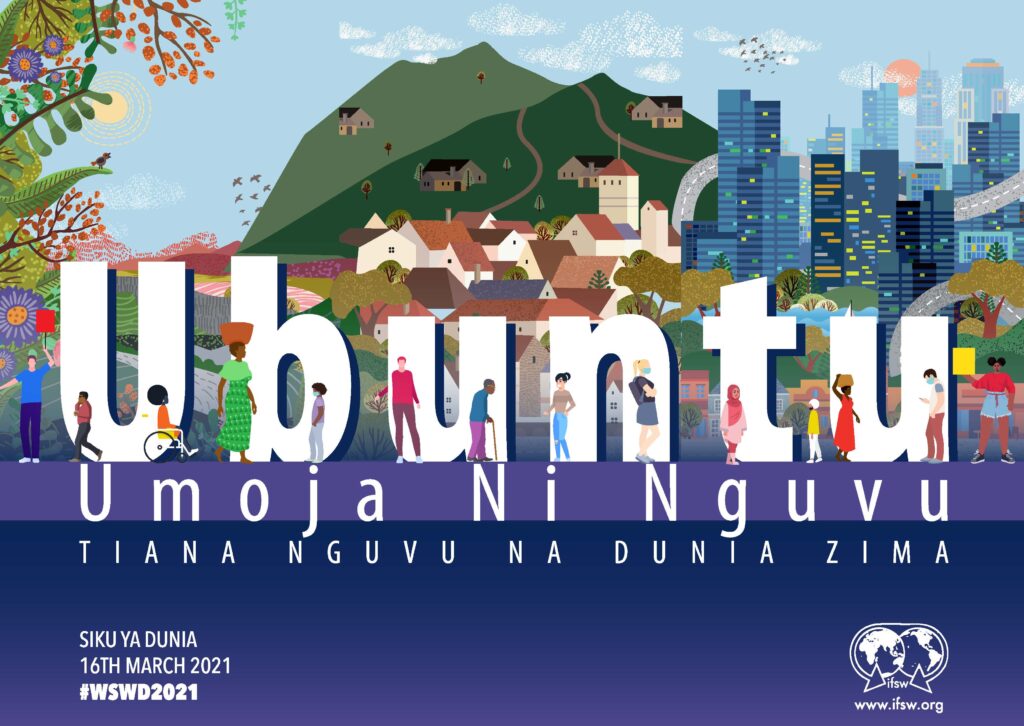
The overarching philosophy behind this is Ubuntu. Buntu is the noun, referring to humanity or personhood, while Ubuntu is the verb or experience, the active practice of being human through others, expressed through justice, reciprocity, community and responsibility.
Ubuntu was adopted as the opening theme of the Global Agenda for Social Work and Social Development, running from 2020 to 2022 under the title “Ubuntu, I am because we are: strengthening social solidarity and global connectedness”. It was the first of a series of themes set out for the 2020 to 2030 Global Agenda.
Harambee and the Nairobi conference
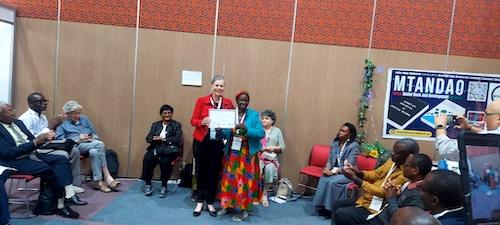
The next marker came with Harambee. Harambee is the noun, meaning all pulling together for the benefit of society, while Uharambee is the verb or experience, the active practice of pulling together for society. Harambee became the theme of the 2026 Joint World Conference on Social Work, Education and Social Development, held under the title “Harambee for sustainable shared futures”. The conference took place from 26 to 29 June 2026 at the Kenyatta International Convention Centre in Nairobi, Kenya, hosted by the Kenya National Association of Social Workers, and brought together more than a thousand social workers, educators, researchers, policy makers and community leaders from across the world. It was jointly convened by the International Federation of Social Workers (IFSW), the International Association of Schools of Social Work (IASSW) and the International Council on Social Welfare (ICSW).
African leadership at the top
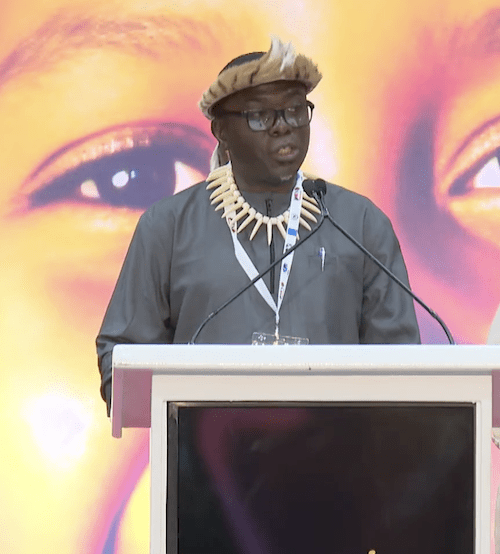
Joachim Mumba, from the Zambian social work community, served as president of the IFSW from 2022 until the close of the Nairobi conference in June 2026, becoming the first IFSW global president drawn from the African region.
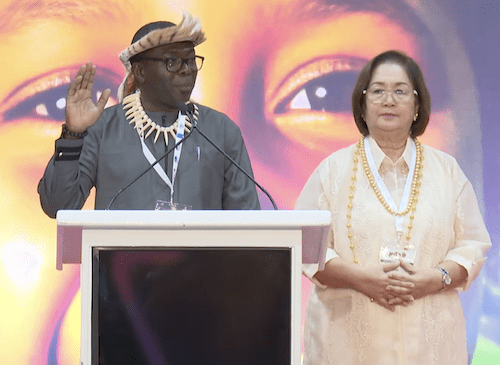
Antoinette Lombard, from the South African social work community, has served as president of the International Association of Schools of Social Work (IASSW) since 2024, with her term running until 2028. She works alongside Janestic Twikirize, from the Ugandan social work community, who has served as secretary of IASSW over the same 2024 to 2028 term.
Decolonisation as the unfinished business
Decolonisation has become an important theme running through this period. However, the current African institutional setup remains weak and too dependent on its global counterparts. The IFSW Africa region depends on IFSW for its structure and support, while the Association of Schools of Social Work in Africa (ASSWA) is largely aligned with IASSW, as its regional member in Africa.
A viable model: ASWEA
A more viable model already exists in African history. The Association for Social Work Education in Africa (ASWEA), which operated from 1971 to 1989, looked more to the African Union and its member states for sustenance, rather than to bodies based outside the continent. Mtandao holds this up as a precedent worth revisiting, an African institution rooted in African intergovernmental structures and answerable to, and trusted by African members.

Putting decolonisation and indigenisation into practice
The more important point, beyond institutional independence, is to put decolonisation and indigenisation lessons into practice in African training, research and practice. This is something Mtandao has been doing consistently through its work.
This requires the creation of a decolonisation and indigenisation plan for each institution and for the region, followed by the revision of four areas built on that plan: curricula, ethics, practice standards and training standards. All of this should be undergirded by the overarching philosophy of Africa, Ubuntu, and three principles: decolonisation, indigenisation, and social development or developmental social work.
Collaboration with IFSW on ethics and practice, and with IASSW on curricula and training, remains desirable, but should not decentre African efforts.
Looking ahead to 2030 to 2040
It is 2026, and as the profession moves towards the third quarter of this decade, Mtandao believes Africa should already be asking what its contribution will be to the next decade, 2030 to 2040. Three areas stand out.
1. Blackness and solidarity with Indigenous groups
Africa should be louder about Blackness and about the challenges faced by Indigenous groups around the world. African communities and Indigenous groups elsewhere have walked a similar road of colonisation, and are now walking a similar road of decolonisation. There is a basis for closer solidarity and shared learning between Africa and Indigenous groups internationally, built on this common history and common current work.
2. Mitigating the migration of professionals
A second priority is mitigating the migration of professionals that has turned Africa into a training school for the West. This is true of social work, where large numbers of African trained professionals, including this author, have left the continent after qualifying. It is not equally true of social development, which is more rooted in African conditions and less transferable to Western labour markets. This distinction matters for policy. Retention strategies for social work need to address the same pull factors driving skilled migration generally, while social development can be built up as a distinctly African strength, less exposed to this loss.
3. Political social development
Political social development is also required, and ties strongly to the principle of developmental social work. If the goal of social development is income optimisation, equality, justice and fair distribution of resources at all levels of African society, this cannot be achieved without being political, because these are political goals. Mtandao holds that social development in Africa cannot remain neutral on questions of power, resource distribution and governance, and that the profession needs to engage directly with political processes if it is to meet its own stated aims.
As we move towards the 2030-2040 decade, Africa needs to plan for that decade now, building on successes in this current decade. There is a part for everyone as shown in the three options above.
Use the form below to subscibe to Owia Bulletin.