Aliko Dangote’s vision of Africa’s future: Implications for developmental social work curriculum, teaching, learning and practice
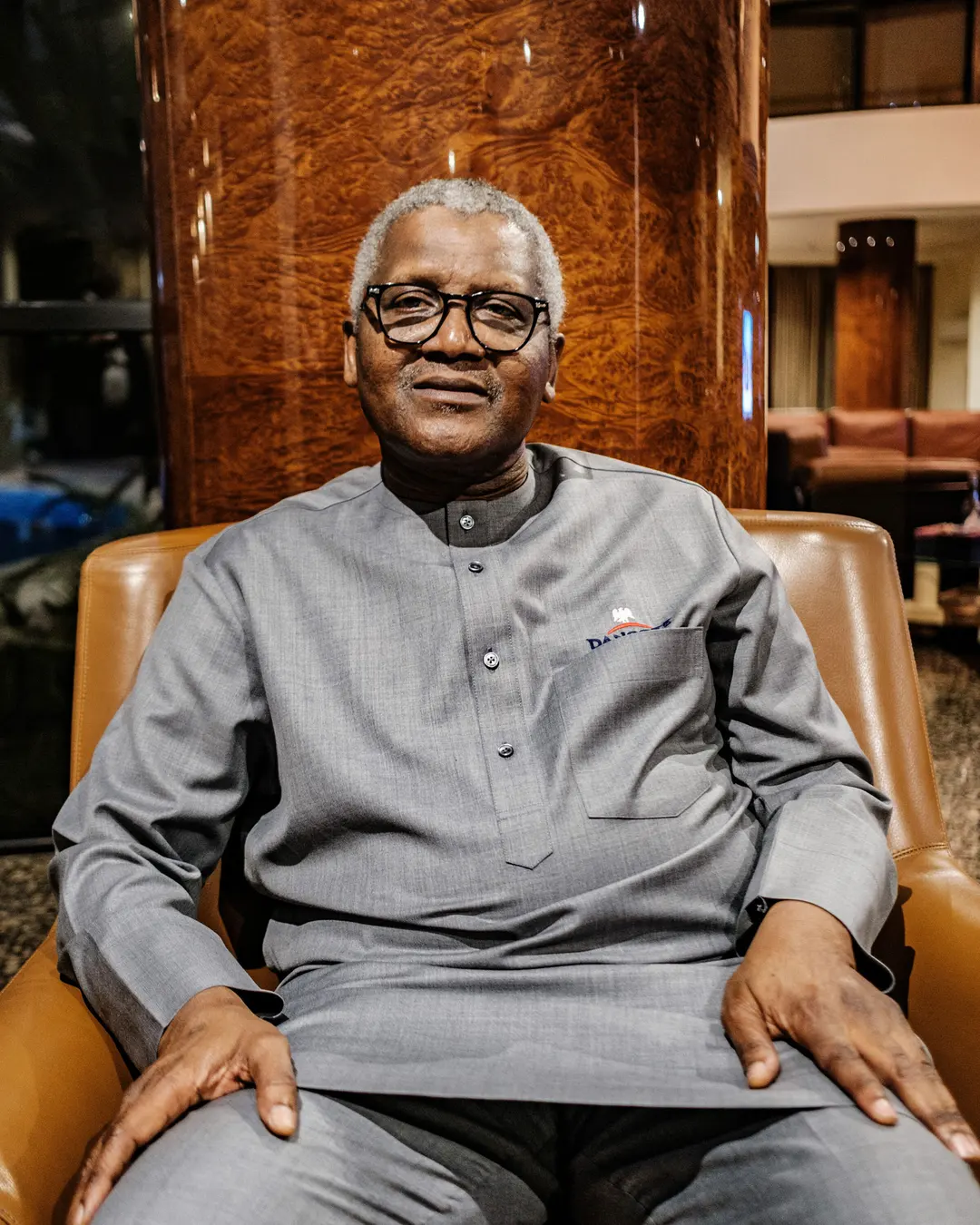
In the interview below, taken from a longer YouTube video, Erik Schatzker, Editorial Director and anchor at Bloomberg Television, interviews Aliko Dangote, President and Chief Executive Officer of Dangote Industries Limited and Africa’s most successful enterpreneur, about his vision for Africa’s future. Their discussion moves beyond business and investment to consider the continent’s demographic dividend, industrialisation, education, infrastructure, global partnerships and the role of African leadership in shaping sustainable development. Although the interview is situated within an economic and industrial context, many of the issues discussed have direct relevance for developmental social work, particularly in preparing practitioners who can contribute to social and economic transformation across Africa.
Interview
Africa’s demographic dividend
Interviewer: When you look at the demographics of Nigeria and Africa, you would need a lot of young leaders.
Aliko Dangote: We have. In Africa, by 2050 we’ll have almost 1.6 billion working people. These are young people. More than 70% of Africa’s population is below the age of 30.
Why the future is Africa
Interviewer: What are your reflections when you think about that?
Aliko Dangote: My reflection is that the future is Africa.
Interviewer: What needs to happen for the future to be Africa?
Aliko Dangote: We need heavy investment in infrastructure, training and education first, because you have to work with an educated society. A lot of African governments are already putting around 15%, and some even 20%, of their budgets into education. We have to upskill our people to make sure we are producing the workers that we need for tomorrow.
The most promising African countries
Interviewer: Which countries are the most promising from that point of view?
Aliko Dangote: The promising countries include Nigeria, Ethiopia, Kenya and Tanzania. Rwanda is small but very promising. Egypt is promising. Algeria is also promising, even though it is not very open.
There are more than ten very good countries in Africa where people can invest. Ghana is doing extremely well. Côte d’Ivoire is doing extremely well. Even Guinea today is attracting major investment. If you look at the mine recently opened by Rio Tinto, it cost over US$20 billion. People are coming in now because they realise that Africa is open for business and that there are real opportunities across the continent.
Who is helping Africa?
Interviewer: Who is helping Africa with business now? Could you reflect on China versus the United States versus Europe?
Aliko Dangote: Honestly, if you want me to be very open, it’s China.
China has really dominated business in Africa because of the absence of the others. They are making money and they are dominating the landscape. African governments take China seriously because China puts its balance sheet on the table.
For example, when we purchase equipment for our cement business, Chinese suppliers can provide supplier credit backed by their insurance company. They might finance 80% of the cost over four or five years. If another country expects me to pay the full amount upfront, while China provides long term financing, the choice is obvious. The Chinese option allows me to do more projects with the same capital.
That is how businesses grow. You need to leverage responsibly without overleveraging.
New opportunities for partnership
Aliko Dangote: Today I also see changes in the United States. When I visited the U.S. Development Finance Corporation, they had significant funding available and were very interested in infrastructure. They are ready to lend and support projects.
I also told representatives from Japan that if they want to compete, they must come with financing. We have many choices today. Countries that want to do business in Africa must come with both technology and financial support.
Growth, inequality and climate
Interviewer: Is it possible to increase efficiency in Africa without increasing inequality?
Aliko Dangote: We have to address inequality. It will be very difficult to improve efficiency without dealing with inequality, and I believe African governments are working towards that.
As for climate, Africa is responsible for less than 6% of global emissions. We are doing a lot to improve our environmental performance. In our cement plants we use advanced technology, robotic systems, low dust emissions and alternative fuels. We are also replacing diesel trucks with compressed natural gas vehicles and investing in solar, wind, hydro and gas.
Climate change is real, but Africa must meet its development needs while addressing climate challenges at the same time.
Africa’s untapped opportunities
Interviewer: You said you have become more aggressive because you now see opportunities you did not see before. What are those opportunities?
Aliko Dangote: There are many.
Africa controls about 60% of the world’s critical minerals. We have a young and energetic population. We have 60% of the world’s arable land and enormous land resources. Yet we process very little of our own minerals. The opportunities are enormous.
The changing global energy landscape has also created opportunities. Nigeria has far more gas than oil, and much of that gas was discovered accidentally while searching for oil. If we invest properly, Nigeria can become one of the world’s largest suppliers of liquefied natural gas.
We are working on plans to transport gas across West Africa and eventually into Europe. Going forward, Africa can become a major supplier of many critical resources to the world.
Legacy and Africa’s industrial future
Interviewer: What is driving you now? You are already the wealthiest person in Africa.
Aliko Dangote: What drives me is legacy. It is not about wealth. I do not have many personal needs.
What drives me most is that Africa has many unmet needs. Companies like ours have a responsibility to provide leadership in transforming African economies. We have waited a long time for foreign investors to demonstrate Africa’s potential. Today, we Africans must be the ones to demonstrate that potential.
If we do that, many more companies and investors will join us in financing the infrastructure needed to take Africa to the next level.
A vision for Africa
Interviewer: What do you hope your legacy will be?
Aliko Dangote: My legacy will be that I was one of those who pioneered the industrialisation of Africa.
My focus is to make sure that Africa produces what it consumes. I also want us to continue pushing towards one common African market.
I belong to a group called the African Renaissance, made up of 54 leading African business people. We meet annually in Kigali, Rwanda, with the support of a number of African presidents. The more people understand what we are trying to achieve, the more progress we will make.
Nobody can transform our continent except us, Africans. That is why we are mobilising entrepreneurs at every level. Some will build large businesses, others medium or small businesses. Together, they will attract foreign investment and help move Africa to the next level.
Implications for developmental social work curriculum, teaching, learning and practice
Dangote’s vision has significant implications for developmental social work. First, social work curricula should strengthen content on economic development, industrialisation, entrepreneurship and employment creation, recognising these as central pathways to social wellbeing and poverty reduction rather than viewing social development solely through welfare provision.
Second, the interview reinforces the need for teaching that equips students to work with Africa’s demographic realities. Graduates should understand youth development, demographic transitions, skills development, labour markets and the opportunities presented by Africa’s growing young population.
Third, developmental social work education should place greater emphasis on infrastructure, investment, public private partnerships and sustainable development. Social workers increasingly need to engage with governments, industry, financial institutions and communities in shaping inclusive development initiatives.
Fourth, the discussion highlights the importance of regional integration and Pan African collaboration. Teaching and learning should therefore prepare students to think beyond national boundaries, appreciating the opportunities and challenges associated with the African Continental Free Trade Area, regional migration, cross border development and continental cooperation.
Fifth, Dangote’s emphasis on African ownership of development aligns closely with developmental social work’s commitment to participation, empowerment and self determination. Curricula should therefore strengthen indigenous African knowledge systems, local leadership, community driven development and asset based approaches that position Africans as producers of solutions rather than recipients of aid.
Finally, the interview illustrates the importance of interdisciplinary practice. Contemporary developmental social workers require competencies that enable them to collaborate with economists, business leaders, engineers, environmental specialists and policymakers to address complex social, economic and environmental challenges. This broadens the profession’s contribution from responding to social problems towards actively participating in Africa’s industrial, economic and social transformation.
Use the form below to subscibe to Owia Bulletin.