Decolonising Awards Speech by Linda Harms-Smith: Work on decoloniality means disrupting dynamics of ongoing coloniality
Thank you so much for this honour. By affirming decolonial scholarship, and here, the small part that my work contributes, ASWDNET strengthens this project. I firstly want to acknowledge those with whom I have written in this area of scholarship and who should therefore also be named: Shahana Rasool; Motlalepule Nathane; Robel Afeworki-Abay; Francine Masson; Jessie Turton. It is critical that we all work to disrupt the impact of colonisation, and so we need a transformative decoloniality that contends with histories of racist dehumanization; destruction of cultures, histories and knowledges; and a critical engagement with all oppressive structures.
Work on decoloniality means disrupting dynamics of ongoing coloniality – of global capitalism, of unequal power relationships, and of Western epistemic violence. As Frantz Fanon (1967) argues, decoloniality must be a complete disruption from the bottom up, to transform material realities as well as colonial dynamics of power, being and knowledge. The global neoliberal system has entrenched extreme socio-economic inequalities in a world still structured by coloniality. It is imperative that social work theory and education rises to this challenge.
However, I also receive this award with some discomfort as a White South African having grown up during the brutally racist Apartheid regime. This meant unjust privilege and advancement and taken-for-granted power. Important theorists such as Fanon, Biko, Freire, hooks, Lorde argue that those amongst oppressive and dominant groups, rather than lead, must relinquish unearned authority, work towards dismantling oppressive structures, challenge white supremacy, and support movements led by those directly affected by oppression.
My early social work practice as a community worker in a South African rural community during the height of Apartheid of the 1980s, conscientized me into a position of ‘oppositional consciousness’. I came to understand more fully what had confused me as a child, classified as White in a racially segregated and privileged world: the structural injustice of the racist regime was grounded in colonialism, White supremacy and racist capitalism.
Such a position requires practising a politically engaged solidarity by divesting from the power afforded by whiteness and historic class privilege, while redirecting that power towards transformative activism. More broadly, our scholarly work and activism must go far beyond adapting Western Social Work theory for local contexts. Without transforming relationships of coloniality, capitalism and patriarchy, we re-enact the colonial matrix of power. We must adopt strategies of resistance and disruption and live out the thesis that ‘philosophers have hitherto only interpreted the world in various ways – the point is to change it’.
Linda
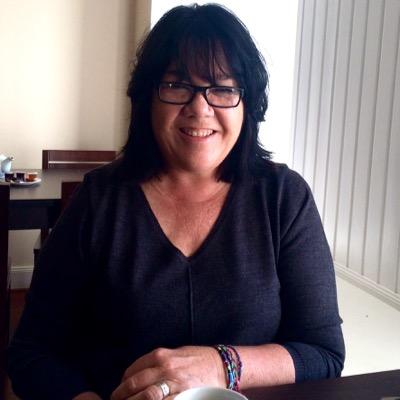
Linda Harms-Smith
Emeritus Professor and Research Associate
BA (SW), M Soc Sc, B(Hons) Soc Sc (Psych), PhD
Department of Social Work and Criminology
Faculty of Humanities, University of Pretoria

Use the form below to subscibe to Owia Bulletin.